Online Reporter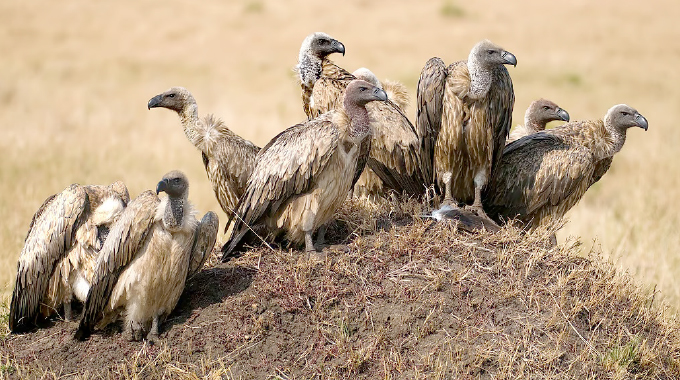
Gibson Mhaka, Features Reporter
SEATED near the entrance of one of the many sports betting outlets springing up in Bulawayo’s Central Business District is an elderly man in his late 70s, easily mistaken for a vagrant due to the worn sacks at his side.
However, an investigation revealed a gruesome truth; the man is not homeless, but an occultist selling a concoction of vulture body parts, used as lucky charms by punters.
Further investigations revealed a notable increase in punters visiting the old man, seeking charms to correctly predict sports results and win bets, including the national lottery.
Charms made from vulture body parts are believed to be a source of clairvoyant powers, foresight and it is widely believed that they increase intelligence.
“People come to him all the time,” a punter who wished to remain anonymous, said:
“They want the vulture parts, the juju, to help them see the winning numbers, to know which team will score. They believe it gives them the edge.”
Another man whispered, glancing around nervously, “They say the vulture knows things we don’t. They come here, hoping to get a piece of that knowledge, to see the future of the game, the lottery, anything. They believe it will bring them luck, make them win.”
Faith healers are also using vultures as they believe they help in pulling church crowds, fore-sighting, fortune-telling, spiritual healing and ancestor connections.
Bird conservation experts warn that the use of vulture parts in traditional medicine will likely lead to their extinction, not only in Zimbabwe, but across Southern Africa within the next three decades.
Seven of the nine vulture species in Southern Africa are considered threatened, with others on the verge of extinction.
Zimbabwe is home to six vulture species.
In the critically endangered category are white-backed vultures, white-headed vultures and hooded vultures.
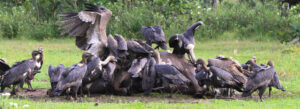
Sadly, vultures are often overlooked as mere scavengers. However, they are a key component in maintaining healthy ecosystems.
Their vital role as nature’s “clean-up crew” allows them to keep the environment free from rotting carcasses and helps contain the spread of contagious diseases such as anthrax, botulism and rabies.
Due to their ability to dispose of carcasses, vultures are essential for maintaining a disease-free environment. This crucial role is often underestimated, contributing to their continued vulnerability.
Environmentalist Mr Liberty Dube said it is crucial to conserve vultures as they have poor breeding success and reach sexual maturity after six years.
“It’s absolutely crucial that we conserve vultures. They have incredibly poor breeding success. You see, they don’t even reach sexual maturity until they are six years old.
“And if a breeding pair dies, it takes a staggering nine years to replace them. That’s a huge gap, and it highlights just how vulnerable these vital birds are. Without vultures, the environment will crash,” Mr Dube warned.
According to the Zimbabwe Parks and Wildlife Management Authority (Zimparks), a single vulture provides over US$11 000 worth of ecosystem services through its cleaning services.
Studies have revealed vultures are also vital for biodiversity conservation, their ecosystem services directly contributing to several Sustainable Development Goals (SDGs).
Specifically, vultures play a key role in achieving SDG 2: Zero Hunger. By rapidly consuming carcasses, they help control livestock diseases, preventing the spread of pathogens that can decimate herds and threaten food security.
This reduction in disease spread directly protects livestock, a crucial food source for many communities.
Furthermore, vultures support SDG 3: Good Health and Well-being. Their scavenging behaviour effectively removes decaying organic matter, significantly reducing the risk of diseases such as rabies, anthrax, and tuberculosis from spreading to humans and other animals.
This not only creates a healthier environment but also lessens the strain on healthcare systems.
In addition, vultures play a role in SDG 13: Climate Action. They contribute to nutrient cycling, which in turn influences carbon sequestration within ecosystems.
Therefore, the presence of healthy vulture populations is essential for achieving multiple interconnected SDGs.
A ground-breaking new report released by the conservation group BirdLife International placed a staggering economic value on the often-overlooked role of vultures in Southern Africa’s ecosystems, estimating that these vital scavengers provide an astonishing US$1,8 billion annually in ecosystem services.
The report, focusing on Botswana, Zimbabwe, and Zambia reveals that vultures provide ecosystem services, such as bequest values, sanitation, and pest control, contributing an estimated US$1,8 billion annually to the region’s economy.
Notably, this includes US$93 million per year in sanitation and pest control services that directly benefit human health across these three countries.
“A new report documenting the economic value of ecosystem services provided by vultures in Southern Africa has been launched by BirdLife International, marking a significant milestone in understanding the role of vultures in the ecosystem.
“According to the report, which focused on Botswana, Zimbabwe and Zambia, vultures provide ecosystem services including bequest values, sanitation and pest control services, totalling US$1,8 billion per year, including sanitation and pest control services to human health valued at US$93 million per year in the three countries,” reads the report.
According to the report, Africa is home to 11 species of vultures. Seven of these face the risk of extinction, being listed as Vulnerable, Endangered, or Critically Endangered on the IUCN Red List.
“Vultures, essential for maintaining ecological balance by scavenging on decaying carcasses, have experienced alarming declines, with African vulture populations plummeting by 80-97 percent over the last five decades, with some species facing a decline of over 92 percent.
“The main threats include poisoning (responsible for 61 percent) of recorded vulture deaths across Africa); belief-based use (29 percent) and electrocution by energy infrastructure (nine percent). Halting and reversing these declines is imperative to preventing vultures from becoming extinct.”
Other threats in the region include collisions and electrocutions from energy infrastructure, as well as habitat destruction.
Additionally, the report highlights other values associated with vultures and their economic impact on communities living alongside them, as well as on the public (both local and international), tourism operators, and rangers and parks personnel.
Commenting on the report, Head of Conservation, Africa at BirdLife International, Mr Matthew Lewis, said the decline of vulture populations across the continent was indeed worrying.
He emphasised that the ground-breaking study on the economic value of vultures in the Southern Africa region was crucial in advancing conservation efforts and that BirdLife and its partners would continue to collaborate with stakeholders in the region to reverse the trend for vultures in Southern Africa.
Preventing extinctions programme manager at BirdLife Zimbabwe, Mr Leeroy Moyo, concurred saying the report was intended to support policy advocacy for vulture conservation and enhance awareness among local communities and stakeholders regarding vultures’ essential role in maintaining ecosystem health and promoting human well-being.
“As BirdLife Zimbabwe, this report is intended to support policy advocacy for vulture conservation. It seeks to enhance awareness among local communities and stakeholders regarding vultures’ essential role in maintaining ecosystem health and promoting human well-being.
“By integrating these findings into national conservation strategies, we aim to continue mitigating threats such as poisoning, habitat loss, and illegal trade, thereby ensuring a sustainable future for vulture populations in Zimbabwe and the ecosystems they support,” said Mr Moyo.
Unsustainable development is also contributing to the loss of food and habitats for vultures. As human communities and agricultural lands expand, new problems arise for vultures.
These include new infrastructure and power lines, which present a multitude of hazardous obstacles for the birds during flight.
It is important to note that long before the African Vulture Crisis emerged, the Government had already committed to protecting these birds by declaring them Specially Protected Species under the Parks and Wildlife Act.
Zimbabwe is one of the few countries in Africa to have accorded vultures this special protection.
By signing this Vulture Action Plan, the Government reaffirms its commitment to protecting vultures.
The purpose of the Vulture Action Plan is to encourage multi-sectoral, national, regional, and international collaboration to address threats to vultures.
It also encompasses raising awareness of the vultures’ plight, their ecological importance, and their valuable ecosystem services, and proposing solutions for African vulture conservation at the highest levels, both nationally and regionally.