Online Reporter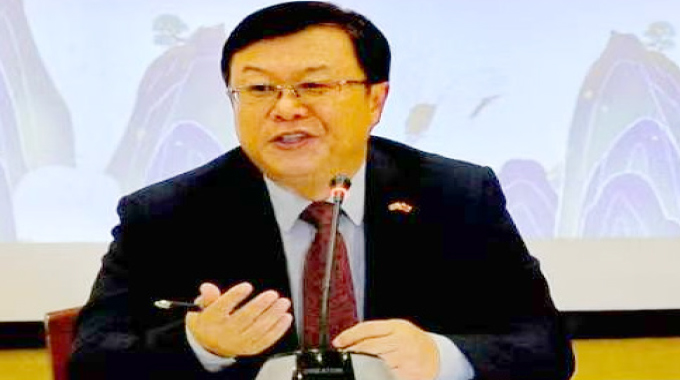
Tichaona Zindoga
THE past few weeks have seen a lot of global uncertainty following US President Donald Trump’s cutting off foreign aid and assistance, through USAid and other avenues.
The US leader also withdrew funding from the World Health Organisation and for many people in Africa, there are fears that he could also discontinue the African Growth and Opportunity Act (AGOA) the US’ main framework for economic policy and commercial engagement with Africa. AGOA, however, covers only 32 countries – with Zimbabwe among excluded countries.
In this new world dis-order under Trump, characterised by the US wilfully disrupting and upending alliances and agreements, even with traditional allies, there are no prizes for guessing that Africa and Third World countries are the least of the Trump administration’s worries.
That Africa – the world’s least developed continent yet with the brightest future because of the abundance of human and natural resources – still needs development partners and external support, is beyond a rational dispute.
The rest of the developing world, too, requires strong partners to lift whole populations out of poverty and propel industrialisation. The situation, however, is dire, because of challenges being faced by major economies globally, and especially regarding Europe and Britain – the former economic powerhouses – who have their problems at home.
The situation in Ukraine has only exacerbated the problems, as they have been left heavily exposed and now have to dig deep to fund their defence needs.
They will be left with little capacity to uplift others – and they have failed to do so in less tenuous times like these: Europe’s
“Global Gateway” investment package, which was conceived in 2022 aiming to provide €150 billion in funding towards Africa, has never taken off. It was seen as key to unlocking development across such areas as digital infrastructure, sustainable energy, healthcare, education, and job creation, with a strong emphasis on green and digital transitions.
At the same time, in recent years both traditional and emerging economic giants (countries like Italy, Japan, Turkey, India and Saudi Arabia) have made overtures to Africa promising aid and co-operation, which have, however, come short on implementation, mostly due to funding.
Trump’s inward-looking policy is likely to give others an excuse to renege from commitments they may actually not have had capacity to fulfil.
There is one exception to the rule – China. The Asian giant, which is the world’s second largest economy, has laid a solid foundation for supporting Africa and the developing world’s development.
Twelve years ago, China announced the Belt and Road Initiative, which has become the world’s largest infrastructure and connectivity plan involving over 180 countries and international organisations.
Zimbabwe became a member of the BRI network in 2018.

A fortnight ago, during a lecture at the Zimbabwe National Defence University, Chinese Ambassador to Zimbabwe, Mr Zhou Ding gave an important speech regarding the BRI, and how it has become “a strong response to development challenges” in light of geopolitical crises that are threatening world peace and prosperity while imbalances between developed and developing countries are worsening.
In spite, or because of this, unilateralism and protectionism are on the rise.
Ambassador Zhou explained that for African countries, and Zimbabwe in particular, the BRI provides more opportunities and options in three major areas that present particular challenges.
In trade and investment cooperation, China has been Africa’s top trading partner for 15 years straight, with the trade reaching US$296 billion in 2024, significantly higher than US-Africa trade, for example, which was just under US$75 billion in the same year.
Within the BRI matrix, China has helped Africa break through its infrastructure bottlenecks, helping to build and renovate over 10 000 kilometres of railways, around 100 000 kilometres of roads, and nearly 1 000 bridges. The infrastructure push also includes expansion of air transport facilities, energy as well as telecommunications.
In terms of poverty alleviation, China has given aid funds to 53 African countries, carrying out livelihood projects in food, water supply, maternal and child care, and education, benefiting over 10 million people.
In the context of Zimbabwe, a number of localised successes have been achieved in five pillars. These include Policy Co-ordination, as co-operation between the two countries aligns with Zimbabwe’s Vision 2030; undertaking of massive infrastructure projects; financial integration and investments that result in foreign exchange revenues and taxes, trade which continues with annual record highs (US$3.8 billion, last year); while People-to-People Exchanges between the Chinese and Zimbabwean people have become more frequent characterised by human capital development and skills exchange programmes, mutual learning visits and cultural exchange while continues to send medical and agriculture expert teams each year, which offer assistance to Zimbabweans.
These successes have given optimism that China and Zimbabwe’s relations will continue to thrive. Ambassador Zhou attributed this to the two countries’ ideological and political harmony, guidance by the consensus between China and Zimbabwe’s leadership, both sides’ strong willingness to open up, and finally, the fact that China and Zimbabwe are both part of the “Global South”.
“We share the same idea of changing global governance,” the envoy explained.
“We both want to make the world order fairer and more reasonable. In the future, China hopes to work with Zimbabwe on global governance, carry out the three global initiatives, and safeguard Africa’s rights and interests.”
The three initiatives that the envoy referred to are Global Development Initiative (GDI), the Global Security Initiative (GSI), and the Global Civilisation Initiative (GCI), which are now widely known as the “3 Global Initiatives”. The GDI focuses on development to boost common prosperity.
The GSI faces the turmoil head-on and stresses universal security. The GCI promotes diversity and harmony and sticks to the principle of equality, exchanges, and mutual learning among civilisations.
These three initiatives are China’s answers to global challenges for peaceful development. They have gotten support from many African countries, like Zimbabwe.
So far, 82 countries have joined the Group of Friends of the Global Development Initiative. 119 countries and international organisations have backed the Global Security Initiative.
Amid all this, the steady leadership of China’s leader, President Xi Jinping, is helping stabilise the world in these most uncertain times — and indeed trump challenges that are threatening to tear the world apart.
President Xi’s political philosophy — now referred to as “Xi Jinping Thought on Diplomacy” — is credited for guiding China, and ensuring that the globe has an alternative worldview.
Arguably the most outstanding idea of this thought is what he refers to as “building a community with a shared future for mankind”, which he enunciated in March 2013, with the aim “to link the fates of all nations closely”.
Ambassador Zhou explained: “We work together to build a harmonious global home and meet people’s hopes for a better life in every country.”