admin
admin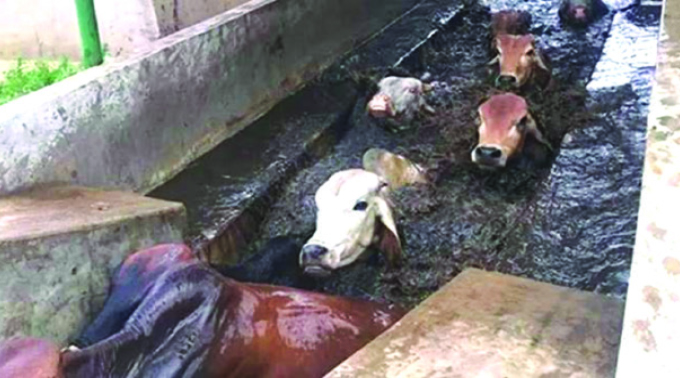
Obert Chifamba-Agri-Insight
WITH the country recording a 47 percent decline in cattle mortality, thanks to the various initiatives the Government rolled out, it is crucial for all stakeholders along the value chain to work towards consolidating the gains made so far.
Farmers are now expected to assume the role of the protagonist and lead from the front in making the dream to eradicate ticks a reality.
Livestock producers need to bolster the momentum gathered so far by adopting intensive dipping, which will see cattle being dipped three times in two weeks with tick grease being applied in-between the dipping sessions.
Tick grease should be applied correctly — in the ears, under the tail and on the tail brush, which are feeding sites of the brown ear tick which transmits January Disease (Theileriosis) that has become notorious for killing hundreds of thousands of cattle in recent years.
This development left many farmers without draught power or cattle for other purposes, for instance, the occasional social expenditure requiring the sale or slaughter of a beast.
It, however, took the intervention of the Government to stop the madness by availing dipping chemicals fluently, which was followed by the introduction of the Presidential tick grease programme targeting over one million households.
More than 600 000 households countrywide have since received the tick-grease from the Department of Veterinary Services (DVS) with those farmers who have not yet received theirs being encouraged to collect it from their nearest Grain Marketing Board (GMB) depots to augment dipping and curb the spread of tick-borne diseases.
The grease is being distributed for free under the Presidential Blitz Tick Grease Programme which was launched by Government at the peak of the January disease holocaust that was threatening to decimate the country’s cattle industry in its entirety.
Beneficiaries of the programme only need to produce a stock card to get the grease. The DVS has a master register where every stock owner is registered.
The register also shows the number of cattle and the vaccinations that the animals would have undergone.
It is refreshing to note that the DVS is also pulling out all stops to ensure farmers get the grease and has since distributed 600 000 kilogrammes of the stuff with all January disease hot spots receiving their allotments.
This has been bolstered by the distribution of 100 tonnes of dipping chemicals countrywide, which should enable farmers take their cattle for dipping regularly while more chemicals are being sourced.
Farmers should also realise that it is compulsory to take cattle for dipping if the battle to end January disease is to be won. The dipping programme dovetails into the Government’s objectives for introducing the National Development Strategy 1, which prioritises animal health and production through strengthening farmer knowledge, skills in livestock production and health, to enhance productivity.
The Government has also made its intentions to re-build the national herd very clear with the Ministry of Lands, Agriculture, Fisheries, Water and Rural Development initiating the Dip Resuscitation Programme that targets to improve basic dipping infrastructure throughout the country.
More than 500 dip tanks have been rehabilitated with a corresponding number of back-up boreholes being drilled to ensure uninterrupted water supply for dipping throughout the year.
The country now has 4 099 dip tanks, a number that excludes privately-owned ones that in recent times have become common, as many farmers adopt a business approach for their cattle farming operations.
To put the icing on the cake, Government has gone on to resume the production of tick vaccines after having called time on the project some time ago.
To date, it has produced 20, 460 doses of Theileria Bolvac vaccine for the control of tick-borne diseases.
Of course, more vaccines are set to be produced with the Government targeting to totally eliminate the tick menace to allow the cattle industry to fully recover. The effective use of the Theileria vaccine together with other measures will help reduce cattle mortalities and promote high production, productivity and profitability as envisaged in the livestock and recovery growth plan.
More than 65 percent of cattle deaths in Zimbabwe are attributed to tick-borne diseases with Theileriosis (January disease) being the chief culprit. Over 500, 000 cattle valued at more than US$150 million have succumbed to the disease between 2018 and 2022.
January Disease is common between December and March and is spread through the bite of the brown ear tick. To protect their animals, farmers must ensure they take them for dipping so that ticks do not mature to the stage of transmitting diseases. Where the farmer uses the spray dip, it is critical to make sure the animal is fully soaked.
An animal requires at least three to five litres of dip wash for the farmer to get the desired results.
Farmers can also help their cause by seeking assistance from their local veterinary extension officers when they undertake to implement their own tick control measures.
Interestingly, the DVS has since confirmed a positive development in which farmers are heeding the call to dip their animals with the DVS chief director Dr Josphat Nyika recently describing attendances at dipping sessions as impressive.
It is therefore crucial for the farmers to continue dipping their animals, as prescribed by the law and the department and always remember that dipping their cattle religiously is key in the fight against tick-borne diseases.
On the one hand, it is also important for farmers to consult veterinary officers if they spot or suspect signs of ill-health on their animals so that the experts can identify the problems or advise them on what to do next.
For January disease, the affected animal exhibits swellings of the lymph nodes under the ears and on the shoulder, cloudiness of the eyes, difficulty in breathing with froth from the nose and mouth.
The affected animal collapses and dies within a few days. January Disease is a notifiable disease in Zimbabwe and when suspected, farmers are compelled by law to report it to the DVS.
It is also crucial for the DVS to take their awareness campaigns on the need to dip cattle a rung higher so that all farmers get the message.
Awareness campaigns may need to include road shows, which by nature are known to create long-lasting impressions on people’s minds compared to pamphlets that are usually thrown away in the blink of an eye soon after they are distributed.



 Online Reporter