Nothando Zondo, [email protected]
LIVESTOCK farmers in Umzingwane are raising concerns over abandoned mine pits, veld fires and alleged water pollution, saying the growing problems are threatening their livelihoods and damaging grazing land.
The farmers fear the situation could worsen as the district prepares for a potentially difficult farming season, with livestock production already under pressure from dwindling grazing areas and environmental degradation linked to mining activities.
Their concerns have prompted Umzingwane Member of Parliament and Deputy Minister of Defence, Brigadier-General (Retired) Levi Mayihlome, to call for urgent dialogue between farmers, miners and government authorities.
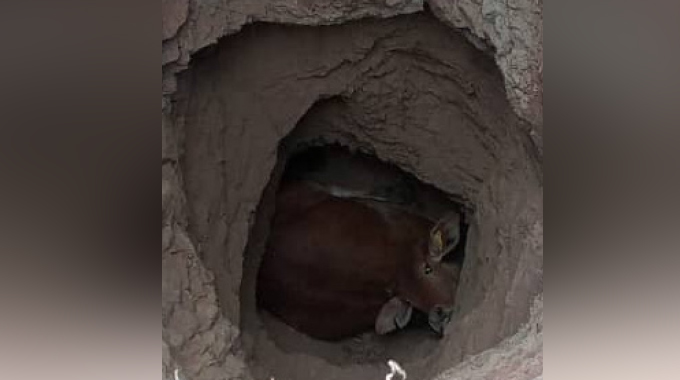
Farmers say abandoned mine pits have become a serious hazard across parts of the district. Livestock often wander into the open pits while grazing, resulting in injuries and deaths that leave households counting losses.
In a district where cattle are more than just livestock, the stakes are high. Many families depend on their animals for income, food security and school fees. Losing cattle can therefore have far-reaching consequences for rural households already facing economic challenges.
Farmers have also expressed concern over recurring veld fires, which continue to destroy grazing land needed to sustain livestock. The loss of pasture has become a growing worry, particularly as communities brace for the possibility of reduced rainfall during the coming season.
Adding to the concerns are allegations of water pollution from mining activities. Farmers claim that waste from mining operations is finding its way into streams, rivers and dams used by people and animals.
Many are now calling for stronger monitoring and stricter enforcement of environmental regulations to protect water sources and prevent further damage.
Responding to the concerns, Brig-Gen Mayihlome said all stakeholders needed to come together and openly discuss the challenges facing the district.
He proposed a meeting involving farmers, miners, the Environmental Management Agency (EMA), Agritex, the Provincial Mining Director, the District Development Coordinator and the Zimbabwe Republic Police.
“I suggest that we as farmers need to call for a meeting involving all the above stakeholders, especially miners, particularly the big gurus that unleash and control gold panners, farmers and discuss with no holds barred,” he said.
The Deputy Minister said meaningful solutions could only emerge through honest dialogue and cooperation among everyone affected.
For many villagers, the debate is not about stopping mining. Communities recognise the important contribution the sector makes through employment creation and economic growth. Their concern is that mining activities should be carried out responsibly and without destroying agricultural livelihoods.
Brig-Gen Mayihlome said the concerns being raised by livestock producers demonstrate the need for agriculture and mining to coexist.
“Our clarion call as Umzingwane livestock farmers is that mining and agriculture stakeholders must find each other. As a country, we cannot celebrate the growth of the small-scale mining sector while oblivious of the destruction the miners are causing to the livestock sector.
“Small-scale and artisanal miners ought to close their pits or pay a levy towards rehabilitation each time they trade their gold.
Both these sectors are the backbone of our economy, hence they must not be allowed to destroy each other,” he said.
The remarks reflect growing frustration among livestock farmers who believe some mining operators are failing to rehabilitate land after extracting minerals.
Open pits left behind by mining activities have become a recurring complaint, with farmers arguing that rehabilitation should be compulsory to protect both people and livestock.
Brig-Gen Mayihlome also encouraged farmers to take their concerns directly to government through formal channels.
He suggested that a petition could be submitted to the Ministry of Mines and Mining Development, the Ministry of Agriculture,
Lands, Fisheries, Water and Rural Development, and the Ministry of Environment, Climate and Wildlife.
He further reminded communities that the Constitution gives citizens the right to petition Parliament on matters affecting their welfare.
“The other option is to send the petition to the Ministers concerned in terms of Section 149 of the Constitution of Zimbabwe.
The Speaker, if he accepts the petition, would send a Committee of Parliament to come and investigate,” said Brig Gen Mayihlome.
According to the Deputy Minister, a parliamentary investigation could result in recommendations being made to relevant ministries and authorities responsible for mining, agriculture and environmental protection.
He also encouraged communities to participate in future consultations on the proposed Mines and Minerals Bill to ensure rural voices are heard when laws governing the sector are reviewed.
The challenges being reported in Umzingwane mirror concerns being raised in other mining districts across Zimbabwe. Increased mining activity has brought economic opportunities, but it has also intensified calls for stronger environmental management and greater accountability.
Many farmers believe the answer lies in striking a balance between the needs of mining and agriculture.
Brig-Gen Mayihlome said closer cooperation between the Ministries responsible for Mining, Agriculture and Environment will be critical in addressing the concerns being raised by communities.
He also called on law-enforcement agencies to strengthen action against illegal mining and ensure all operators comply with environmental regulations.
Stakeholders hope the proposed dialogue will help find practical solutions to key issues such as pit closure, land rehabilitation, veld fire management and the protection of water sources.
For farmers, the matter is urgent. Livestock remains the backbone of many households in Umzingwane, and protecting grazing land and water supplies is essential for their survival.
They insist they are not opposed to mining. What they want, they say, is responsible mining that allows both sectors to thrive.
Their hope is that through dialogue and cooperation, Umzingwane can protect its livestock industry while still benefiting from the economic opportunities that mining brings.