Online Reporter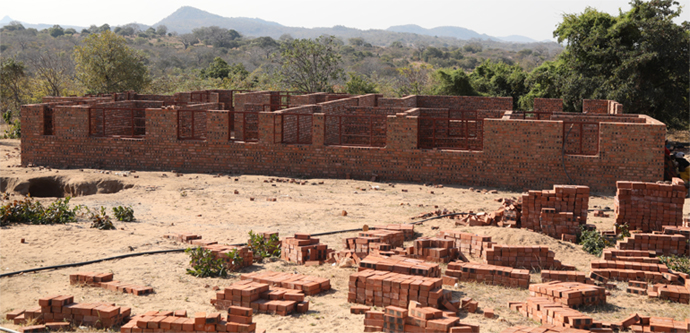
Tendai Gukutikwa
Post Reporter
THE Second Republic has accelerated infrastructure development across Manicaland, rolling out a series of strategic projects in the health, education, industry and energy sectors as part of efforts to advance the National Development Strategy (NDS2) and attain Vision 2030.
The province-wide drive encompasses the construction of Chimusasa Clinic in Nyanga, student hostels at Manicaland State University of Applied Sciences (MSUAS), a pulp production plant at Wattle Company and the installation of solar energy infrastructure at Kazozo.
Implemented under the Government’s results-based management framework, the projects are aimed at ensuring value for money, timely completion and maximum socio-economic impact. Once completed, they are expected to improve healthcare access, expand tertiary education facilities, stimulate industrial growth and enhance energy security across the province.
Government monitoring and evaluation teams that toured the project sites last week expressed satisfaction with the progress achieved so far. In Nyanga, the construction of Chimusasa Clinic is set to strengthen primary healthcare services for rural communities that have traditionally travelled long distances to access treatment.
At MSUAS, the new student hostels are expected to address accommodation shortages, improve the learning environment and support increased enrolment in line with the Education 5.0 philosophy.
The establishment of a pulp production plant at Wattle Company is expected to revitalise industrial activity, create employment opportunities and boost export earnings.
The solar energy project at Kazozo, on the other hand, forms part of national efforts to diversify energy sources, reduce pressure on the national grid and promote sustainable power generation. The projects underscore Government’s commitment to infrastructure modernisation, inclusive economic growth and improved quality of life under NDS2, while positioning Manicaland as a key contributor towards the achievement of Vision 2030.
Deputy Director for Monitoring and Evaluation in the Ministry of Home Affairs and Cultural Heritage, Mr Respect Jongwe said the inspections formed part of Government monitoring framework under the 100-Day Cycle Programme.
Mr Jongwe said Chimusasa Clinic, being implemented by the Lotteries and Gaming Board, has surpassed 60 percent completion and on course for commissioning before December 2026.
“We are here to assess progress, identify any challenges and make recommendations where necessary. We have engaged the contractors and the community, and we are satisfied that the project is moving in the right direction. Government responsibility is to ensure that communities receive the services they deserve within the planned timelines,” said Mr Jongwe, adding that materials required for the clinic had been secured.
“The clinic block is progressing well. The next stage is installation of the ring beam before roofing commences. Plumbing materials, electrical fittings, paint and other critical materials are already on site. Once construction is completed, medical equipment will then be installed before commissioning,” he said, adding that Government will also construct a waiting mothers’ shelter and semi-detached staff cottage for two families.
Mr Jongwe said the facility would serve an extensive catchment area covering at least seven villages, while also benefiting communities across the Zimbabwe-Mozambique border.
He said some Mozambican communities situated near the Gairezi area currently travelled about 78 kilometres to access healthcare, despite being only about two kilometres from the new clinic site.
“The catchment area for this clinic is quite large. This facility will serve several villages in Zimbabwe and neighbouring Mozambican communities, making it an important regional health facility whose impact will extend beyond our borders,” he said.
Chimusasa village head, Mr Zaccheus Tizora said the absence of a nearby health facility had exposed communities to avoidable deaths, particularly during malaria outbreaks and cholera emergencies.
“For many years, people had to travel more than 20 kilometres to reach the nearest clinic. During malaria and cholera outbreaks, some people failed to make the journey and sadly lost their lives at home before receiving treatment. We are grateful to the Second Republic for remembering this community. This is exactly what leaving no one and no place behind means. We never imagined that one day we would have our own clinic,” he said.
Kwawa village head, Mr Willard Jambo said the project would transform healthcare delivery for thousands of people who had previously travelled long distances to seek treatment.
“At least seven villages will directly benefit from this clinic. Families have endured difficult journeys to Fombe Clinic for many years, but this development will dramatically improve access to healthcare,” he said.
Women, who have borne the greatest burden of inadequate health infrastructure, said the new clinic would eliminate dangerous childbirth journeys that often placed both mothers and babies at risk.
Mrs Grace Munderekunde recalled how expectant mothers frequently delivered babies before reaching hospital because of the long distance to the nearest clinic. “It was heartbreaking because some women ended up giving birth on the way. Families could even be fined for such incidents, yet they simply could not afford transport. If people had the money, they would have hired motorcycles to get to the clinic in time,” she said.
Mrs Jennifer Nyambo welcomed Government’s plans to construct a waiting mothers’ shelter alongside the clinic, saying it would greatly reduce pregnancy-related complications. “Once the waiting mothers’ shelter is completed, expectant mothers will be able to stay close to the clinic as they approach delivery. That will improve maternal health and reduce unnecessary risks,” she said.
Villagers have also embraced the project by providing labour during construction, reflecting growing community ownership of Government development programmes.
This clinic belongs to the community. We are proud to be working alongside the contractors because we know this facility will save lives for generations. Government has brought this opportunity and we want to play our part in ensuring it is completed successfully,” said Mr Enock Fore.