admin
admin
Raymond Jaravaza, [email protected]
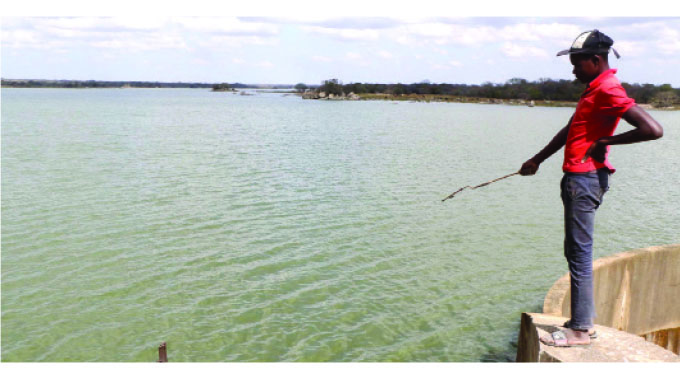
BULILIMA’S 19-year-old Prince Mpofu defies the norm, fishing with a homemade rod and reel on the edge of Mananda Dam. While his peers enjoy the freedom of closing day, Prince is the family’s “breadwinner,” relying on the dam’s fish to sustain his granny and siblings.
As the schools’ academic calendar ended its second term on Thursday, children in Ward 18, Bulilima, amble back home, and for young adults like Prince, every day is a day to work.
Mananda Dam, a lifeline for villagers in the surrounding areas, serves as a source of income and sustenance. Despite winter’s challenges, Prince perseveres, fishing to feed his family and selling to motorists passing by.
“I just got here so I haven’t caught any fish but I won’t leave without a catch. If I catch at least three fish then I’ll go home, today I won’t sell anything, my grandmother and two sisters need the fish for dinner,” the young man tells Saturday Chronicle.
However, the dam’s resources are under threat. Villagers like Prince lament the intrusion of “outsiders,” using massive nets to deplete fish stocks.
The delicate balance between locals and “poachers” is at risk, with tensions rising over fishing rights.
“The fish is hard to catch in winter but I barely go home empty handed, each day is different but with luck I catch a few which I sell or take home. I started fishing here when I was about nine years old so I know a few good spots where the fish is easier to catch.
“But over the years we have been having problems with outsiders that come with huge nets and catch fish in huge quantities. They are finishing all the fish and soon we will have nothing,” bemoaned Mpofu.
For Owen Tshabalala, another native of Ward 18, fishing is a means to support his family. As a source of income, fish sales help him pay school fees for his children, and the dam’s water serves his livestock year-round. Yet, even as the dam nourishes villagers, concerns grow over the diminishing fish stocks.
“Teachers and lecturers at Solusi High School and Solusi University, motorists driving to Tsholotsho and Bulawayo are our major customers. On a good day, I catch fish which my daughters and wife sell for about R100. For someone like me who is not employed, the fish are a source of income to pay school fees for my kids.
“Our livestock also have a place to drink water all year round. The water levels at Mananda Dam are good even in the dry season but the fish stocks are depleting, maybe it’s because many people are coming from outside our villages to fish here. We can’t have people coming to finish all the fish and leave us with nothing, something needs to be done,” said Tshabalala.
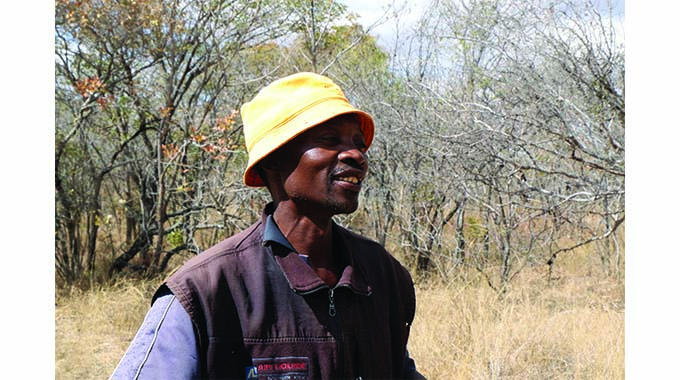
A five-minute drive takes Saturday Chronicle to the village head’s homestead Musa Sibanda, a middle-aged man who doesn’t mince his words about tensions between locals and “outsiders” rising over fishing rights at Mananda Dam.
Sibanda is the secretary of Mananda Fishing Co-operative, a grouping of 30 villagers that work together to fish at the dam to feed their families. He prefers to call individuals that come from outside the surrounding villages that fish at Mananda Dam “poachers”.
“They come and camp in the bushes around the dam and fish at night using nets and rowing boats. We are afraid of them, we are talking about dangerous people who are prepared to do anything just to catch as much fish as they can.
“As co-operative members we take turns to fish at the dam in groups of five and lay our nets overnight but in the morning, the nets, together with the fish will be gone. We have reported the cases to the police on several occasions but the poachers simply disappear and resurface again.
“Mananda Dam belongs to the villagers and we must be the ones benefiting from the fish. The same goes for amacimbi (mopane worms), we also have another problem where people come from all over the country, cut down trees and harvest them leaving us with nothing,” lamented Sibanda.
Homesteads in Sibanda’s village have impressive nutrition gardens thanks to readily available water that they get from a pipeline that supplies water to Solusi University.
“We have tap water that was installed by Zinwa (Zimbabwe National Water Authority) from a pipeline that supplies water to Solusi University so apart from fish, we also benefit water from Mananda Dam that we use for household use and to water our gardens.
“Our appeal is to the MP (Member of Parliament candidate for Bulilima Constituency Cde Dingumuzi Phuti) to supply with various fish species because the fish stock in the dam are depleting,” said Sibanda.
Cde Phuti said he will send his team to listen to the concerns of the villagers in Ward 18 and map a way forward.
A recently opened eatery on the highway close to the dam offers variety of traditional dishes that include chicken commonly known as inkukhu makhaya (road runners) and fish.
“Motorists stop by to eat and one of popular dishes is isitshwala and fried fish. The fish is always fresh, which is why it is a favourite dish for most of our customers,” said Sukoluhle Mlilo, an employee at the rural eatery.


 Online Reporter