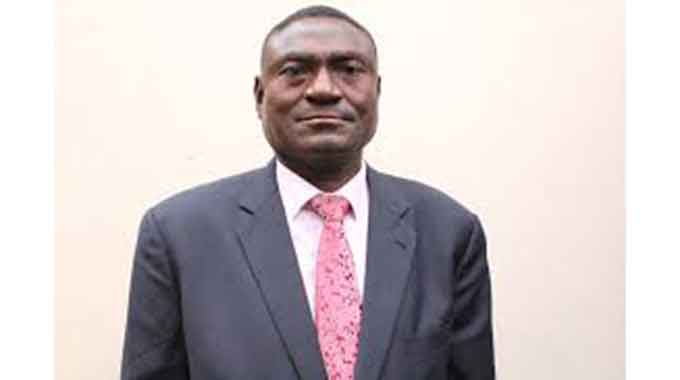
Online Reporter
Lovemore Dube, [email protected]
BULAWAYO City Council is conscious of the important economic impact of sport.
This was highlighted by Bulawayo’s director of housing and community services Dictor Khumalo at a Bulawayo Sports Economy Indaba yesterday.
It was organised by the local authority and ran under the theme: “Unlocking the Future of the Sports Economy.”
In his delivery, Khumalo said: “The city is very conscious of the important economic impact of the sporting economy in creating jobs for various sectors such as sports management, marketing, tourism and livelihoods. This forum will no doubt provide a platform that the city can leverage to promote sports inspired local economic growth and development.”
He emphasised that sporting events, if successfully conducted, result in revenue generation for locals.
“Local businesses, such as hotels, restaurants, and retail shops as well as the informal sector, benefit. It is this revenue that the city is yearning to tap into, through sports development,” said Khumalo.
He said sports infrastructure development to meet expected standards tends to present opportunities to attract investments into the city. Khumalo said that could stimulate the depressed local economy and enhance the quality of life for citizens.
Khumalo said Bulawayo City Council is ready to co-operate with potential partners, institutions, and associations in the development of the sports industry for sustainable community development.
Sport is a key development tool and is part of the 17 Sustainable Development Goals creating employment and promoting wellness as well.
The city council owns most of the sporting facilities.
There have been no big sports facilities built in the last decades and a few patches of land have been set aside for recreation grounds.
Khumalo’s presentation was on the role of the department of housing and community services in sports development and facilities management.
City of Bulawayo, who are affected by low revenue collection due to challenges faced by ratepayers, has done its best to provide a bare minimum in standards for residents.
Khumalo said the city plays a key role in the development and management of the sports economy.
“The City of Bulawayo plays a vital role in the development and management of the sports economy as it is involved in various facets of the sports industry, from infrastructure planning and development as well as providing the requisite administrative institutional framework.
“The city impacts positively in infrastructure provision, development and management of facilities, provision of recreational facilities, hosting of major events, and in facilitating sporting partnerships and collaborations. This important role has a significant impact on the city local economic growth, jobs creation as well as community development. The city also provides facilities for amateur sporting activities for leisure so as to enhance the healthy and well-being of its citizenry as well as provision of recreation centres such as parks for relaxation,” said Khumalo.
It is his department in which the mandate for the provision and maintenance of public sporting infrastructure lies.
The Town Planning Department like others, play significant roles with it ensuring that the land to accommodate sporting infrastructure is properly designated in line with proper planning.
They ensure such land is serviced with water, sewer, roads, energy and telecommunications infrastructure.
Khumalo believes there is room for sport to grow in Bulawayo.
“There is potential to diversify the sport by adding more sporting disciplines in the city through collaborations and capacity development,” he said.
Khumalo said the city is invested in building and maintaining infrastructure such as stadia, arenas, sports fields and swimming pools which all play host to several sporting events.
He confirmed that the city developed recreational facilities such as parks, youth recreational centres and community grounds largely in old suburbs.
“These facilities are lagging in new residential areas mainly due to resource constraints. These centres encourage sports participation by the youths at a tender age and promote physical activity and healthy lifestyles, keeping the youths occupied and away from potential vice and the drugs menace,” said Khumalo.
He noted that the spectrum of facilities puts Bulawayo in a vintage position to host major sports and national events.
“Besides the ongoing professional soccer games played under the Zifa, PSL leagues Banner, some major tournaments have been successfully hosted in our venues previously in the city and these include the:-
“All Africa Games 1995, Cosafa Games, Cricket Test Matches, Region 5 Youth Games 2014, CANA Zone 5 Swimming Championships 2017, boxing tournaments, Squash Federation Games, basketball tournaments, marathons, car racing and golf tournaments,” said Khumalo.
Khumalo said with sports thriving in Bulawayo, support industries had been established.
“There is also demand for services by schools for sporting gear and equipment by pupils, which can sustain the industry. In this respect, more sporting disciples undertaken in the city are viewed as a catalyst to economic development. There is potential for strengthening the manufacturing sector in the production of sports equipment gear, apparel and footwear for consumption in the sports economy,” he said.
Several prominent Zimbabwe sports personalities have emerged through the city council’s deliberate position on facilities. Among them are Peter Ndlovu, Madinda Ndlovu, Zebron Magorimbo, the late Collin Williams, Pat Mckillop, the late John Love, Boy Ndlovu, the late Majuta Mpofu, George Ayibu, the late triple jumper Elijah Ngwenya, Glen Taute, Ringo Star, Thamsanqa Dube, Elvis Moyo, Dumiso Khumalo, Nsikelelo Mlauzi, Brendan Dawson and Ernie Noble.