Online Reporter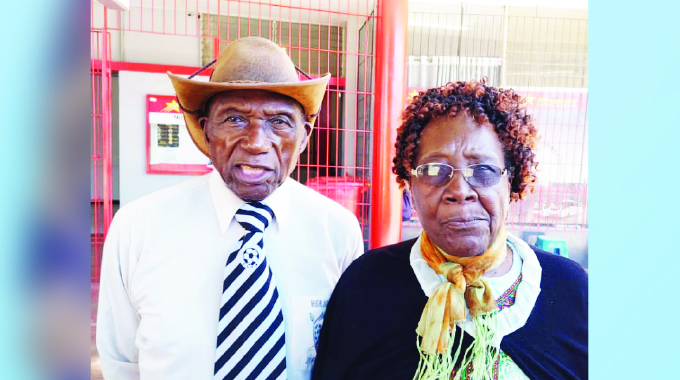
WHO would agree to take over a former national soccer league champion and Chibuku Trophy winner with just nice cents in its bank account?
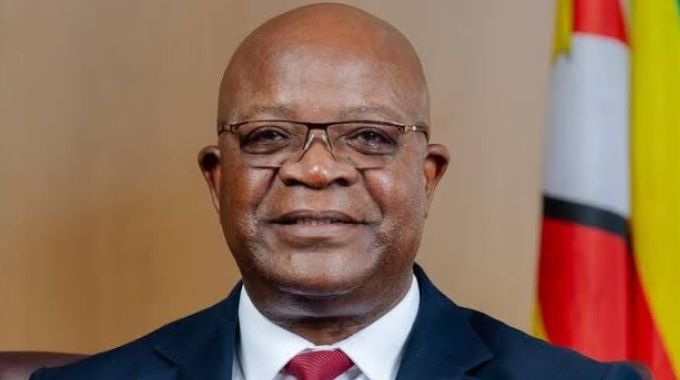
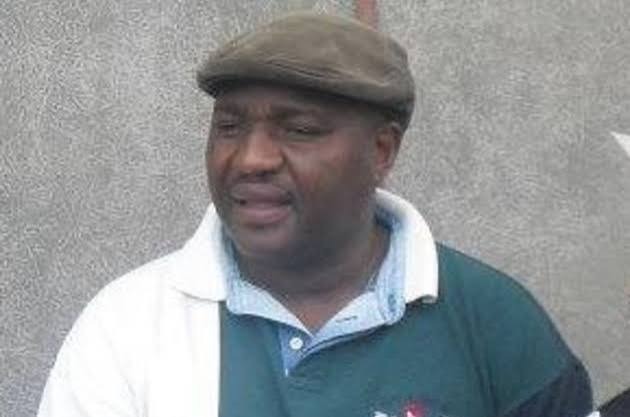
That sounds like a fairy-tale but Enock Mangena, Ndumiso Gumede and Mike Gumpo did the unthinkable in 1978 when they agreed to executive posts at the country’s longest surviving Premiership side, Highlanders Football Club when it was in the financial doldrums. The trio went on to build Bosso from such a financially sorry sight to a formidable force.
At one stage they raised Highlanders to an institution that was flying to away matches in Harare, had $92 000 in its coffers and was able to buy a town house and convert it to an office in Bulawayo’s Central Business District (CBD).

As if that was not enough, Highlanders became the first football club to buy a sports complex for communing by the membership and community and another property, a house in Luveve 4, a medium density suburb for players.
But it is the wisdom of the three men and their executives that along had other members like Josiah Nxumalo, Jahalamajaha Dlamini and Shadreck Sibanda that Bosso stands out as a model despite its perennial begging bowl syndrome.
Gumede and Mangena were the loud mouths at the Stanley Square meeting. They raised a number of issues and demanded answers as they wanted the South Zone Soccer League side to be at a better level.
When club directors who included Elijah Ngwane, Nick Mabodoko, who went on to become a mayor for Bulawayo and Jonathan Themba Mhlanga (JT) opened the floor for nominations for positions, Gumede and Mangena were unanimously installed chairman and secretary.
“So Gumede and myself were nominated and we accepted. Back then the chairman and secretary would be allowed to look for their own treasurer and we settled for Mike Gumpo whom I knew. He was working at Barclays Bank.
“We just had nine cents in the account. It was a mammoth task for us, I remember changing banks from CABS to Barclays. Those were trying times for the club, it was at its lowest and good performances, unity of purpose were key to finding our way. We had robust discussions, the three of us in the executive. The vision for a better Highlanders for all bound us together, no one saw a gap to enrich himself but we all wanted the club to prosper,” said Mangena in a rare interview with Sunday Life on Thursday.
During those days clubs shared gatetakings and that became a lifesaver for Highlanders. At times they would not be having money to pay Pelandaba Bus Services, the club’s official transporter back in the day.
“It was so bad that we could not afford to hire Pelandaba. We would ask to be transported to our next game and pay out of our share of the spoils after the game,” said Mangena.
He said crowds improved with the club led by players like Majuta Mpofu, Douglas Mloyi, Lawrence Phiri and Tymon Mabaleka playing good football.
“But in Majuta we had a problem kid who would refuse to come to training and say he is tied up at work. I would be tasked with fetching him either from home or work. All the way to camp, he would be saying he is in bad health and will not play, but get to the field, he would be a marvel for all and win us the game,” said Mangena.
Mangena’s first big win as Highlanders secretary was the 1980 Chibuku Trophy, 4-0 at Rufaro Stadium against a star-studded Rio Tinto that had the likes of Robert Godoka, Raphael Phiri, Wonder Phiri, Joshua Phiri and Joseph Zulu.
They went on to beat Dynamos in the four-team Heroes tournament in which Caps United and Hwange were the other participants. Highlanders won 3-1.
They were, however, a no contest for Caps United who beat them 8-3 on aggregate in the two-legged Rothmans Cup final played with Peter Nkomo away at the Moscow Olympics.
With breathtaking football on the pitch, crowds swelling, bank balances improving, Bosso became a club that decided to think outside the box and invest in real estate.
“Gumpo was a man of vision. He is the one who had financial brains and suggested that we invest in property to save on accommodation ahead of matches.
“But among the first things he did was to suggest that we move our offices from eMkambo in Makokoba to the city centre. So around 1980-81 Highlanders rented an office at the CABS Building on Lobengula Street and Sixth Avenue. We staffed it with a lady who was doing administrative work and selling club membership cards. It was a milestone achievement for the club, as we continued to be a better structured and administered institution,” said Mangena.
Five years later Highlanders bought a property on 50 Robert Mugabe Way, formerly Grey Street, and equipped it with more staffers.
“In no time Gumpo who was connected on the business scene was telling us about a sporting club being available and we did not think twice about that. We envisioned a situation where our people could come together to socialise, talk about their club, see their children train and play in a variety of sporting disciplines. We saw it as an opportunity to build hostels to house players, a gym, hall of fame, a Highlanders home. We got the clubhouse and bought the Luveve house to lessen expenditure on camping before constructing hostels at the clubhouse,” said Mangena.
In doing that Bosso became the first club to invest in real estate and own offices at a time when most clubs met under trees, or behind vehicle boots or at shops’ backyards. It continued to set an example with an annual general meeting with audited financials and activity reports from the chairman with members debating robustly and having a right to vote in members of the executive.

Accountability and transparency are corporate governance tenets inherited from past generations where selfless men served the club with distinction.
There were fewer incidents where members were accused of pilfering unlike in the last two decades at the club.
Mangena credited Gumede for coming up with the logo Highlanders uses.
“Gumede was intelligent and innovative. He came up with the logo the club uses today. It was perhaps through research or picked up in tours we undertook to Botswana, Swaziland, Malawi and Zambia,” said Mangena.
As Bosso’s profile rose, so did the individuals’ personal resumes get enhanced.
“I became very close to Nelson Chirwa. I remember one time I travelled with him to Ethiopia in 1982 with the Warriors that had players like Douglas Mloyi,” said Mangena.
Bosso won the 1984 Chibuku Trophy, the BAT Rosebowl in 1985, a clean sweep of silverware in 1986.
“Highlanders had become a national symbol, it had grown in stature and its loss was felt in every corner of Zimbabwe. During our time we could lose to any other team, not Dynamos and Zimbabwe Saints. I remember we had a curse against Caps United, no matter how good we played we rarely managed to beat them.
“In the mid-1980s we were able to assemble a very good team with very talented players and we started beating Caps United and collecting silverware and 1986 was a great year for us as we won most of the knock-out tournaments,” said the former Emakhandeni Primary School headmaster who introduced several sporting disciplines there.
Mangena said at one time, they were almost filled with tears of joy with his colleagues when the bank balance read $92 000.
“We could not believe it that from a club we inherited with a paltry nine cents, we had $92 000 at the bank, this was a result of hard work, commitment and good rapport with members, supporters, technical team and players. When there is unity and a belief to uplift the club, the result is one, success,” said Mangena.
Highlanders toured the then West Germany in 1987.
“It was a learning curve for the club. So much benefit accrued from that exposure and we realised that one major cost centre for the club was transport. We negotiated for buses which were delivered the following year,” said Mangena.
He could not seek re-election in 1988 feeling after a decade, of being Highlanders’ errand boy, he had to turn his attention to his family, to support his wife Alma nee Dungeni who had since around 1971-72 been there for the family.
“It was time to support my wife raise our children Sihle, Nqobile, Dylon and Fezile. I had been on the road for a long time on football-related business starting from my time in 1971 when I was secretary of Hayilanga FC in Gweru with Enock Nyoni a former head at Inyathi Mission the chairman,” said Mangena.
Hayilanga FC was a team they formed in Gweru, made up of those who supported Highlanders back in Bulawayo at a time the team was just an ordinary outfit with just the Bafa, Townshend and Butcher, Stanley and Livingstone and Towungana Cup in their medals’ cabinet if it existed at all back then.
The team contributed in its small way in terms of resources and players.
“If Highlanders came to play in Gweru we assisted. We had players like Gibson ‘Ndizamtshina’ Sibanda and Nduna who would play for Hayilanga FC on Saturday and catch the evening train to play for Highlanders the next day. After the match they would catch the evening train back to Gweru. During those days we were all committed for the sake of a better Highlanders,” said Mangena.
Mangena was born in Ensindeni (Fort Rixon), Matabeleland South Province on 12 May 1940.
“The date of birth was arrived at when I was already a teacher. My parents had not managed to get me identification papers, so they had to turn back the hands of time and look at other occurrences around my time of birth before they settled on 12 May. So soon after my birth it is said my parents took me alongside my two elder sisters to live at a farm in Somabhula where my father worked. I remember looking after sheep with black heads and calves.
“At the age of 11 I got a place for my Sub A at Msipane Primary School at a place we called Mabhazule (Mapanzure) in Zvishavane. I lasted a term and refused to go back there and the following term I stayed with an aunt from my mother’s side but did not go back the following year. I went to Dorset Primary School and in 1953 I was at Ngungumbane in Mberengwa with a relative pushing up Standard Two,” said Mangena.
At Ngungumbane he said pupils rarely went into senior grades as they were forced to go and look for work, in most instances only those belonging to the Chief’s family went beyond primary school education.
Mangena later proceeded to Solusi for his secondary education where he went up to Form Three after his benefactor Florence Molene moved up north to work in Zambia.
That forced Mangena to drop out and move to Gweru to work as a temporary teacher.
“I was good in Mathematics and singing which were her passion. She paid my fees until she left for Zambia and I ended up a temporary teacher where I would coach sports in Gweru. In football I was an attacking player and could play any position because I used both feet. Growing up we did not play positions, we kicked the ball around, only later when I was at teacher’s training college in Mutare did I learn positions,” said Mangena.
A Mr Loveridge who inspected his teaching practice in Gweru facilitated that he trains as a teacher in Mutare.
After graduating Mangena taught in Gweru and moved to Bulawayo in 1972.
He recalls coaching former Go Beer Rovers’ Danny Mahaso at Ascot Primary School, former Bosso chairman Ernest Sibanda and Madodana “Horsepower” Tshabangu at Helemu Primary School in Njube.
Yes, administrators are legends and yesteryear greats too.