Online Reporter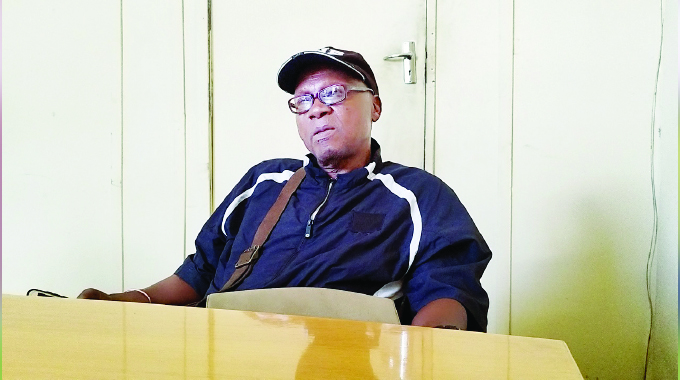
WE continue our interview with Cde Cecil Banda real name Dingani Ncube, the former commander of Victory Camp (VC) in Zambia and Brigade Chief of Logistics for the Gwayi River Mine Assembly Point after the ceasefire period. In this week’s instalment Cde Banda tells our Assistant Editor Mkhululi Sibanda (MS) about his training in the Soviet Union. Cde Banda specialised in arms caches and military logistics, especially in a guerilla warfare situation. Below are excerpts from the interview. Read on . . .
MS: In our last interview you were talking about your trip to the then Soviet Union, may you resume your narration from there?
Cde Banda: When we arrived in the Soviet Union we were taken to a military base that was about 20 kilometres from Moscow, the capital. Unlike other camps in the Soviet Union that housed other liberation movements such as the Frelimo of Mozambique, the ANC of South Africa, Swapo of Namibia, we were the only ones there. Also, there were no other groups from Zimbabwe. The duration of our training was nine months, but we did our pass-out parade at Simferopol, which is in Ukraine. After the pass-out parade, we returned to our base and then went back to Moscow, from where we were flown to Zambia.
MS: Give us the breakdown of your training, what did it involve?
Cde Banda: We covered a lot across the military spectrum, but each one of us had his area of specialisation. While we were thoroughly taken through combat tactics, weapon handling covering a number of, I specialised in the storage of arms and ammunition. We also did command, how to deploy troops and conduct on the battlefield. As for Tshangane (late Jevan Maseko), who was the leader of our group he was there to command at a very high level. Tshangane had been taken from Morogoro in Tanzania where he was an instructor. We were also all taken through political orientation. It was shocking to sit and listen to a Soviet telling you about Rhodesia, the regime’s structures and installations. At some point, one got the feeling that those Russians knew more about Rhodesia than us. We were impressed with their military intelligence gathering, it was brilliant.

MS: You spoke about specialising in weapon storage, take us through that.
Cde Banda: We were fighting a guerilla war where in the field there were no store-rooms to keep our military hardware. From our group, there were three of us who specialised in military logistics. Besides myself, the other two were Cdes Ben and Mosquito. So, we were taught how to store arms underground to avoid them being affected by the forces of nature such as rust. There was a time when I thought that was classified information, but anyway, it’s important to make people know some of these things.
MS: Yes, go on.
Cde Banda: When storing or caching arms you need thick grease and thick plastic covers. Very hard plastic cover. You also need trunks. You apply grease to your firearm, an AK-47 for example and then wrap it with plastic. After wrapping it with plastic you also apply that thick grease around the wrapped weapon or weapons. After doing that you place them in a trunk or box. The trunk should also have been applied with grease in and outside to avoid it being attacked by rust and even termites. The trunks are then placed in a hole that has been dug as if preparing a grave. After digging that grave like hole, you further dig a cave-like trench where the trunks would be placed. That way, your weapons can stay in that state for years to come. You do the same with your rounds of ammunition, missiles, landmines and so on. It might sound easy but we had a programme designed for that and we went through it.
MS: That is very interesting.
Cde Banda: After burying your weapons you then camouflage the site and do a sketch of the area. Sketching is meant to remind yourself of the cache and also for others who will be directed to pick up the weapons. In choosing the spot to conceal the weapons that place or spot should be near features that cannot be removed either by human beings or forces of nature. If you cache your arms and rely on trees as landmarks, there is a danger that you might find having been cut down on your return. You, the person who cached the arms and worse for those who will be ordered to collect them would then get lost. So, the landmarks should be big rocks or other features that cannot be victims of human beings or weather forces.
MS: Above, you were talking about your return from the Soviet Union, where were you deployed then?
Cde Banda: When we returned to Zambia it was during the détente period where there was a cessation of arms. When we got to Zambia the ZPRA Chief of Logistics, Cde Report Mphoko had moved to Mozambique to be part of the senior command of the Zimbabwe People’s Army (Zipa), which was an amalgamation of ZPRA and ZANLA forces. Although the détente was in full force, behind the scenes we were building up for the war. I was therefore one of the combatants who were sent to a ZPRA base near Kariba called Sinazongwe. There were many cadres based there. However, some had crossed the Zambezi River into Rhodesia for small missions such as sabotage. The commander of that base, Cde Dan had before the détente been operating in that area. As someone who always wanted action, Dan would send guerillas to intimidate the enemy such as stealing boats docked along the Zambezi as a way of inflicting pain on the regime forces, he just wanted the enemy to keep guessing what would happen next.
MS: Under such conditions how successful were their missions?
Cde Banda: At the end of the day it was a tragedy. One evening Dan himself in the company of Bhubhudla Khumalo and Mosquito went on that mission to get the boats. That was the last time we saw and heard from them. Later on the following day, there was a broadcast by the Rhodesians that they had killed terrorists and it was apparent they were referring to the three. It seems they got into an ambush. Their bodies were never recovered, it is like they just disappeared from the face of the earth. It was a mission that failed. After that incident, we changed the position of our base for security reasons. I was later recalled back to Lusaka.
MS: Before you talk about being deployed back to the rear in Lusaka, did you have weapon storage facilities at the front?
Cde Banda: Yes, we did. You know people always talk about the battles that were fought and the arming of the forces without looking at where the weapons were coming from. Comrades were just seeing weapons being given to them, but some of us who were in the logistics kept big secrets about the ZPRA arms. You also hear people downplaying the role that the late former Vice-President Mphoko played in the execution of ZPRA operations. Then coming to your question about the storage facilities, yes we had them, big ones for that matter. Mphoko is the one who initiated the identification and construction of those secret sites, the underground armouries. But those storage facilities were known by a few people, us in the logistics department. They were kept a secret because in case of a comrade being captured, there were chances of him leading the enemy to our facilities.
MS: Where were those facilities located?
Cde Banda: We had two at Siajumba near the Zambezi River and another one at a place called koMbhunu. The one at Siajumba was a big facility, its size was that of a large room, and it could have been as big as a lounge for some houses. We dug a deep hole and Cde Mphoko brought an old guerilla who had trained in the 1960s, Cde Sikhumba Dlodlo, who before joining the armed struggle had been a bricklayer. Cde Dlodlo then started doing brickwork after which he plastered that underground facility. It was a nicely designed underground storeroom. Weapons of all types were brought in and stored there. The weapons were not only your AK-47s, bazookas and landmines, but heavy ones such as anti-air like Zegues. At some point, I was one of the two people who looked after that facility. When the time came to collect the weapons after there had been a raid on another underground store-room koMbhunu, the Zambian Defence Forces brought four trucks to load the weapons. It was a huge arms cache.
To be continued next week with Cde Banda talking about the Rhodesians raiding their bush storeroom and his deployment to VC where he became commander.