Judith Phiri [email protected]
THE Minister of State for Provincial Affairs and Devolution for Bulawayo, Judith Ncube has said the city views agriculture and industry as two sides of the same coin, highlighting the importance of strengthening linkages between the two sectors to drive economic growth and development.
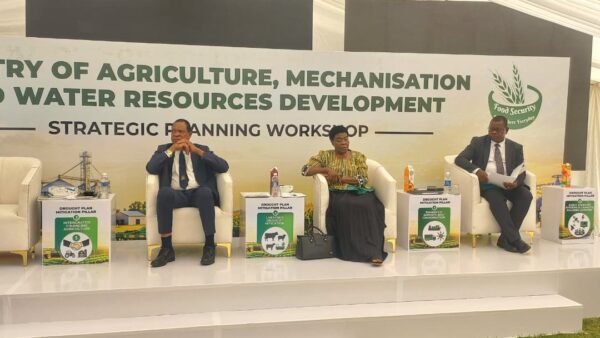
Speaking at the Ministry of Agriculture, Mechanisation and Water Resources Development’s five-day strategic planning workshop in Bulawayo on Monday, the Minister said agriculture and industry were interdependent.
“There is no industry without raw materials, and agriculture is the single biggest supplier of raw materials to our manufacturing sector. Maize and wheat feed our milling industry. Cattle supply our abattoirs and leather industry. Milk sustains our dairies.
“Cotton supplies our textile mills, and soya bean and sunflower supply our oil expressers and stockfeed manufacturers. When the farmer produces, the factory runs. When the factory runs, jobs are created, value is added at home, and our import bill falls,” she said.
“That is why we in Bulawayo see agriculture and industry as two sides of the same coin. Every tonne of grain, every head of cattle and every litre of milk that reaches a processor in this city is value added in Zimbabwe, rather than exported raw or lost.”
She said the Matabeleland region, with its strong livestock tradition and its suitability for drought-tolerant small grains such as sorghum and millet, is a natural partner to Bulawayo’s agro-processing capacity.
Minister Ncube said the strategic planning workshop came at a critical time with the Meteorological Services Department having warned of a very high probability of El Niño during the 2026/27 season.
“In Bulawayo and Matabeleland, we know the meaning of drought all too well. We have lived through dry dams, water rationing and lost livestock. We therefore follow the work of this Ministry with keen interest.
“As Bulawayo, we are aware of the six-pillar drought mitigation strategy approved by Cabinet. It covers strategic and household grain reserves, reducing post-harvest losses, climate-smart agriculture, a new agricultural financing model, livestock drought mitigation, and trade, coordination and early warning,” she added.
“We welcome this strategy. It shows that Government has chosen to prepare early rather than react late and we look forward to the presentation on its implementation.”
The Minister emphasised the pillar on post-harvest losses, because this is where the city can make a direct contribution.
She said too much of what farmers grow is lost after harvest, through poor storage, pests, delays and the lack of processing.
“Proper storage, processing and value addition are among the most effective tools against post-harvest loss. Grain that is properly stored, milled and packaged lasts longer and travels further, so it can feed families through a dry season. Bulawayo’s processing capacity, its warehouses and its rail links can help protect every harvest our farmers work so hard for.”