Chronicle Editor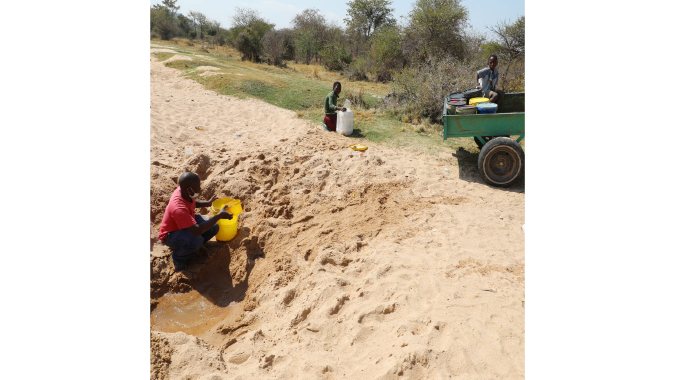
Sukulwenkosi Dube-Matutu, Chronicle Reporter
Garanyemba Clinic in Ward 13, Gwanda District does not have a reliable water source, forcing patients and their relatives to fetch it from a nearby river.
Most parts of the ward have been experiencing water shortage for years, a development that has also affected two local schools Garanyemba Primary and Secondary Schools.

The area is generally dry and efforts to drill boreholes have yielded nothing. Community leaders in the area feel that the best solution to their problem will be to install a piped water system which will draw water from a nearby river to the three institutions and community.
A Chronicle news crew visited the area last Friday.
Community members said they were fetching water from Pendi River, taking it to the clinic for their sick relatives.
Some expecting mothers are now avoiding the waiting mothers’ shelter in order to escape the burden of collecting water. Eight villages rely on Garanyemba Clinic.
Ms Ntombiyelanga Nyathi (50) from Nsimbi Viilage said expecting mothers had to bring their water or rely on their relatives to provide it.
“We have a serious problem of water here at the clinic as we have to collect our own water. As I speak, this morning we went to collect water for us to sanitise our hands when getting into the clinic. Expecting mother have to fetch their own water so it’s either they do it for themselves or their relatives bring it,” she said.
“In March my niece was at the waiting mothers’ shelter and she had to collect her own water from the river. After she delivered her baby, we had to collect the water for her as she couldn’t manage. We had to bring her at least 40 litres of water per day. It becomes very difficult for people who stay far and those who are critically ill as they have to do it themselves.”
When the news crew got to the clinic there were no patients at the waiting mothers’ shelter.
Garanyemba Clinic health centre committee chairperson, Mr Gezani Dube said nurses were also facing water problems.

Mr Dube said various organisations made efforts to drill boreholes, but could not reach the water.
“Efforts have been made to drill boreholes but they only get hard water. Last week a 75 metre borehole was drilled at the clinic but we hit a dry hole. We are now forced to instruct patients to collect their own water but we exempt those who are critical. Sometimes we ask people who visit the clinic who won’t be ill to collect water to cater for the critical patients. We store this water in water tanks,” he said.
“This tends to annoy some people because they will be coming to seek medication and instead, they are told to fetch water. Expecting mothers who are at the waiting mothers’ shelter also have to collect their own water. Some mothers now avoid coming to the shelter to avoid this burden of collecting water. On a daily basis people who visit the clinic are given five litre containers to collect water so that the clinic can have water for them to sanitise their hands. The hospital staff also have to collect their water from the river.”.
Mr Dube who is also the Garanyemba Primary School Development Committee (SDC) chairperson said when schools were open parents had to bring water for their children to use at the school.

He said some teachers had resorted to hiring people to collect water for them. Mr Dube said pupils had to bring their drinking water from home but others often sneaked out of the school to collect water from river, which was dangerous for the learners.
Garanyemba village head, Mr Mike Ndlovu said people from the area were struggling because of the water crisis. He said it was risky for people to drink water from an unprotected source.
“In this day and age, we shouldn’t be having a situation whereby our teachers, nurses and villagers dig up water from the sand. People shouldn’t be digging up sand to collect water as if they are animals. It’s unhygienic because animals also drink the same water. This problem has persisted for a long time and we wish that relevant stakeholders may hear our plea and assist us. Instead of wasting money drilling boreholes that won’t materialise we need a permanent solution.
“There is a lot of water under the sand along Pendi River. Firstly, we need a sand dam that will help us to harvest the water. We also need a piped water scheme that will draw the water from the river to the clinic and schools and community. We have seen that boreholes don’t work in our area so there is a need for a more suitable solution. It’s important that people have access to clean water, especially now when we are experiencing Covid-19,” he said.
A villager Mr Malakia Dube from Mpatiwa Village said he had to travel three kilometres to fetch water from the river as they did not have boreholes.-@DubeMatutu


 Online Reporter