Chronicle Editor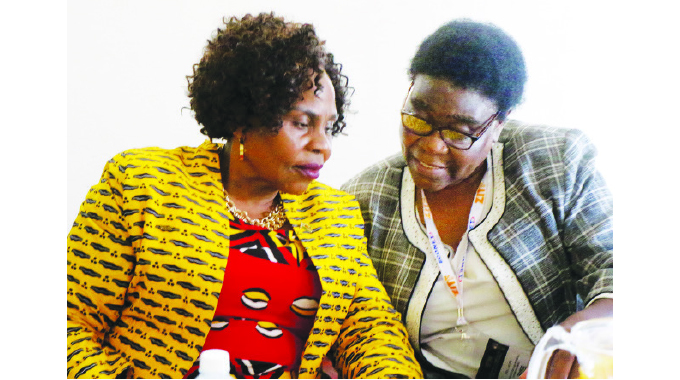
Nqobile Tshili [email protected]
THE Second Republic has been commended for opening up the media space, a move that has allowed people to have unlimited access to information.
Government licensed 14 community radio stations, a majority of them in Matabeleland region and six commercial television stations and campus radio stations at all the country’s State universities.
Some of the television stations including Zimpapers Television Network (ZTN) Prime, KeYona, 3ktv and NRTV have started broadcasting through satellite television.
Speaking during the inaugural Zimbabwe International Trade Fair Media Indaba held at the National Arts Gallery last Thursday, Fairtalk Communications chief executive officer Dr Qhubani Moyo said the opening up of the media space was pleasantly unexpected.
Fairtalk Communications is Skyz Metro Radio, Breeze FM, and KeYona TV parent company.
He said for nearly 20 years, he had been part of the free-the-airwaves activists who had lobbied for the opening up of the media space to no avail.
Dr Moyo said at one point they were nearly branded “the enemy” after setting up Radio Dialogue which was deemed a pirate radio station.
“We never imagined when we began the fight for the media space that there shall come a Government that will give out so many community radio stations; that will give out so many television stations. This Government has done it, you have outdone yourself,” said Dr Moyo.
He said there is a need for Government to invest in infrastructure that will enable access to new television stations.
“What are the challenges that we have faced as KeYona TV? The biggest challenge that we have faced is that while we have launched as a television station, we are relying on satellite television and on digital terrestrial television. But unfortunately, that platform is not available to many Zimbabweans. When you set up the infrastructure for the public to access these television stations, the Government must understand that it is not just about setting up transmission sites. The set top boxes are part of the infrastructure,” he said.
“You cannot have transmitters that are separated from set top boxes because both of them are gadgets and they enhance access to the platforms. I hope Government is not going to bring set top boxes that they are going to sell to us.”
In response, Information, Publicity and Broadcasting Services Minister Monica Mutsvangwa said Government’s finances were overstretched to provide set top boxes (decoders) freely.
“We have licensed all these commercial television stations, community radio stations and community radio stations and we need that content to reach our population. This is an issue that we are going to look into. But it is easy to throw things at the
Treasury but Treasury is overstretched,” said Minister Mutsvangwa.
“We have given our concerns and we have taken those concerns and at this point we will encourage those with free funds to bring set top boxes to bring them and start selling to people so that they can start accessing that information.”
Information, Publicity and Broadcasting Services Deputy Minister Kindness Paradza said following the licensing of new stations, content creators should produce content that is of high quality to dislodge widely consumed South African content.
He said there should be collaborations between tertiary institutions and content creators in producing the new content.
“We should create content which is of high quality, which you will love instead of the South African content. This is why we have created these colleges. When we were starting in 1990s there were two schools for journalism training, Christian College of Southern Africa (CCOSA) and Zimbabwe Institute of Mass Communication which is now Harare Polytechnic. But now Government has created these other institutions of higher learning which now have the department of media studies,” he said.
“It is now yourselves who should create this good content rather than to say we are watching South African content rather than Zimbabwean content. Give them quality content and they should be able to buy that content.”
Deputy Minister Paradza said Zimbabwe is in a marathon to upgrade the country’s media sector so that it catches up with the region.
He said the opening up of media space should be a launchpad for producing high quality local content.
“The ball is now in your court to make sure you get Zimbabwe exciting. The problem that we have in this country is that we hate ourselves and it’s now up to you young people to change that attitude,” said Deputy Minister Paradza. — @nqotshili



 Online Reporter