Online Reporter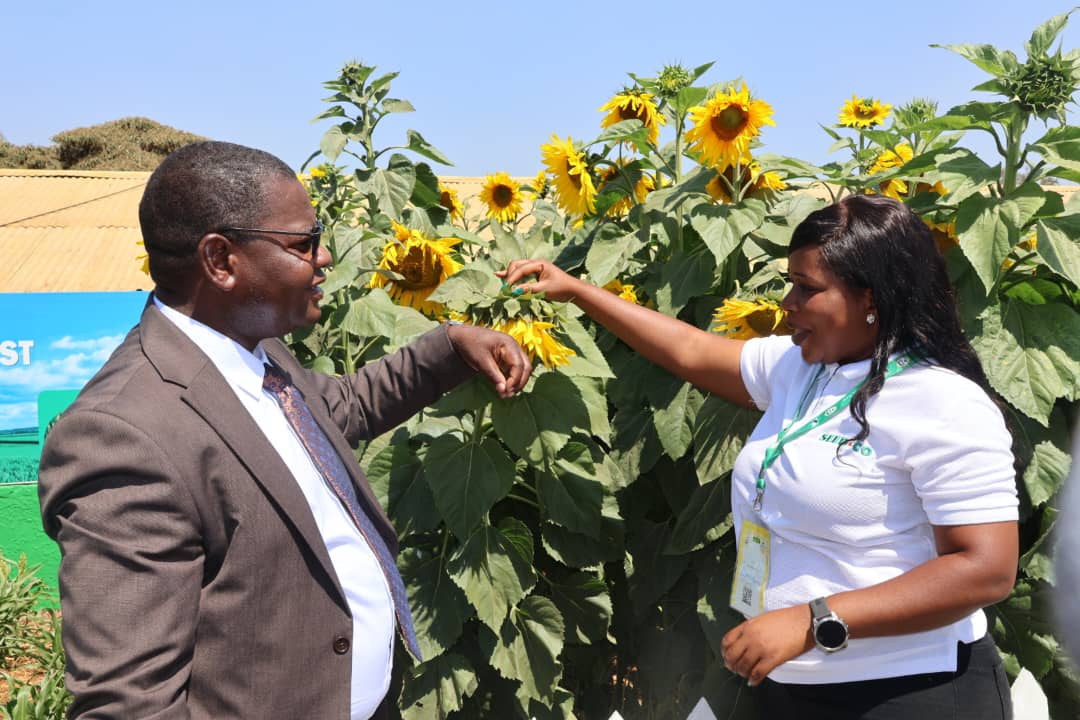
Theseus Mauruki Shambare
Government is urging farmers to adjust their cropping strategies and adopt drought-tolerant crops and fast-maturing varieties ahead of the expected El Niño-induced drought during the 2026/27 summer season.
Agriculture, Mechanisation and Water Resources Development Permanent Secretary Professor Obert Jiri said farmers should select crops and seed varieties according to their agro-ecological regions to reduce the risk of crop failure.
He was speaking during the ongoing 116th Zimbabwe Agricultural Show in Harare, running under the theme “Powering Growth: Where Agriculture, Technology and Commerce Converge.”
Professor Jiri said maize production could face increased pressure in most parts of the country, making diversification into drought-tolerant crops necessary.
“In most areas, we know in Zimbabwe that the suitability for maize is going to be constricted,” he said.
He urged farmers to consider traditional grains, sunflower, sorghum and millets, as well as short-season varieties that can mature within the anticipated shorter rainfall window.
Professor Jiri said Government had engaged seed companies to ensure climate-smart varieties were available to farmers.
“I am happy to say that we have met with most of the seed companies who have aligned to introduce and to deliver to our farmers the climate-smart varieties — short season and medium season varieties — which are appropriate for this season,” he said.
Seed Co Africa has also aligned its varieties with the expected conditions.
Head of Agronomy and Seed Co Africa public relations manager Wendy Madzura said the company would provide sunflower, sorghum and climate-smart maize varieties covering different maturity periods.
She said farmers should spread their risk by staggering planting dates and growing varieties with different maturity periods.
Madzura also urged farmers to intensify water harvesting and conservation practices, including Pfumvudza/Intwasa for small-scale farmers.
Commercial farmers, she said, could use ripping to improve water infiltration, while retaining crop residues as mulch would help conserve soil moisture and reduce evaporation.
“Every drop counts,” she said.
ARDA Seeds general manager for operations Innocent Musiiwa said the company was promoting climate-smart varieties to strengthen national seed security.
“We are exhibiting our range of climate-smart varieties that we are producing,” he said.
He said the company was promoting small grains suited to lower rainfall conditions.
“We have a lot of small grains which can contribute to high productivity despite the marginal rainfall quantities that we are expecting, like our Okashana pearl millet, and we also have Macia white sorghum variety,” he said.
Musiiwa said ARDA Seeds was also promoting Msasa hybrid sunflower.
“On oilseeds we have our high-yielding Msasa hybrid that can actually achieve about 3.5 tonnes per hectare. And that Msasa is also a high oil content variety that can produce about 45 percent of oil once harvested,” he said.
He also urged farmers to consider ZTS265 maize, which he said could perform under moisture stress.
“Our maize ZTS265 variety has been known over the years for being able to produce high yields of up to eight to 12 tonnes per hectare, even subjected to marginal rainfall,” he said.
He said the variety’s multi-cobbing ability made it suitable for moisture-stressed conditions.
“We pride that variety for its multi-cobbing abilities; hence it can produce a lot of grain and maize even grown under moisture-stressing conditions,” he said.
With increased climate risks expected during the coming season, Government and seed companies are encouraging farmers to combine appropriate crop selection, climate-smart seed and improved water-management practices to safeguard production and national food security.