Chronicle Editor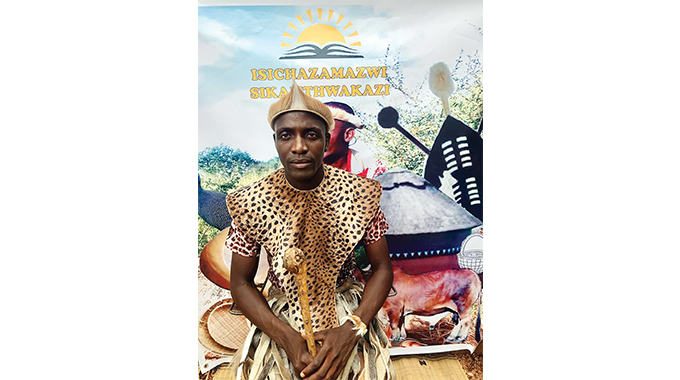
Yvonne Ncube, Chronicle Reporter
The widespread influence of English language is threatening the existence of some native languages.
Some people go as far as equating fluency in English (considered by some as the universal language) to intelligence.
Most of the younger generation are losing touch with their mother tongues as parents scramble or compete to have them spout the Queen’s language, with a nasal twang for added measure.
A number of Africans are now “more English than the British.”
One straightforward way to trace the growing influence of English- which itself borrows regularly from other languages- is in the way its vocabulary has infiltrated so many other languages.
The IsiNdebele language is not an exception.
However, 35-year-old Mr Martin Mlilo has taken upon himself the duty to revive the IsiNdebele language and encourage younger people to be proud of their roots.
In November last year, he initiated a language revival programme entitled “Isichazamazwi” which is literally translated to “defining terms/words.”
Though aimed at achieving the same purpose, the programme is not related to an earlier project called Isichazamazwi SesiNdebele, the Ndebele Dictionary.
Mr Mlilo records short tutorials and videos on YouTube and on his Facebook page both titled Isichazamazwi, where he discusses origins, meanings and usage of IsiNdebele words.
Sometimes he uses short, witty and catchy poems to drive his points home.
Through the tutorials that are up to five minutes long, Mr Mlilo is certain the native language will not die.
Guided by the Ndebele proverb “Isigogo sigoqwa sisemanzi”- which may loosely be translated to mean catch them while they are still young- he pledges to pass his message to a significant number of children especially those at school.
“Isichazamazwi is a programme where we remind each other IsiNdebele terms that are slowly being forgotten and words that are no longer used correctly. The language of our forefathers is slowly being forgotten and improperly used; it is our duty to revive it.
“I started the programme last year in November and my target audiences are younger people in schools because they are still young and it is easy for them to adjust and grasp concepts. Also, that is where the revival should start so that they are able to pass it on to the next generation,” he said.
Mr Mlilo also recites poems in the language which he posts on his social media platforms.
“I can recite poems explaining some of the Ndebele words because poems are interesting and it’s easier to master.
“What I do is record and upload short informative videos on my social media pages since accessing learners in school at a time of this pandemic is a challenge.”
“I came up with this idea when I was in high school. I used to enjoy IsiNdebele lessons where we were being taught about all the Ndebele traditions, culture, foods and practices but I noticed that most of those traditions are no longer prioritised nowadays or used,” said Mr Mlilo.
He said he decided to move around schools teaching IsiNdebele words that are no longer spoken correctly and showcasing the Ndebele dress code and food.
“I have been moving around schools but most of them have asked me to seek permission from the Ministry of (Primary and Secondary) Education and I’m happy to say I’m currently working on that. I have also packed some traditional food items that are no longer common to showcase to children so that they know what I am talking about. Some of which include umfushwa (dried veggies) amongst others.
“I am also working on making this a profitable business where I sell my produce. As of now I have come up with a dorofiya juice from dorofiya and it’s in the process of purification,” said Mr Mlilo.
Originally from Nkayi, he did his primary education at Tsheli Primary School. He proceeded to Nketa High School in Bulawayo for Ordinary level and went to Hlangabeza High School in Nkayi for Advanced level.
Mr Mlilo is a self-employed welder and is studying boilermaking at Bulawayo Polytechnic.
“I have a Facebook page called ‘Isichazamazwi’ as well as a YouTube channel. Language is always changing, evolving, and adapting to the needs of its users so it is our duty to make sure that we teach ours to the younger generation to ensure its continuity,” said Mr Mlilo.
He called on adults to help in restoring IsiNdebele language and culture for future generations.-@SeehYvonne


 Online Reporter