Sidumisile Mabena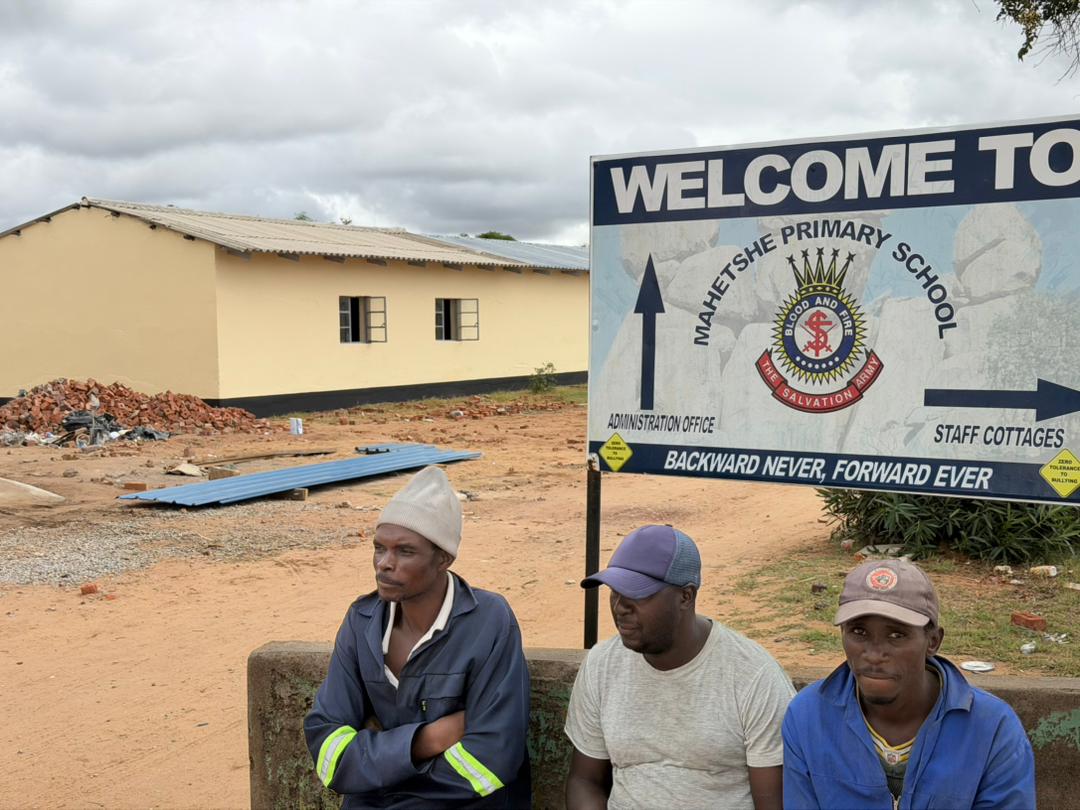
Andile Tshuma in Maphisa
FOR years, science lessons in some rural schools in Matabeleland South existed only in theory, learners memorised experiments they had never seen, let alone conducted, test tubes, Bunsen burners and computers were concepts confined to textbooks.
But a new chapter is unfolding.
Government-led legacy projects have delivered 40 fully equipped laboratories across seven districts in the province, marking a significant step towards improving science, technology, engineering and mathematics (STEM) education in rural communities.
The development is expected to bridge long-standing gaps in access to practical learning facilities and open up new academic and career pathways for rural learners.
Permanent Secretary in the Ministry of Primary and Secondary Education, Mr Moses Mhike said the initiative will significantly enhance the teaching and learning of STEM subjects.
He noted that the programme is part of broader efforts to ensure equitable access to quality education across the country, particularly in historically marginalised areas.
Provincial director for the Rural Infrastructure Development Agency (RIDA), Likhwalethu Ndlovu, said investment in rural education infrastructure is critical, as Matabeleland South has been producing very few students qualifying for STEM-related programmes at state universities.
“This has largely been due to a lack of laboratory facilities, which created barriers to inclusive education and limited opportunities for learners in rural schools. Investing in rural school infrastructure to support STEM is investing in the future as we project that after such interventions, in few years, rural schools will be able to also produce candidates for STEM degrees and other programmes,” he said.
Government is now targeting provinces such as Matabeleland North, Matabeleland South and Mashonaland Central, which have consistently recorded low pass rates in STEM subjects.
The Permanent Secretary said efforts are also underway to eliminate zero pass rates in some remote and schools through intensified teacher training and capacity development programmes.
“If we are to share the report on schools that recorded zero pass rates, it will show that most of them are our satellite schools. This means that we should invest more in infrastructure development, upgrade them to regular schools and have infrastructure to house teachers. That way the quality of education will improve for the learner and this is something that we are already doing,” he said.
Mr Mhike added that infrastructure development remains a key priority, noting that long distances travelled by learners to school have contributed to poor academic performance and high dropout rates.
At Mahetshe Primary School, one of the beneficiaries of the programme, the impact is already being felt.
Headmistress Ms Sibusiso Sibindi said in her 20 years at the school and within the community, she had never witnessed such rapid development.
“This is a turning point for our learners. For the first time, they will have access to proper science facilities, which will transform how they learn and what they can achieve. I joined this school in 2006 as a teacher and I’m proud that such a milestone has been achieved when I’m still here,” she said. The school only had 16 classrooms, but now has 26, with an additional 8 classrooms and 2 laboratories under the programme.
Matabeleland South Director for public works engineer Sijabuliso Harold Ncube said the legacy projects will leave a lasting legacy in primary secondary, vocational and tertiary education in the province.
“We are looking forward to seeing our local universities having more of rural learners being admitted to STEM related degrees. This will leave a lasting impact to communities,” he said
The laboratory rollout is expected to not only improve pass rates but also inspire a new generation of scientists, engineers and innovators from rural Zimbabwe, bringing the country closer to its vision of inclusive, quality education for all.



 Online Reporter