Online Reporter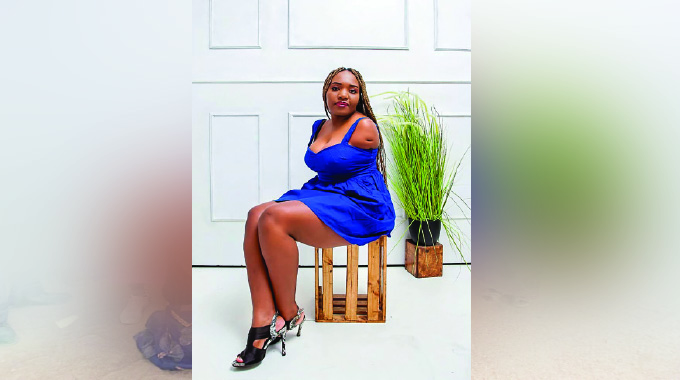
Health and Gender Editor
DAILY tasks such as bathing, cooking, washing, eating and typing on a phone are second nature to most people.
But imagine not having both hands to do these things. For many, it would seem impossible.
Yet for Miss Siphiwe Mbano (27), these tasks come naturally, despite being born without her upper limbs.
Born in Silobela, in the Midlands Province, Miss Mbano was embraced by her family as a precious gift, even though her condition meant she needed extra care growing up. Her name, loosely translated, means “we have been given”, likely a way of expressing gratitude for her life.
When it came time for schooling, Miss Mbano had to relocate to Harare, as rural Silobela lacked facilities for children with disabilities. She enrolled at Jairos Jiri, where she completed her primary education, before moving to St Faith’s High School in Rusape to begin secondary school.
After a year, she transferred to King George VI Children’s Centre in Bulawayo, a boarding and rehabilitation institution for children with disabilities.
“After my O-levels, I moved back to Harare to live with my mother and began a short course in Information Technology, but I didn’t complete it. I later studied digital marketing, but I’m not currently employed,” she explained.
Miss Mbano said she has never fully understood the medical condition that led to her being born without arms, but she recalls her mother sharing how astonished people were at her birth.
“My mother said people from church and the community came to see me, as no one had ever seen a baby like me before,” she said.
While many came out of curiosity, her mother was distressed and confused by her daughter’s condition.
“She questioned what had happened during the pregnancy. She worried about whether I would ever live a normal life, eat, bathe or take care of myself. But one day, she was stunned to see me feed myself porridge using a spoon, with my toes. That’s when she realised I was capable of much more.”
What may seem like a “superpower” to others is something Miss Mbano regards as a natural ability.
“My legs are very flexible. I was born this way. No one taught me how to use my feet, it’s God-given. I can bathe myself, apply lotion, and dress myself. I only need help putting on trousers. I can even scratch my head with my toes,” she laughed.
Miss Mbano is a shining example that disability is not inability. She performs household tasks with ease, cleaning, sweeping, making the bed, cooking, waxing and polishing the floor and doing laundry, all using her feet.
“I also had very good handwriting. Teachers and classmates were amazed to see me write with my toes. Visitors to the school would be taken to my class, just to watch me write,” she recalled proudly.
She said her disability has never hindered her from living life to the fullest.
Miss Mbano now advocates for parents of children with disabilities to give them opportunities to experience life, rather than hiding them away.
“Parents should never hide or be ashamed of children with disabilities. These are the same children who might care for you one day. Allow them to make friends and face the world. It builds confidence. They just need your support,” she urged.
Raised with love and equality, Miss Mbano said she didn’t experience discrimination growing up. Although some children were hesitant to play with her at first, they simply weren’t used to seeing someone without upper limbs.
She dreams of becoming a model, an aspiration she has held since childhood. She hopes to receive training and opportunities to represent brands and participate in pageants.
Like many people with disabilities, Miss Mbano once struggled with body image and avoided sleeveless clothing to hide the stumps of her arms. Over time, however, she found inspiration in others, who looked like her.
“I follow people on social media, who don’t have hands either. I saw a woman confidently wearing sleeveless dresses and asked myself why I couldn’t do the same. Now, I wear sleeveless clothes without shame. No one should feel embarrassed about how they look,” she said.
One of her key inspirations is Chipo Muchengwa, a musician and former classmate from Jairos Jiri, who also has no hands and partially developed legs.
“She taught me how to use social media, to show people that one can live a normal life despite a disability. The first video I posted was of me cooking eggs and it got a lot of views. People were amazed at how effortlessly I used my toes.”
Like many young women, Miss Mbano is in a happy relationship and is hopeful for a bright future.
— @NyembeziMu