Sidumisile Mabena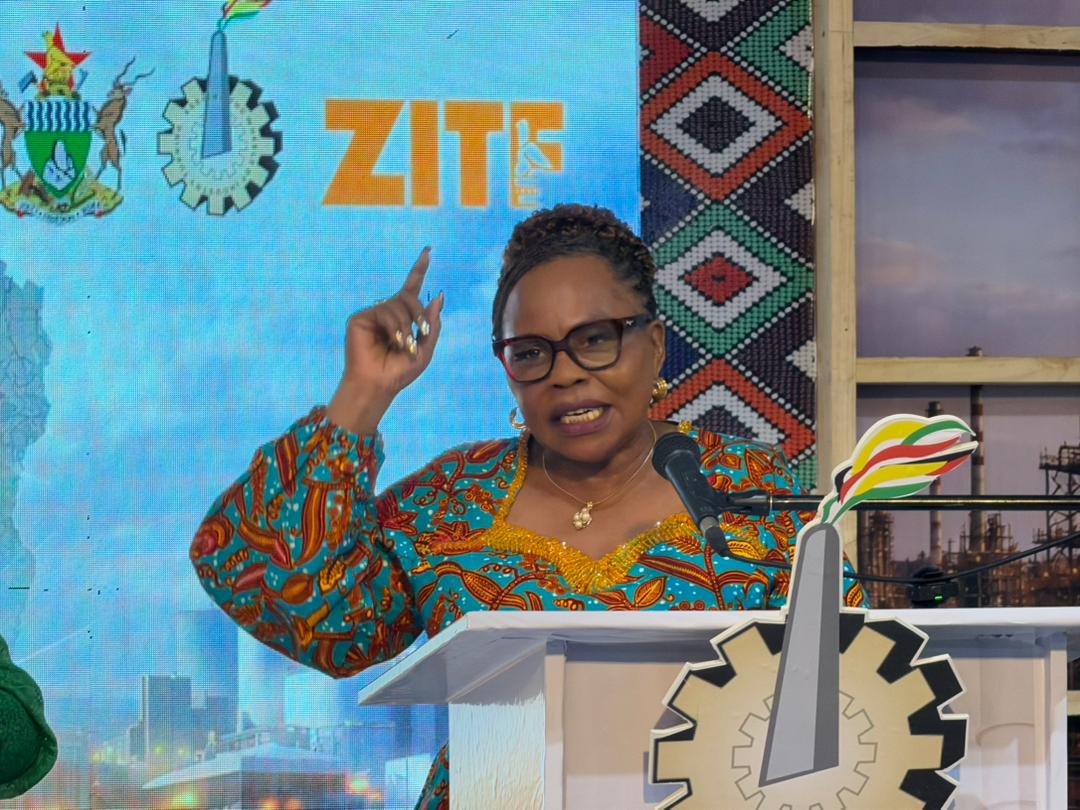
Judith Phiri, [email protected]
MICRO, small and medium enterprises (MSMEs) are playing a central role in Zimbabwe’s industrialisation agenda and remain the entry point for rural industrial development, Minister of Women Affairs, Community, Small and Medium Enterprises Development Senator Monica Mutsvangwa has said.
Speaking at the Industrialisation and Economic Empowerment Indaba held during the Zimbabwe International Trade Fair (ZITF) in Bulawayo, the Minister said MSMEs are the backbone of the economy, contributing significantly to GDP and employment creation.
“MSMEs are the entry point to rural industrialisation,” she said.
Senator Mutsvangwa said under the Small and Medium Enterprises Act [Chapter 24:12], businesses are classified based on employment levels and annual turnover, ranging from micro to medium enterprises.
She said micro enterprises typically employ up to five people, small enterprises employ between six and 14 people, while medium enterprises employ up to 75 people, depending on turnover thresholds.
“These thresholds provide a practical framework for identifying and supporting SMEs as key drivers of economic growth and development,” she said.
The Minister said MSMEs contribute over 60 percent of Zimbabwe’s gross domestic product and account for more than 70 percent of employment, making them critical to livelihoods and local value addition.
“At the same time, we must also highlight the indispensable role which large industry plays in rural industrialisation. Big industries anchor and strengthen the MSMEs around them,” she said.
She said large-scale investors create opportunities for supply chains, subcontracting, skills transfer and broader market access, adding that deliberate linkages between big business and MSMEs were necessary to spread industrial growth.
“What is needed is a deliberate linkage model that connects big producers to MSMEs so that industrial growth does not remain concentrated in a few places but spreads across the country and reaches rural communities,” she said.
Senator Mutsvangwa said one practical strategy is for large companies to outsource specialised functions such as manufacturing, packaging, logistics, maintenance and component production to trained MSMEs.
“This approach not only expands production capacity but also helps to build local enterprise and deepen participation in industrialisation,” she said.
She, however, stressed the need for investment in training, equipment, mentorship and quality assurance to ensure MSMEs meet industry standards, highlighting the importance of certification by the Standards Association of Zimbabwe (SAZ).
The Minister said Government is also strengthening collaboration with tertiary institutions such as Great Zimbabwe University to capacitate MSMEs with technical and innovation skills required for industrial participation.
“We want the technical and innovation skills which are required for industrial participation,” she said.



 Online Reporter