Online Reporter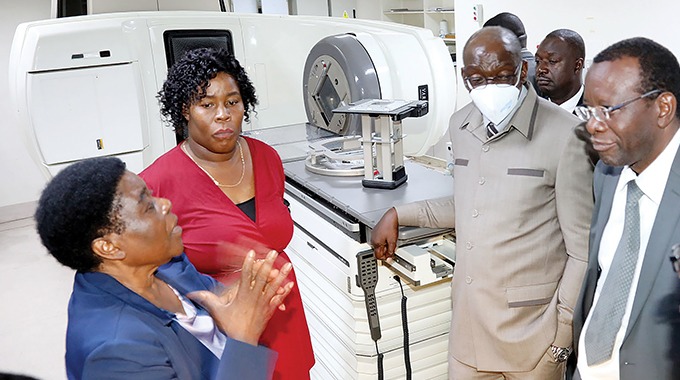
Robin Muchetu, Lifestyle Health and Gender Editor
CLOSE to R1 million is required to buy a new Uninterrupted Power Supply (UPS) machine at Mpilo Central Hospital in Bulawayo that will enable cancer patients to receive radiation sessions uninterrupted by power outages.
Patients undergoing cancer treatment with the radiotherapy machine need continuous power supply as the machinery is very sensitive to power fluctuations and any sudden changes or fluctuations with power damages the machine, experts say.
Already, two of the cancer treatment machines at the hospital are down. This emerged during a visit to the referral hospital by Vice-President Kembo Mohadi on Friday who directed the Treasury to urgently look into the issue and avail the R1 million for the servicing of radiotherapy machines to save lives.
VP Mohadi said critical cancer machinery that services the Southern region must always be functional as patients are incurring huge costs travelling to places like South Africa, India and other destinations.
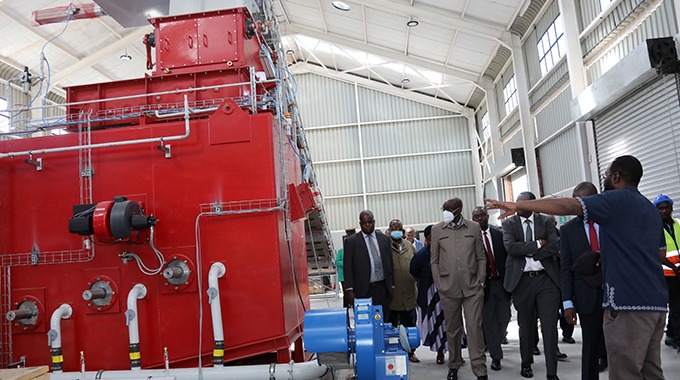
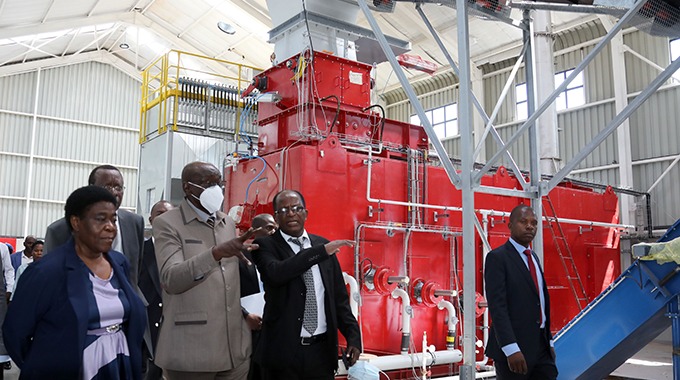
Mpilo Central Hospital chief medical officer, Dr Narcisius Dzvanga, said the UPS at Mpilo Central Hospital requires 24 batteries to keep it functional and the batteries now need to be replaced. He said according to quotations from South Africa, the set of batteries cost just over R1 million.
Dr Dzvanga said the hospital had been told to downsize their UPS machine to match that of Parirenyatwa Group of Hospitals, a proposal that VP Mohadi vehemently rejected.
“That is about US$100 000 needed for the machine. The machine was made like that and it has to run like that. We need to get this machine running, we cannot fail to raise this amount as a country,” said the Vice-President. “Why do they say it (UPS) machine is too big? No, we do not want that, we want the US$100 000 and Mthuli (Minister of
Finance, Economic Development and Investment Promotion) has got to act,” said VP Mohadi.
Almost 50 percent of the cancer patients that visit Mpilo Hospital require radiotherapy but these are not being treated as the machines are down with revelations that the radiotherapy machines were procured and left in storage for many years, causing some of the faults and deterioration of the machines.
The machines are said to have been locked up at Beira, Mozambique for three years before they were eventually delivered to Bulawayo. All patients requiring radiotherapy are being referred to Parirenyatwa Hospital in Harare and are having to endure long waiting periods of up to five months as the hospital is overwhelmed by the demand for the service.
VP Mohadi said it was too much of a burden for one public institution to be treating cancer in the country.
“Parirenyatwa cannot carry the entire nation, it is impossible. We need to have other referral hospitals offering the same service. People are dying every day; they are dying because we cannot avail US$100 000 to have these things fixed. We need to get these machines to function, people pay a lot of money to go to India and the Government also pays a lot of money too, that is foreign currency, which is being wasted,” said VP Mohadi.
He said if the ministry wants to buy new machines its fine but what is urgent at the moment is to fix the machines that the hospital has so that people can start receiving the service.
VP Mohadi said the hospital and cancer patients cannot wait for the promised new machines because it is not known when these will be bought.
“We don’t know when the new ones will come or when the money will be available. There is no radiotherapy taking place here and we cannot allow that as a Government,” he said.
“Everybody cannot go to Harare to seek the services as Harare is already overwhelmed hence the long wait,” said VP Mohadi.
Head of Radiotherapy Dr Tatenda Chingonzoh said the waiting periods for treatment were too long.
“The waiting period for a patient to get on the machine at Parirenyatwa is four to five months because of their own burden plus ours from Mpilo. When we treat cervical cancer, a patient receives treatment for up to six weeks and they need to be in Harare,”he said.
Dr Chingonzoh said in January engineers came to try and get things running but the problem was the issue of power.
“The cancer machines are down again and we have not managed to treat anybody. For the first quarter of the year, we have seen about 1 200 cancer patients and usually about 50 percent of these patients require radiotherapy services,” she said.
Dr Dzvanga said the hospital was servicing their machines via a South African company but it later engaged local technicians who unfortunately failed to repair the broken-down machines.
“We got a local company whose technicians came and spent a week here, only to tell us that they had failed to repair the machines,” he said.
Dr Dzvanga said to address the problem, Mpilo Central Hospital must have comprehensive service contracts.
“A service contract mandates that if there is a minor fault to machinery, they (manufactures) come and attend to that fault and without this, no service can be done and institutions have to pay cash upfront for spare parts,” he said.
About US$80 000 was at one time disbursed for diagnosing the problem when the radiation machines were down but there was no extra funding for the procurement of spare parts for repairs.
“We have a sort of service contract in place, the engineers have been coming but not quite getting things working.
They once came but due to power fluctuation, they could not test the machines,” said Dr Dzvanga.
Dr Chingonzoh said the hospital was offering chemotherapy only yet many of the cancers that they have such as cervical cancer, require radiotherapy.–@NyembeziMu



 Bongani Ndlovu