


 peter
peter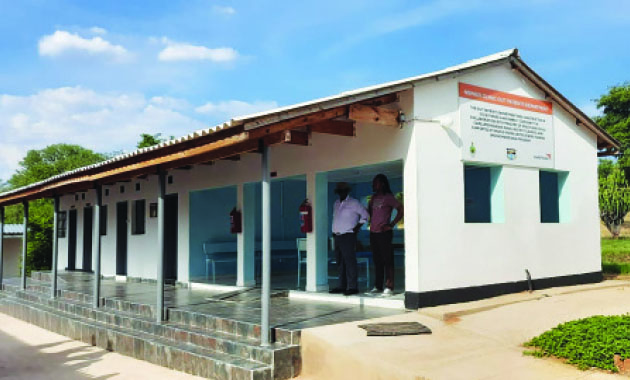
Robin Muchetu, Senior Reporter
COMMUNITIES in Nswazi in Umzingwane District, Matabeleland South province, have expressed delight at the completion of Nswazi Clinic and its waiting mothers’ shelter, saying the development has greatly improved access to safe and reliable maternal healthcare.
The clinic and the waiting mothers’ shelter is an initiative of the Ministry of Health and Child Care and its development partners, under the Health Resilience Fund (HRF). Sister in Charge at Nzwazi Clinic, Sister Phindile Thwala said home deliveries and maternal deaths have been reduced in the district, owing to the opening of the heath facility.
“There is a reduction in maternal deaths since we started getting assistance under the HRF programme because this community has ownership of their facility and we have a beautiful waiting mothers shelter that pregnant women are using.
Home deliveries have also been reduced through health education that we have been conducting,” said Sr Thwala.
Maternal mortality has been linked to various issues including delays in seeking appropriate medical help for an obstetric emergency, a delay to access health care facilities and also a delay in receiving adequate care when a facility has been reached.
“If there are referrals, we do it swiftly because we do not want to see pregnant mothers and children under five dying, these are our special groups including adolescents. It is through this support that we are getting from the Ministry that we are able to carry out some of these interventions,” she added.
The waiting mothers shelter can accommodate eight women at a time and has four showers and four toilets for their convenience. The clinic is solar powered and has safe and clean running water too. The sister in charge lamented that many of the pregnant mothers were school drop outs. She said the issue of economic migration has led to a situation where children were left alone as parents, leading to some girls getting pregnant at a young age.
Umzingwane District has a population of 6971 and 20 village health workers have been trained under the Health Resilience Fund.
“For this facility to run, we work with the Health Centre Committees,, including traditional leadership in the area. We are very lucky that through the various trainings that we get and the support from our mother hospital ,we have little challenges, as we make use of the village health workers that even visit our hard to reach areas and educate all the mothers on the importance of taking their children to clinics,” said Sr Thwala.
Village health workers have been trained and also capacitated with bicycles so that they are able to move from one place to another easier, to carry out awareness campaigns and identifying problems.
“Now we have service integration and we take the services to the people, we do not want them to walk long distances to seek medical care. The HRF has supported us a lot especially in the area of malaria, nutrition, Tuberculosis and HIV programmes. It is very rare in our areas to get children who are malnourished, as the mothers have been educated on how to feed them,” she said.
Households also, have been taught how to check for malnutrition using the Mid Upper Arm Circumference (MUAC) tape, which is a potential indicator of maternal nutritional status. Medicines have also been availed, to which have been availed to the community when they visit the health centre free of charge.
“We have trained our nurses on the importance of educating pregnant women who come for antenatal classes on some of the challenges and risks they can come across. We encourage pregnant mothers to register their pregnancies in time, less than 16 weeks, which enables us to detect any problems so that if the problem is beyond us we refer them to other health institutions early enough,” said Sr Thwala.
She said another area of training was the Basic Emergency Obstetric and Newborn Care (BEmONC) in crisis settings.
“When a pregnant woman comes to deliver at a clinic, we want to ensure we save life, there are many checks we do when a woman comes here, we check for blood pressure, cleanliness ,even of the surrounding area where she gives birth. If there is danger, we shout for help but we do all our deliveries here at the clinic. We no longer record home deliveries because the women have been educated on the need to present to a health institution early, village health workers also assist to send women to the clinic when it is towards their delivery months” added Sr Thwala.


 Online Reporter