

 Online Reporter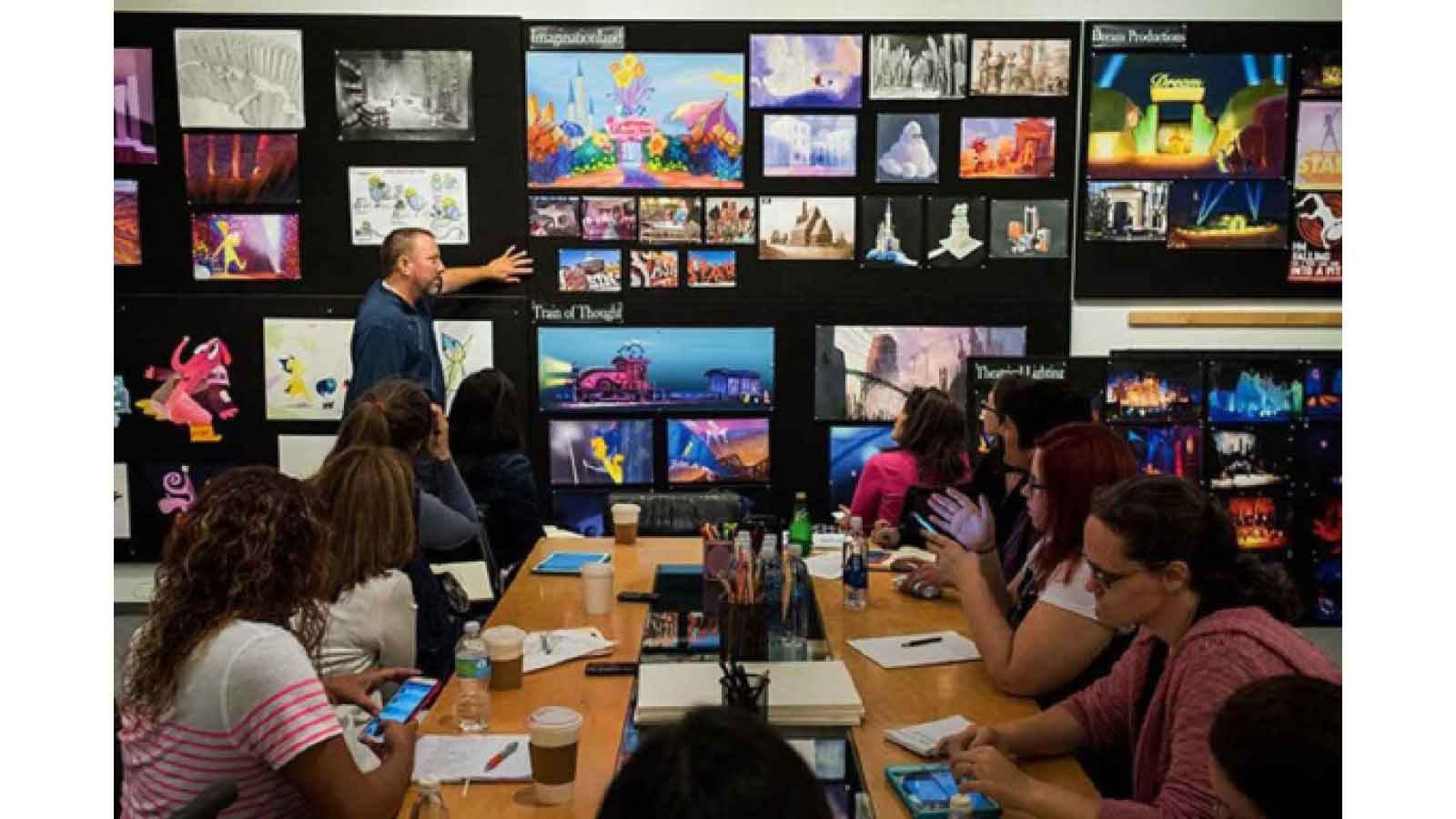
Arthur Marara
Point Blank
In the brackish mangroves of Southeast Asia, young archerfish face a daunting challenge. They are born with the instinct to hunt, but not with the skill.
Their first shots are clumsy, their aim erratic, their success rate dismal. The physics of refraction, the calibration of force, the timing of the shot—all of these must be learned. For a young fish relying on trial and error, the learning curve is steep and dangerous.
Every missed shot means hunger. Every miscalculation could mean falling prey to a competitor.
Yet remarkably, scientists have discovered that young archerfish do not have to learn everything the hard way. When placed in tanks where they could observe experienced adults hunting, the juveniles achieved expert-level accuracy in a fraction of the usual time.
By simply watching the masters, they absorbed the nuances of aim, timing, and calibration without enduring the cost of endless failure. They learned not by doing, but by observing.
This observational mastery— is the ability to acquire wisdom not through personal experience, but through the deliberate study of those who have already mastered the craft.
For leaders and organisations, the implications are profound. You do not have to experience every failure personally to learn from it. Wisdom can be transferred. The question is whether you have built a culture that enables it.
The Myth of Trial by Fire
In many organisations, the dominant model of development is trial by fire. Junior employees are thrown into challenging situations, expected to sink or swim.
The logic is seductive: experience is the best teacher. But experience is also the most expensive teacher. It comes with the cost of mistakes, the waste of resources, and the pain of failure.
Worse, in high-stakes environments—a critical negotiation, a major client presentation, a crisis response—the cost of allowing a novice to learn on the job can be catastrophic.
The archerfish offers an alternative. Young fish do not need to starve to learn how to hunt. They can watch, internalise, and accelerate their mastery.
Organisations that embrace observational mastery understand that the fastest way to develop talent is not to delegate tasks blindly, but to invite junior members into the room where decisions are made, not as participants, but as observers.
Let them watch how a senior leader navigates a difficult negotiation, handles a crisis, or presents to a key client. Let them see not just the polished outcome, but the messy process—the questions asked, the pivots made, the quiet moments of judgment that separate mastery from mediocrity.
Pixar: Institutionalising Observational Mastery
No organisation has institutionalised this principle more effectively than Pixar Animation Studios. For decades, Pixar has produced an unparalleled string of hits—Toy Story, Finding Nemo, Up, Inside Out—films that have defined a generation of storytelling. Behind this success lies a unique mechanism called the Braintrust.
The Braintrust is a group of Pixar’s most experienced directors, writers, and storytellers—the “experienced archerfish” of the animation world. They gather regularly to review films in progress. But the process is not what you might expect. The Braintrust does not give orders. It has no authority to mandate changes. Instead, the junior filmmakers present their work, and the Braintrust watches.
Then they discuss—candidly, constructively, drawing from their wealth of experience—what is working and what is not. They dissect story problems, explore character motivations, and surface structural flaws. And crucially, they do this while the junior team observes.
The magic of the Braintrust is that it transforms learning from a directive into an observation.
Junior filmmakers do not leave with a list of commands; they leave having witnessed how masters think. They see how a seasoned director approaches a narrative dead end, how a veteran writer reframes a character problem, how a master storyteller distinguishes between a symptom and a root cause. They absorb not just the solution, but the process of arriving at the solution. Then they return to their work and apply those insights themselves.
As Pixar co-founder Ed Catmull wrote in Creativity, the Braintrust is built on a simple premise: “The film is not made by the Braintrust; it is made by the filmmaker.”
The role of the masters is not to take over, but to let the junior team observe mastery in action. This is observational mastery at its highest level—learning by watching, not by being told.
Building a Culture of Active Observation
How can leaders cultivate this in their own organisations? It begins with shifting the mindset from “delegation” to “demonstration.” Traditional mentorship often focuses on assigning tasks and reviewing outcomes. Observational mastery, by contrast, focuses on inviting junior members into the process itself.
Create structured opportunities for observation. Bring junior team members into strategy meetings, not as note-takers, but as observers. Let them watch how senior leaders navigate ambiguity, handle pushback, and make trade-offs. After the meeting, debrief: What did you observe? Why did I ask that question? What assumptions was I testing? This turns passive observation into active learning.
Second, separate observation from evaluation. The archerfish does not learn by being corrected in the moment; it learns by watching the master execute a flawless shot. Similarly, when junior members are observing, they should not be in the hot seat.
The goal is not to critique them, but to let them absorb mastery without the pressure of performance.
Third, normalise the idea that watching is working. In many organisations, “observing” is seen as passive or non-productive. Leaders must explicitly value and protect time spent in observation.
When senior leaders invite juniors into critical meetings, they send a signal that this is not a perk, but a vital part of development.
The Competitive Advantage of Accelerated Mastery
The archerfish that learns by observation survives. The one that relies solely on trial and error may starve before it ever becomes proficient. In business, the same dynamic plays out. Organisations that force every employee to learn exclusively from their own mistakes move slowly, repeat errors, and waste precious time. Those that cultivate observational mastery accelerate the development of their people, build deeper bench strength, and create a culture where wisdom flows naturally from the experienced to the emerging.
Pixar understood this. Their institutional commitment to watching masters navigate failure is why they consistently produced hit after hit while competitors struggled to replicate their success. They knew that the most powerful form of growth is not doing, but watching—and then applying what you have seen.
As a leader, ask yourself: Are you giving your people tasks, or are you giving them access? Are you delegating, or are you demonstrating? The archerfish reminds us that wisdom, once earned, is not meant to be hoarded. It is meant to be observed, absorbed, and passed on.
To be continued next week
Arthur Marara is a corporate law attorney, keynote speaker, peak performance, and corporate strategy speaker. With his delightful humour, raw energy, and wealth of life experiences, he captivates audiences and inspires them to unlock their full potential. He is also a leadership expert with extensive experience in leadership development and coaching. He is passionate about developing effective leaders and empowering individuals and organisations to achieve their full potential. Through his engaging talks and workshops, he imparts invaluable insights and practical strategies that empower individuals to lead with confidence and make a lasting impact. Arthur is the author of “Toys for Adults,” a thought-provoking book on entrepreneurship, and “No One is Coming,” a book that seeks to equip leaders to take charge. Send your feedback to bookings@arthurmararaattorneys.
com, visit his website www.arthurmarara.
com, or contact him at +263772467255.



