

 dyton mupawaenda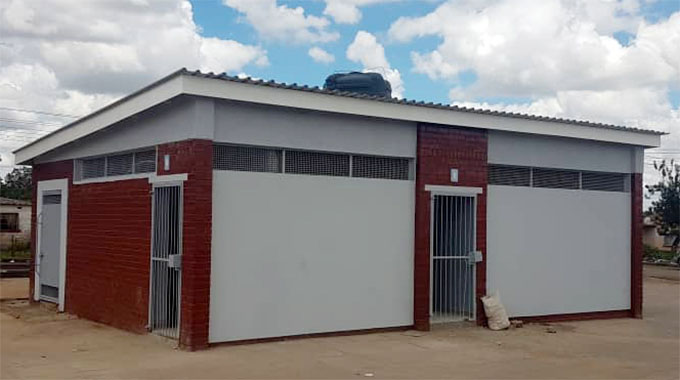
Herald Reporter
LACK of running water for Harare public toilets, especially in the city centre, remains a serious cause for concern, putting people’s lives at risk during an outbreak of cholera.
Despite the city battling cholera, its toilets are closed most of the time due to acute water shortages with the handful operational using buckets.
Almost all the city’s toilets in the city centre were dysfunctional yesterday.
Among the non-functional toilets were four in Harare Gardens, Bata at the corner of Leopold Takawira and Bank Streets, the set at the huge Simon Muzenda Street bus terminus was also temporarily closed and those at Copacabana and Charge Office terminuses were using buckets.
Apart from the council failure to provide the basic service, some top council officials have been continuously frustrating private businesses complementing their roles through mobile toilets which are being grabbed.
Residents and city hawkers yesterday raised concern over the closure of council toilets.
“It is a pity that council toilets are dysfunctional. I am forced to buy something in food outlets for me to access ablution facilities,” said Mr Wallace Mangume.
Mrs Portia Kurwa bemoaned the state of the toilets even when they have access to running water.
“Their state is worrisome such that not even a single council official may be comfortable to use them. It is better to pay a paltry fee and use a reliable toilet than accessing council facilities,” she said.
Mr Alfred Gono said the closure of complementary ablution facilities was uncalled for.
“It is shameful that while the city is in the middle of a cholera crisis, council has the guts to grab mobile toilets. Open defecation will surely increase, posing a more serious health hazard,” she said.
Harare Mayor Jacob Mafume yesterday said all the seized mobile toilets “should be on the ground.”
The Zimbabwe Mobile Sanitation Association (ZMSA) president Mr Boston Muteya said they are facilitating the placement of ablution facilities at busy spots.
“The purpose of the programme is to reduce issues of open defecation. We are targeting all crowded areas without ablution facilities like markets, truck stop overs, and borders among others,” he said.
“We are also creating employment in the process. We are not taking over council business, but complementing it as part of creating a clean city.”
Mr Muteya said they were also complementing areas with existing toilets, but failing to cope with demand.
“There are instances where public toilets will be clogged which has become the norm in most cases and we then complement them with our mobile toilets,” he said.
Harare City Council spokesperson Mr Stanley Gama yesterday said there are a number of measures lined up by the council to make sure all toilets are functional.
“We are having water tanks since most of the times when they are closed it is about water. So all our toilets will have such. Even then we realise toilets are few as the population is increasing everyday. There are so many people in and around the city.
“The long-term solution is to build new toilets and we are looking at partnering private players to make sure we get more toilets in the city for the public. We want to increase the number of both free and payable public toilets,” he said.
Mr Gama singled out a toilet situated at the footbridge near Town House as a clear example of a partnership between the council and Joina City which was working well.
He said council will return all confiscated mobile toilets.
“Mobile toilets were confiscated by the city, but as from tomorrow we are renewing their permits so that they resume operations. We want them to help out until our situation is normal in terms of number of toilets.
“What it means is that toilets confiscated will be returned to the owners. Obviously we would like to apologise to the residents for the inconvenience due to lack of toilets, but as from tomorrow things will improve,” Mr Gama said.



 Peter Tanyanyiwa
 Online Reporter