Chronicle Editor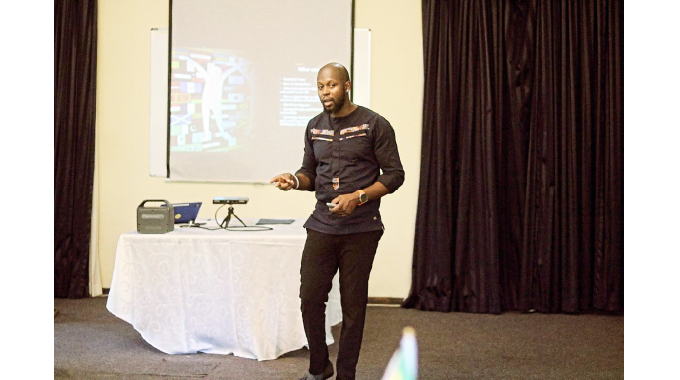
Bruce Ndlovu
WHEN he relocated to the United Kingdom in the early 2000s, Tonderai Tomu had a dream.
One day, Tomu dreamt, he would come back and make sure that young boys and girls in Zimbabwe, dreamers like himself, would be exposed to an environment that allows them to flourish.
Tomu had excelled in the sports field, got a scholarship and would finish the rest of his secondary education in the British Isles. He would then move to the United States, where he has spent most of his adult life.
Almost two decades later, armed with several academic qualifications and a desire to make good a dream he had all those years ago, Tomu is now back.

The one-time track and field star is now the founder and chief executive officer of Motherland, an organisation whose chief concern is improving the lives of young, talented Zimbabweans whose gifts are being stifled by the environment they find themselves in.
In an interview with Sunday Life, Tomu said he had founded Motherland upon the realisation that he could never forsake his roots.
“The idea, of my motherland comes from me being here because this is my mother’s land. This is where I was born and raised and that is how the idea came about. Mothers are pretty much the best people you can have because they will take care of you regardless of your situation. That was the thought process behind the formation of Motherland,” he said.
While he has big ambitions, Motherland is no longer just an idea, but a reality that is affecting the lives of many young people.
“The idea was to help students that are either gifted or talented. We want them to go to school, get an education and equip them with everything that they might need in order to be school ready while learning the 21st century skills.

“We are talking about enabling them to use computers because there are about 25 computers that I will be bringing that I hope would be part of a community centre. We are going to be offering tutoring services for those that want to use the gadgets,” he said.
Like any good educationist Tomu, a teacher at the Wellington School in the United States, knows that education does not start and end in the classroom. It is for this reason why he has also initiated a project that will see communities, especially in rural areas, get access to cleaner water.
“Another important thing that we are looking at is providing clean water to people. We have seven life straws that are already in Zimbabwe and some have been installed in communities.
“You have to think about it, when you open your tap sometimes what colour is your water when it comes out? It’s even worse in the rural areas where people might be drawing water from unsafe streams that some mischievous people might have dumped their waste there.
“So what this device does is that you can take dirty water, as dirty as it can be, pour it into the system and it comes out clean. It takes out a lot of bacteria and it makes the water safe to drink. These are for the community that can serve 100 people and they can last up to three years. We have replacement filters and 10 of those mean 30 years of clean water for the community,” he said.
A fortnight ago, Tomu found himself rubbing shoulders with Bulawayo Provincial Affairs and Devolution Minister Judith Ncube, as he made the announcement that 18 students from Wellington would make the trek to Zimbabwe in March, as they sought to gain a better understanding of how the country’s education system works. This, Tomu said, was another idea that for a long time had been brewing.
“I have coached some of the students that are coming on this trip since they were in the sixth grade and they are now in lower sixth. They have always spoken about coming to Zimbabwe because they are fascinated about where I come from.
“Every year our school sends kids to different countries which allows them to learn about other cultures and how the world around them works. So, we are preparing them for the future outside high school.
“So I proposed a trip to Zimbabwe and we managed to get 18 students interested. So they will learn about the culture, music and educational systems while we do our community services as well. So, we want to make sure that the kids that we are bringing get to learn about Zimbabwe. This is something that is outside their comfort zone because there are things that they have never experienced in their lives,” he said.
As he looks to the future, Tomu said he hoped Motherland would transform into a fully-fledged, self-sustaining educational institution in the next few years.
“Hopefully soon we can get some land and start building because we want it to be like an academy that caters for the educational needs of the students and sports as well. I was fortunate enough to run for Zimbabwe because I did track and field events and that helped me a lot in life so I am trying my best to pay it forward,” he said.


 Online Reporter