Chronicle Editor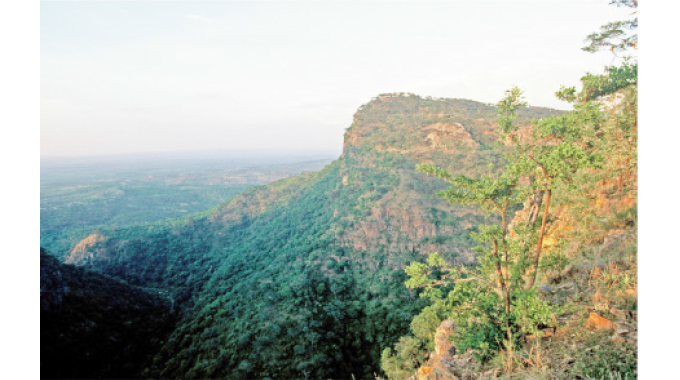
WE continue our interview with Cde Miller Mlilo whose pseudonym was Cde Masotsha Nkiwane. Cde Mlilo was the ZPRA Battalion Medical Officer for the First Battalion, commanded by now Major-General (Rtd) Stanford Khumalo aka Cde Madliwa. In our last interview, Cde Mlilo talked about his deployment to Mlungushi soon after training at the Camp Guerilla Training (CGT) in Zambia. Cde Mlilo told our Assistant Editor Mkhululi Sibanda (MS) that it was at Mlungushi, which was a camp for training by the regular forces that he was attached to the First Battalion as its Medical Officer. Today he narrates about the battalion’s deployment to the front. Below are excerpts from the interview. Read on . . .

MS: Last time you were talking about being deployed to the front. Please may you take us through that.
Cde Mlilo: It was towards the Lancaster House Talks, beginning of October 1979 when our battalion, the First under Cde Madliwa was ordered or chosen to move to the front. Our deployment area was at BL One close to Kariba but on the Zambian side. When we left Mlungushi the message or the orders were very clear that we were moving to Zimbabwe and were supposed to burst the Rhodesian border and destroy their racist military machine. As a conventional force, our mandate was to attack the enemy, secure the ground and move until we achieved military victory. As for the command structure of the battalion, Madliwa like I said was the commander while just below him there was Cde Citizen as the Battalion Chief of Staff. The three company commanders were Cdes Jesus in charge of the first, the second was under Cde Spox Mthunzi (Enoch Dube) and the third was commanded by Cde Lovemore.
MS: How were the companies structured?
Cde Mlilo: Each company had around 95 infantry men with each having attachments. The attachments comprised a commissar and his deputy, seven intelligence officers, two signals men, medics and an artillery unit. The smallest unit of the company was a section of nine soldiers. Each section had one RPK machine gun, an RPD machine gun, and an RPG7 (bazooka) while the rest had AK-47s, so we were properly armed. As the medical officer and my subordinates, we were also armed with assault rifles. Senior officers like myself were armed with AK-47 folded butt types. Each soldier was also armed with offensive and defensive grenades. The artillery units had 82mm and 60mm mortars, amaB10, amaZegue, the double barrels. Other weapons at hand were SAM7s, a heating-seeking anti-aircraft weapon (the weapon used to down the Viscounts) but we did not use them in that battle, and iGrad P which Mdliwa ordered its use on the last day when we made a tactical withdrawal. I must also add that the battalion also had a regimental sergeant major (RSM) for discipline. It was a well-constituted force and was a rehearsal of what we were going to be like as the country’s army. At that time ZPRA had transformed itself from a guerilla outfit to a proper conventional army.

MS: How did you move to your deployment area?
Cde Mlilo: ZPRA had its own trucks called amaKraz and they are the ones that transported us to our deployment area. We drove through Lusaka in the evening and it could have been around 12 midnight when we were dropped a few kilometres from the intended position. We then moved for an hour to the area where we were supposed to deploy. It was not that far but because our movement was tactical we took such a long time. We completed the deployment, which stretched for more than a kilometre after about two hours. We were deployed around a swampy area on the foot of gorges. It was an all-round deployment formation and it was like a semi-circle around the swamp to create an anvil where we would hammer the enemy, we were being tactical because we knew that they would come through the swampy area thinking that we had been foolish to leave a gap. As anticipated they fell for it and that is where most of the fighting took place.
MS: Let’s go to specifications tell us about your duties as the medical officer.
Cde Mlilo: I brought all the medicines that were needed. When we were deploying a lot happened. We cut down huge trees, dug trenches, and fortified the pits. Remember we were a conventional unit, so every soldier had his own pick and shovel. The communication guys laid down their lines, in fact they dug and laid their lines. Anti-air weapons were mounted while a reconnaissance unit that was a platoon crossed the Zambezi River safely to the Zimbabwean side to monitor the movement of the enemy. We created a headquarters where the commander, Cde Madliwa was stationed. There was a battalion headquarters there with battalion officers like myself stationed where the commander was. There was an underground office for Madliwa. Everything was well planned.
MS: As medical personnel what did you have?
Cde Mlilo: I had my surgery or small clinic which was an underground facility. It was properly fortified so that nxa amakhiwa ebhomba it was not affected. I had stretcher beds, medical bag commonly known in military circles as a shock bag, ringer lactate, normal saline these being fluids. We also had painkillers such as pethedine, paracetamol, and indocid and bandages of all sizes among other equipment we had. So you see we were about what we were doing.
MS: What about water sources?
Cde Mlilo: As the Battalion Medical Officer it was my duty to see that water sources where we had deployed were safe. We medics tested the water to check whether it was safe, we had medication meant for that. Anything to do with health fell under me and I had to see that it was properly done.
MS: How was the deployment area chosen?
Cde Mlilo: Before we left Mlungushi an advance unit of reconnaissance officers was sent to assess the situation on the ground. They are the ones who did all the groundwork making sure that the area had water, the terrain had adequate cover, and so on. However, an unfortunate incident happened before we deployed there as the advanced reconnaissance unit fell into the ambush of the Rhodesian forces. One of the comrades was then captured and taken to Rhodesia where all his two legs were hacked off by the enemy using a hacksaw. We found him here at Ntabazinduna after Independence where comrades who were injured during the war were kept.
λ To be continued next week with Cde Mlilo talking about the five-day battle they had with the Rhodesian army.


 Online Reporter