admin
admin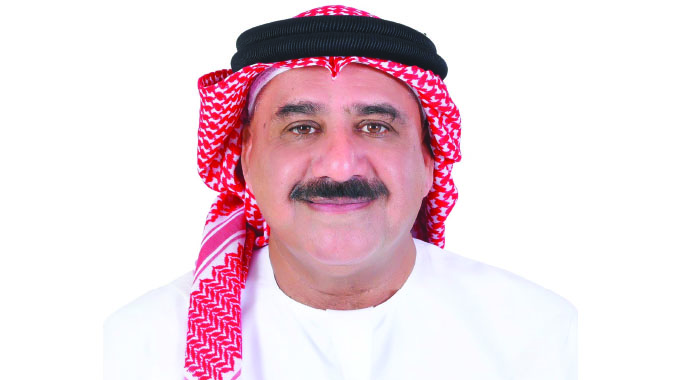
Zimbabwe’s re-engagement and engagement initiative has kept the “Open for Business” mantra since the advent of the Second Republic. New business enquiries and investments have made way into the Zimbabwean economy, including from the Middle-East- the Gulf region. Zimpapers Politics Hub’s Gibson Nyikadzino (GN) recently had an interview with the Chief Advisor to the President on Middle-East Affairs, Ambassador Mahommed Jasat (MJ) on the status of Zimbabwe’s relations with the Middle-East countries, areas of co-operation and cultural exchange programmes. Below are the excerpts:
GN: We want to understand from you as President Mnangagwa’s Chief Advisor on Middle-East Affairs, which key sectors are countries from that region ready to invest in Zimbabwe?
MJ: What I have noticed in the last six or eight months is that there is a large business interest from the Middle-East into Zimbabwe and the main areas where people are looking at investing are in the mining, telecommunications, real estate, power, agriculture, among other sectors. And the shift that I have seen is that a lot of investors that were coming in are looking mainly at large projects but also different types of business people are enquiring about medium and small-scale businesses.
We have got a lot of investors looking at big projects. Some investors coming in at the moment are interested in building student accommodation at a local university and accommodation for civil servants.
Also, to the investors, the Victoria Falls has become an important destination because in the past few months a significant number of tourists have been coming in. We are working to attract investment from the Middle-East because they are big spenders.
GN: Are there airlines you are communicating with regarding that?
MJ: We are working to get a flight directly from Dubai to fly into the Victoria Falls via Harare and back. There are some airlines that have shown interest and commitment to come in. And that is going to make a major difference.
GN: Which specific countries from the Middle East are making investments or enquiries?
MJ: Six months ago, we brought the most followed blogger from the Gulf region in the country and he did a documentary on Zimbabwe’s tourist attractions. He showed our local way of life, like how the Tonga people live. He did a story on Mosi-oa-Tunya. His documentary about Zimbabwe came out number one. That documentary had the biggest hits. We have feedback that there are a lot of Middle-Easterners who want to come to Zimbabwe, because they did not know much about the country. We are now starting to attract a lot of investment from the Middle East in terms of tourists and the good news is we found an investor for Air Zimbabwe. Hopefully we are going to see a big difference in Air Zimbabwe, that will see us flying into London. We are working on those routes well to try and make Zimbabwe a regional hub, especially with the new airport.
GN: Some Middle-East countries have advanced technological and infrastructure developments compared with Zimbabwe. From these engagements, are we likely to see outcomes on technological, cultural and developmental cooperation?
MJ: There is a lot of that happening at the moment. In the last three months, we had many people from the United Arab Emirates (UAE) coming in that want to share technology. For example, having a smart system for our traffic and a good 911 (Emergency Call) system.
They are going to start implementing this technology. We also want to make sure our revenue collections are good so that we eliminate bribery and corruption within the market.
There is also e-governance that they are trying to introduce. And also because of His Highness, who is very close with His Excellency, they are trying to make sure that those Saudi and Zimbabwe cultural differences are shared.
Recently, we had programmes in the Victoria Falls showcasing Zimbabwe’s gastronomy. I have also noticed in the health and pharmaceutical industries, doctors want to come here and some want to set up dialysis centres and we will not necessarily have to go to South Africa.
There are companies in the Middle East involved in e-learning, and they want to start introducing e-learning into Zimbabwe.
The great thing about e-learning is you do not need to be at a private school to be able to get the facilities. The way that they design it is that even kids in the rural areas can benefit from e-learning.
GN: What is the readiness that Zimbabwe has in terms of infrastructure? Can we leverage on the developments that we have had at the moment to boost our capacity to attract investments?
MJ: Yes, we definitely have the foundations of solid infrastructure, which is a great thing, though we still have a way to go.
There are many people coming to invest in the railways and we have the new steel factories attracting attention. So yes, Zimbabwe is now sorting out the infrastructure, railways and we have made big progress in road construction.
The Middle Eastern countries are starting to supply bitumen into Zimbabwe.
There is a big drive to start getting fuel, fertilisers and seed. President Mnangagwa wants to ensure that we can be competitive in what we are doing and that is what we are working on. We want to make things like fertilisers and seeds affordable. That can only happen if there is good competition.
GN: What about the issue of sanctions? They have been a major economic hindrance and how best are you supporting Zimbabwe attain its vision?
MJ: The great thing about the Middle-East countries are friendly to Zimbabwe. So yes, we have some challenges when it comes to banking. However, the Gulf countries do not worry about what is happening in a country’s internal affairs like how the West or America worries about what is happening and sanction us. Gulf countries are friends with Zimbabwe. And there are no sanctions between us as such. It is a lot easier to do business with Gulf countries as well and any of those countries are amenable to Zimbabwe and doing business in Zimbabwe.
GN: What do you have to say about the future Zimbabwe-Middle-East relations? What are the chances of economic transformation?
MJ: Because there are a lot of infrastructure projects and developments that are coming in, that means a lot of money is coming in. With new money and with new technology and with new ideas, things are changing in Zimbabwe. I tell you, President Mnangagwa has done tremendous work in ensuring that Zimbabwe is definitely ‘Open for Business’. With this mantra, a lot of people are attracted to Zimbabwe. And it is my job to ensure that we attract as much investments from the Middle Eastern countries. But the other thing is we do not only want one-way traffic.
There was a company from Saudi Arabia that came in last week, the Saudi Agricultural and Livestock Investment Company (SALIC).
It is an agricultural organisation and they are interested in, fodder and doing red meat from Zimbabwe. So, we are trying to export red meat; export fodder crops. At the moment, we are exporting a lot of citruses into the Middle-East. Horticultural crops are going in. Zimbabwe is one of the best growers of blueberries in the world.
The quality of our blueberries is very good and most of them are going into the Middle East. There is also this two-way trade. The good thing is that there is now a balance of investments coming in and exports going out. And that is great.


 Online Reporter