Online Reporter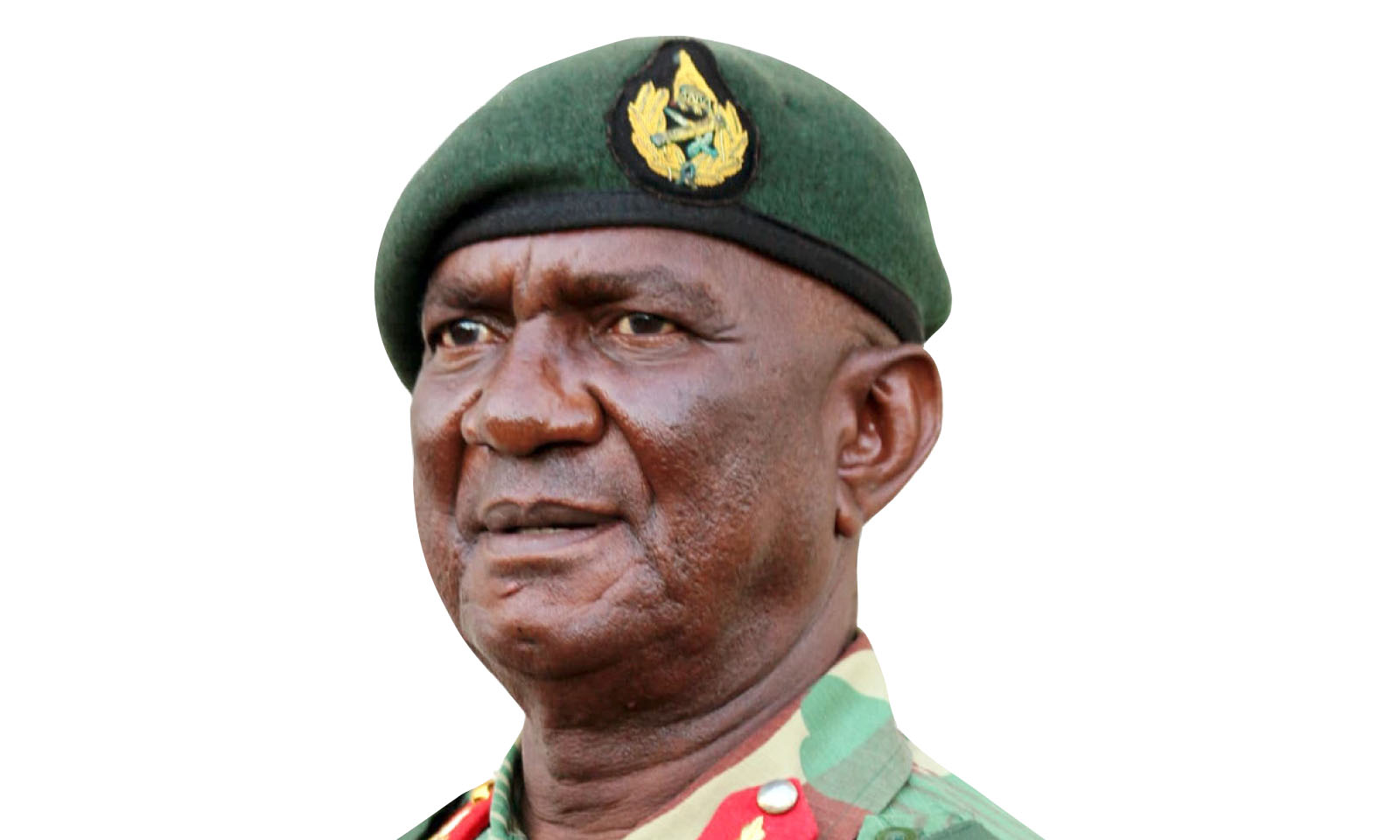
NEWLY appointed Zimbabwe National Army (ZNA) Commander LIEUTENANT-GENERAL EMMANUEL MATATU on Friday officially took over command during a handover-and-takeover parade held at Charles Gumbo Barracks in Harare. Our reporter COLUMBUS MABIKA interviewed him on the sidelines of the event and he outlined his vision for the ZNA.
*****************
Q: May you give us a brief background of who Lieutenant-General Emmanuel Matatu is?
A: I was born in 1960 in Midlands province. I began my education in Zhombe before completing primary school in Bulawayo.
My journey into military service began at Tekwane in 1976, when, at just 16 years old, I joined 34 others in crossing the border to enlist with ZIPRA forces.
After initial training in 1976, I was selected for officer cadet training at the Zambia Military Academy in Kabwe in 1977.
I was assigned to the Zambezi Valley, where we prepared the ZIPRA regular forces to cross into Zambia.
At independence, I was attested into the Zimbabwe National Army in September of 1980.
I rose through the ranks and occupied several positions up to the time we were deployed to the Democratic Republic of Congo.
Upon our withdrawal from Lubumbashi, I returned to Army Headquarters as Brigadier-General (Plans), later transitioning to the Zimbabwe Defence Forces Headquarters as Director-General of Policy, Public Relations and International Affairs.
In this role, I represented Zimbabwe extensively at SADC and AU forums.
It is from there that I was then moved from the Zimbabwe National Army team to Namibia, where I worked with the Namibian Armed Forces, where I helped train them, and ran a number of courses.
I then came back home, had a brief stint with the Zimbabwe National Defence University; firstly, in charge of planning for seminars and workshops, then moved on to the Defence Doctrine.
I was promoted from Defence Doctrine to Army Headquarters as Chief of Staff (Administration Staff).
I served there for about four years, then moved on from that position to Chief of Staff (General Staff) at the beginning of this year.
I was promoted to Lieutenant-General and Commander, Zimbabwe National Army, two weeks ago.
That is General Matatu.
He is married; he has got three children.
I enjoy reading, playing golf, but reading is my main pastime. I am also a farmer; I do farming in Hurungwe, Mashonaland West province.
Q: As the new Commander of the ZNA, what is your vision for the organisation?
A: Well, I want an organisation, an army, that is ready to fulfil its mandate.
I will have failed the people of Zimbabwe if the army, when called upon to perform, fails to perform.
To be able to perform, the army has to be, one, professional.
We have to be well-trained; we have to be professional in everything we do.
We have to know what to do, under what situations.
We have to be disciplined, listen to orders and do exactly as we are told.
We have to be experts at using our arms of trade.
Every soldier has to know what role he has to play, in whatever situation that we are tasked to do.
And basically, that calls for good loyalty, good teamwork and professionalism on the part of the army.
Q: In the context of instability in some parts of the SADC region, how prepared is the ZNA in playing its role in bringing peace in the region?
A: The army does not stop training.
We have been training, and we will continue to train.
In peacetime, the major preoccupation of the army is to train, to prepare for any eventuality that comes.
We keep abreast, we watch the situations taking place around the region, on our borders, and we train accordingly.Every year, the command of the army issues a training directive that guides the formations and the units on what training to concentrate on for the year.
And we single out certain formations for specific tasks that we might want them to carry out.
Q: In line with the Government’s modernisation trajectory, what is the ZNA doing to modernise the army?
A: Modernisation entails bringing in new equipment — modern equipment.
It also entails being able to develop new equipment systems on our own.
We are doing this together, as part of the Zimbabwe Defence Forces.
The message from Commander, Defence Forces (General Philip Valerio Sibanda), on modernisation was clear and we are modernising.
And by modernising, we are looking at new equipment, modern equipment for the army, new equipment for the Air Force.
So, we are part of the Government’s modernisation trajectory.
We have sat down, we have looked at what our requirements would be, and looked at what can be afforded, and looked at what would be best for us.
Q: What corporate social responsibility projects have you undertaken as the ZNA in recent years?
A: We have done quite a lot.
Throughout the year, we do have some community assistance projects.
We build schools, we build clinics, we work with the communities to meet whatever requirements that they might have.
In most of these community projects, you will find that the week before Defence Forces Day every year is set aside to commission and publicise the community assistance projects that we would have done.
It is quite a long list, but there are quite a number of projects that are underway that will be commissioned in August.The burden of construction comes mostly to the army because we do have the artisans; we do have the engineers who can do that.
We have also been involved in medical outreach programmes.
We do have challenges here and there in terms of availability of drugs and so on, but we do get assistance from time to time.
We have been doing cataract operations in conjunction in Mashonaland East, Mashonaland Central and in the Midlands.We live with the community; we are in touch with the community and usually we encourage the community to come forward if there are any requirements that they need us to help with.
We do look at that and we do work with them to the best of our ability.
Q: Artificial intelligence (AI), digitalisation and technology have become the order of the day worldwide. As the ZNA, where are you in this regard?
A: As the ZNA, there is still quite a lot for us to improve in that area.
We have recognised some of our deficits in this area and we have focused or refocused our recruitment to look at candidates with STEM (Science, Technology, Engineering and Mathematics) subjects; people who will be able to contribute towards the scientific development of the army.
We are into research and development, where we try and research various defence-related areas we might need to improve and suit our situations.
It is not a one-time thing that we can say tomorrow we are there.
It is really something that we have to build on and start with the human resource itself, to make sure we get the right people who will be able to contribute meaningfully and help us develop with an understanding of what Zimbabwe needs.
Q: What is your message to the people of Zimbabwe as you commence your work?
A: I want to assure the people of Zimbabwe that the Zimbabwe National Army will continue to deliver on its mandate.
We are an organisation; we are an army that has a very proud history.
I can count the number of commanders before me who I have had the opportunity to work with; they have taught us quite a lot and we have developed, and we have been respected in the nation.
We have made the nation proud through some of our achievements.
I will assure the people of Zimbabwe that under my watch the Zimbabwe National Army will deliver to meet their expectations.