Sundaymail Editor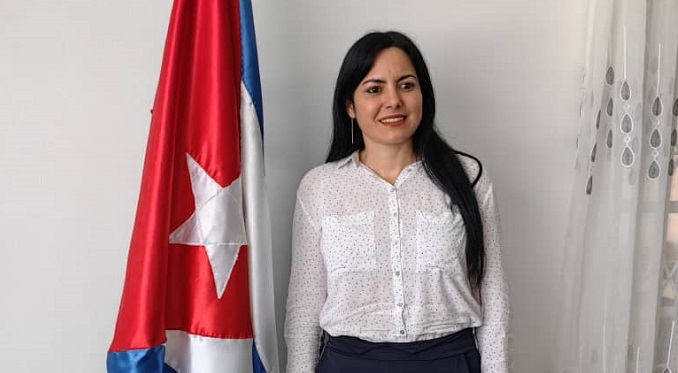
CUBA loses at least US$14 million a day owing to the United States’ embargo on its economy. The US blockade, in place since 1962, has been intensified over the years, hurting the Caribbean country’s developmental aspirations. Zimpapers Politics Hub’s GIBSON NYIKADZINO interviewed Cuba’s Ambassador to Zimbabwe MS SUSELLYS PEREZ MESA to reflect on the two countries’ ties, which date back to April 20, 1980 — two days after Zimbabwe’s independence. Today, therefore, marks the 45th anniversary of diplomatic ties between Harare and Havana
********************
Q: To what extent has the diplomatic relationship between Zimbabwe and Cuba yielded political, social and economic benefits for both nations?
A: I am very proud to be the new Cuban Ambassador to Zimbabwe because of the legacy it means and also the responsibility we have to build from that.
We have very strong historical ties between Zimbabwe and Cuba — relations of friendship, brotherhood and solidarity.
Cuba was one of the first countries to establish these relations when Zimbabwe gained its independence. However, our ties come from before that day, and both countries have maintained a very high level of brotherhood, friendship and solidarity.
Last year, we had the visit to Zimbabwe by Cuba’s Vice President (Salvador Valdés Mesa).
This past month, we had the delegation of the President of the Council of the States and the President of the National Assembly of the People’s Power of Cuba (Juan Esteban Lazo Hernández). And now we had two delegations in Cuba from here who attended international events that were taking place there. We have donated to the Museum of the African Liberation, which is a great project that we will continue supporting.
We have been here since the 1980s, especially in the education and health areas.
Since 2000, which was a new modality for medical cooperation, we have had 14 brigades of about 1 000 doctors and personnel from the health sector. Also, we have had our professors working at the Bindura University of Science Education. And about 3 000 Zimbabweans have graduated in Cuba since that time.
Cuba is willing to increase and continue this cooperation on a solid basis.
Q: Cuba has led progress in medical and pharmaceutical sciences. What are the key projects between the two countries in this cooperation?
A: I humbly wish to express that Cuba’s achievements in health are recognised worldwide. For example, during the Covid-19 pandemic, we developed our own five vaccines, and they had very good results on our population. Scientific diplomacy is a concept that is better known nowadays.
But this is not what we do exactly with Zimbabwe because it is a solidarity, and the essence lies in the strong ties and the relations of brotherhood we have.
In Cuba, we are implementing a governmental system based on science and technology with the premise to apply innovation and technology to all areas where it’s possible to face the challenges we have identified, taking into account the scientific approach and the human resource potential we have in the country. In terms of the bilateral relations, it can be translated into joint projects in biotechnology.
We are working together and that will be beneficial for both countries to achieve greater social and economic impact.
I could say that most of our doctors, as part of the medical brigade here, are involved in PhD studies, and the topics are of national interest to Zimbabwe.
This gives a contribution to that scientific approach to those problematic situations and health. Also, our professors working at the universities here develop research projects in different areas where they have expertise.
I have to say that we intend to look for new initiatives to foster cooperation and scientific cooperation between the two countries.
Q: You have a vibrant tourism sector. What are the exchanges made so far in this area?
A: Indeed, Cuba has natural wonders. We could mention the beautiful beaches, which are among the top 10 in the world, the coral reefs in excellent condition, and, of course, a cheerful and friendly population that makes any visit to Cuba memorable.
To name just a few places, we have Varadero in the province of Matanzas, Viñales in the western province of Pinal del Río, Trinidad in the centre of the country, Baracoa in the far east, and other tourist destinations that also combine health. Currently, we don’t have a strong relation or cooperation in tourism. We are looking to a new creative way to do that, and that is why I would like to announce the International Fair of Tourism that will take place in Cuba from April 30 to May 3 this year.
This is the most important event in this industry in Cuba, and I think that would be a great opportunity to look for areas of change because we have potential and we have to work on it.
Q: Last month, the world celebrated International Women’s Day. When you look at the triumph of the Cuban revolution in 1959 and Zimbabwe’s independence in 1980, what were the key roles of women in these two revolutions?
A: Cuban women have played a key role in the struggle for our independence. They have always been there, and also after the triumph of our revolution, they continued in the defence of our conquest.
What we can say is that after the triumph of the revolution, it meant a radical change for women, and they were placed at the top of the process and in the centre of society.
So, you mentioned the critical situation they had before that time in 1959.
Today, according to UNICEF (United Nations Children’s Fund), there is gender parity in science in Cuba.
Women play a fundamental role in the performance of science, technology and innovation activities in the country.
As recognised by the United Nations Educational, Scientific and Cultural Organisation (Unesco), Cuba is currently one of the seven countries that achieved gender parity in scientific research, plus the presence of women as a majority among workers in the sector. It is also on the list of main authors of the most significant awards and recognitions granted in the Caribbean nation in that field.
Cuban women today constitute about 53,8 percent of the workforce in the scientific sector and 68 percent of the categorised researchers, according to recent data from the Ministry of Science, Technology and Environment. Eleven women are members of the Council of State, and we have one Deputy Prime Minister and five women ministers.
They represent 55,7 percent of the Members of Parliament, the second country in the world with the highest proportion of women.
Currently, 43 percent of the total number of ambassadors are women.
The National Programme for the Advancement of Women was approved by Presidential Decree 198 of 2021 to strengthen mechanisms and incorporate gender issues in the development of policies and programmes to continue protecting women.
We have good results but also challenges. So, we have to continue improving, giving more power and influence to women.
I am sure we will get more results in that, and so should Zimbabwe.
Q: Regarding life for Zimbabweans and Cubans under illegal Western sanctions, what, in your assessment, does this reveal about the endurance and resilience of the people from the two countries?
A: I can tell you that the blockade imposed by the US on Cuba is the main obstacle for our development as a country, but also it is a flagrant violation of the human rights of the people. Ordinary Zimbabweans and Cubans are affected because of those unilateral coercive measures. We share that struggle. Just to have an idea, the cost per day of that blockade on the Cuban economy is about US$14 million.
The current US administration has reinforced to a higher level the economic siege and the asphyxiation of the Cubans.
But I can tell you that they won’t achieve their goals. Once again, they won’t get it.
My message would be that we should stay united because our dignity is priceless.
We have to continue fighting, and for that, we count on you. With people from all around the world, Cuba is not alone.
Cooperation in international forums has always been a pillar in bilateral relations, and it is based on historical ties, the coincidence of positions and respect for the principles and norms of international law.
It is worth recalling the participation of the historic leader of the Cuban Revolution, Fidel Castro, in the summit of the Non-Aligned Movement in Harare in 1986.
We appreciate His Excellency President Mnangagwa. He categorically rejected the blockade and the unilateral coercive measures, but also denounced and demanded the exclusion of Cuba from the so-called state sponsor of terrorism. And we appreciated that a lot. We appreciate that our African brothers stand with Cuba in that fight.
At the most recent summit in February, the African Union approved a resolution condemning this policy for the 16th time.
It also included a request to remove Cuba from the spurious list of states that allegedly sponsor terrorism, where Cuba should never have been.
Finally, Cuba has been an associate member of the BRICS alliance since last January, and we are very pleased to know that Zimbabwe has applied to join the group. That is a very good initiative for the benefit of the people in that new mechanism.
Q: What new initiatives will you seek to pursue?
A: Well, I said I am new here, but I have some ideas I can develop.
Maybe with the potential you have, it could be in water management; mining; and climate change adaptation, mitigation and resilience.
But that will be just the beginning of ideas we have to work on. And I hope to find counterparts here who are interested also.


 Online Reporter