admin
admin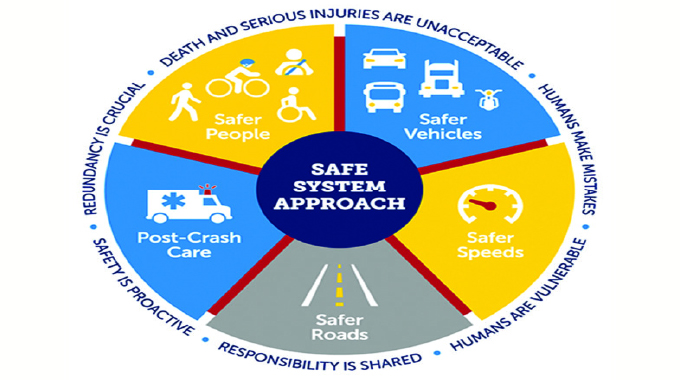
Ruvimbo Machingaidze, Tendekayi Marapara
As schools open, we need to review speed on routes to school
What is more valuable than life itself?
Are vehicles more important than pedestrians or cyclists?
When will it be safe enough for school children to walk or ride their bikes to and from school? When will it be safe for parents to let their children ride bikes or walk to school?
So many of our children’s deaths, injuries, and disabilities have occurred on their way to school.
The question of whether we should continue to use the term “accident” or “crash” again is no longer debatable.
Have we reached a point where we have no choice but to accept the current status quo, or we could hopefully come together to take action and save our children?
This is not a fantasy but a reality brought about by the complete breakdown of a safe system.
According to the World Health Organisation, road traffic crashes are the leading cause of death for people aged five to 29 all over the world.
Zimbabwe shares this fate with every other nation in the world.
Regularly drivers especially the pirate taxis (mushika shika) and commuter omnibuses (Kombi) drivers speeding, overtaking and passing on zebra crossings without stopping.
Youth for Road Safety (YOURS), identifies speeding as a danger as it affects the effectiveness of other road safety interventions.
Studies have shown that there is a correlation between increased speeds and an increased likelihood of getting hit by a car as well as increased severity and suffering life-threatening injuries or death.
Studies have shown that if a pedestrian is to be hit by a car travelling at 30 kilometres per hour, there is a 10 percent chance of dying.
Getting struck at that speed again has the same effect as falling face-first from the first floor of a building.
At 50 km/h, the risk of death increases to 80 percent, is the same as falling from the third floor of a building; at 80 km/h, it is the same as falling from the eighth floor.
Consider the agony that the body of a six-year-old must endure: permanent injuries and trauma.
Hitting a child is not an “accident”, and as such, it should never be referred to as a road accident but rather as a “road crash”, as it is possible to avoid such an occurrence.
Often, we hear that school children are naughty, they walk while putting on earphones but a lot of times we do not put the developmental stages of humans into account.
Humans, particularly young children who are still developing physically and cognitively, are at risk and increased likelihood of making mistakes.
Changes in the brain that strengthen neural connections initiate at this younger age, when children first enter school.
Young children lack the cognitive capacity to perceive danger and are thus unable to accurately judge the speed of oncoming vehicles.
Children are naturally curious and eager to try new things, but they can be easily distracted and even baffled by the sights, sounds, and movements of traffic.
Children are small and hard to spot on the road.
In addition to being extremely delicate, they are also quite playful and have relatively underdeveloped reflexes. Should we, in light of all of these natural occurrences, place all of the blame on school children, or should we stop blaming them and start protecting them?
We need to retain and promote the safe system approach, which recognises that human beings will inevitably make mistakes, but that those mistakes ought not to cost any of us our lives.
It also recognises that human beings are fragile, so it is important that all elements of the transportation system work together to keep everyone safe, before, during and after a crash.
This includes having five-star GNCAP safer vehicles that effectively protect pedestrians and cyclists from harm in the event of a collision, as well as having three-Star or better safer roads that are self-forgiving of human error, self-explanatory, easy to follow and encourage safe speeds and behaviour.
There is also need for an effective post-crash care, that is quick response from ambulance services, extrication services as well as hospital care.
Although we hope that motorists will follow all traffic rules, posted speed limits and stop at zebra crossings, we also acknowledge that mistakes will happen and that the most crucial part of our safe system is the management of speed.
Putting up a zebra crossing only and instructing drivers to come to a complete stop while the road environment does not communicate the same message is similar to drawing a line across a balcony and affixing a sign that reads “do not cross” in the absence of any railings.
We need self-enforcing speeds, to force drivers to slow down.
These are engineering treatments with accompanying traffic signs, as well as traffic calming infrastructure such as building speed humps, rumble strips, raised pedestrian crossings such as the one along Leopold Takawira and Speke Avenue in Harare, raised intersections, protected signalised intersections that prioritise pedestrians, and speed cameras, thereby reducing the severity of crashes.
We must move quickly to implement the maximum speed limit of 30 kilometres per hour as a policy around schools.
Although we encourage responsible driving, we also make allowances for the inevitable slip-ups that will inevitably occur.
System designers need to think outside the box , it is not only about cars. They should consider how vulnerable our children and their friends are while travelling to school.
There is an urgent need to shift from reactive strategies to becoming proactive that is to conduct road safety assessments around school zones employing international, regional, local best practices.
As schools have opened, we issue a call to action to all those involved and responsible in the design of transport systems to work on this urgent matter.
When we work together, we can save the lives of our children and prevent them from being injured or killed on the roads.
Tendekayi Marapara and Ruvimbo Machingaidze are road safety experts and members of the Global Youth Coalition for Road safety



 Online Reporter