


 Sundaymail Editor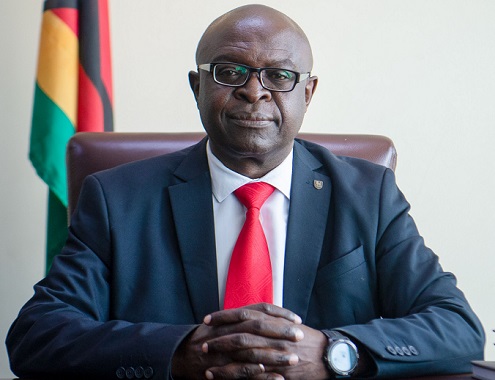
In its quest to fight corruption, the Zimbabwe Anti-Corruption Commission (ZACC) is spearheading the establishment of integrity committees and signing of integrity pledges in the public and private sectors as part of its broader corruption prevention strategy. The Sunday Mail’s Senior Reporter NYORE MADZIANIKE interviewed ZACC chairperson Mr MICHAEL REZA to get more on what the commission is doing to fight graft.
**********************
Q: ZACC has been facilitating the establishment of integrity committees in the public and private sectors, and signing of integrity pledges by public sector officials and private citizens. What is an integrity committee and what is an integrity pledge?
A: An integrity committee is an anti-corruption administrative committee tasked with designing and implementing measures to prevent corruption within the organisation’s sphere of control.
The integrity committee concept adopts a proactive, rather than a reactive approach in dealing with corruption occurring within an institution.
An integrity pledge is a commitment to act honestly and openly in all aspects, to promote transparency and accountability, and abiding by law and ethical principles, amongst others.
Put simply, an integrity pledge is a social contract through which individuals announce their commitment to act against corruption.
The integrity pledge was designed through a consultative process and adopted by both public and private institutions.
This pledge illustratively lists a set of positive principles and values to guide ethical conduct, including integrity, honesty, objectivity and impartiality.
Pre-set disciplinary actions and punishment will be instituted to any person who violates such a pledge.
Q: Explain how the establishment of integrity committees and the signing of integrity pledges are critical to the fight against corruption? What is the relationship between the two?
A: Establishment of integrity committees and signing of integrity pledges are critical in that they appeal to the conscience of employees; firstly, in their individual capacity and, secondly, as a collective under the banner of the committee to spearhead good ethical practices, strengthen good corporate governance and institutionalisation of corruption prevention and integrity promotion action plans focusing on interventions aimed at reducing opportunities for corruption.
The corruption prevention plan is designed by the committee, in consultation with the management and the rest of the employees.
In essence, the plan is tailor-made to organisational context and dynamics.
Q: What are the functions and responsibilities of integrity committees?
A: The main functions include promoting transparency and minimising opportunities for corruption; participating in the training of staff in ethics, integrity and anti-corruption strategies; providing an efficient and transparent monitoring and reporting mechanism to expose corruption; and receiving, considering and providing redress on all complaints emanating from within and outside the organisation relating to ethical issues and hindrances.
Q: Are there specific qualifications or competencies required for individuals to serve in the integrity committee, and how are these members selected?
A: Members should exhibit the highest standards of integrity and probity, strong critical assessment and judgement skills, as well as the ability to listen, forge relationships and develop trust.
A member of the integrity committee must be a person of unquestionable character and conduct.
Integrity committee members are appointed by the head of the institution.
All members must possess the requisite qualifications and experience, as outlined in their respective job descriptions.
Q: Is there a relationship between integrity committees and Zimbabwe’s National Anti-Corruption Strategy (NACS)?
A: Zimbabwe implemented the NACS that was launched by His Excellency, President Mnangagwa, for 2020-2024.
The NACS had strategic and specific objectives that Zimbabwe sought to achieve in as far as the fight against corruption was concerned.
Strategic objective two sought to enhance the structures for deterrence, detection, adherence and enforcement through improved compliance with anti-corruption and integrity management obligations and mechanisms across sectors.
Strategic objective three was to increase public demand for transparency and accountability, and rejection of corruption in Government offices, ministries, agencies and State-owned enterprises (SOEs) and or parastatals, public institutions, media houses and the private sector.
It is under these two broad strategic objectives that integrity pledges and integrity committees were mooted.
The intention is to mould an ethical citizenry; this will ultimately manifest in the public sector and corporate world.
Graft is one of the obstacles to the socio-economic development of the country.
Therefore, eradicating corruption is a key pillar of the National Development Strategy 1 (NDS1) and attainment of Vision 2030, as enunciated by His Excellency, the President.
Q: What mechanisms are in place to ensure effective operationalisation of integrity committees?
A: ZACC does not capacitate integrity committees and end there. The commission works with institutions to design an action plan. We go on to monitor the activities of the committee.
Integrity committees are monitored according to an agreed and endorsed action plan, which outlines specific activities to be undertaken within a set time frame.
Additionally, these committees submit quarterly reports to ZACC detailing their progress on the activities they have conducted.
Q: How does ZACC ensure that those who have signed integrity pledges abide by the commitments they would have made for improved governance within the public and private sectors?
A: ZACC employs several strategies to ensure that individuals and organisations that have signed integrity pledges adhere to their commitments, promoting improved governance in both the public and private sectors.
You know that ZACC has investigating and arresting powers.
We do not hesitate to deploy our investigators against such individuals and organisations because more often, where there is a deviation from compliance, chances are high there is criminal intent.
However, before we move to investigate, ZACC provides training to educate integrity committee members about the importance of integrity and the specific commitments made in the pledges.
This training empowers them to motivate and educate other employees on the significance of the pledge.
Additionally, ZACC conducts public awareness campaigns regarding the integrity pledge, encouraging accountability and fostering a culture of transparency.
Q: Who are the primary stakeholders targeted for the signing of integrity pledges, and what criterion is used to identify them?
A: The primary stakeholders targeted in the signing of integrity pledges are Zimbabweans within the diverse groupings they identify with and, as the President always says, no one is being left behind.
As such, we have engaged the Public Service Commission (PSC) to incorporate adherence to the integrity pledge as one of the key requirements for individuals upon recruitment.
This is so because the PSC is Zimbabwe’s largest employer.
ZACC aims to foster a culture of integrity and accountability across various sectors.
Civil servants are crucial for implementing policies and services.
We have reached out to academics because we believe they contribute research and insights into best practices for governance.
We have also targeted political actors because we believe they play a vital role in shaping legislation and public policy.
We are even targeting traditional leaders, who are the custodians of culture and often influence community values and behaviours.
Q: To what extent have integrity committees achieved their objectives and what measurable outcomes have been observed so far?
A: The integrity committees have fulfilled their purpose through several key achievements; that is, identification of corruption and potential corruption gaps within institutions.
Mechanisms to address and close those gaps have been implemented effectively.
There has been a notable reduction in corruption due to the promotion of high ethical standards and good corporate governance practices.
This shift has encouraged organisations to adopt transparent processes and accountability measures, and improvement of institutional integrity.
The moral fabric of numerous public institutions has improved significantly, leading to successful initiatives aimed at curbing corruption.
Enhanced integrity within these institutions fosters public trust and encourages citizen engagement.
Through these efforts, integrity committees contribute to creating a more transparent and accountable governance framework in both the public and private sectors.
A case in point are the increased reported cases against or by local authority officials.
Through collaborative work with the Ministry of Local Government and Public Works, ZACC has facilitated the training and establishment of integrity committees in 84 local authorities.
These committees have been effectively executing their mandate.
Last year alone, out of 999 reports received, 109 were against or by local authorities.
Q: How many organisations have established integrity committees and how many individuals have signed integrity pledges since the inception of the programme?
A: A total of 146 institutions have established integrity committees, reflecting a broad commitment to promoting ethical governance.
The breakdown of these committees is as follows: universities and colleges — 17; ministries — three; local authorities — 84; schools — 25; and parastatals — 17.
Also, over 7 000 individuals voluntarily signed the integrity pledge.
Q: After the establishment of integrity committees and signing of integrity pledges, what form of support does the commission provide? How is the performance of these committees evaluated?
A: ZACC provides comprehensive training for integrity committees and assists in the crafting of their action plans until they are officially endorsed.
These committees are responsible for submitting quarterly reports to ZACC, detailing their activities and progress.
ZACC monitors the implementation of the issues addressed in the action plans to ensure accountability and effectiveness.
Through this structured approach, ZACC aims to strengthen the capacity of integrity committees, enabling them to effectively combat corruption and promote ethical practices within their respective institutions.
Q: Can you provide examples of notable successes or case studies where integrity committees have significantly improved organisational accountability?
A: I have already spoken to the success story within the local authorities that have resulted in some arrests and convictions.
Recently, Harare City Council officials were sentenced to 10 years in prison.
However, I admit, we still have a lot of work to do within these local authorities.
We have integrity committees within institutions such as the Zimbabwe National Road Administration (Zinara), Zimbabwe Open University, the Zimbabwe Revenue Authority (Zimra) and Mutare City that have demonstrated notable successes in the fight against corruption.
These committees have implemented effective measures to identify and address corruption risks, leading to increased transparency and accountability in their operations.
For instance, Zimra has improved tax collection efficiency and reduced revenue leakages. You know about the syndicate that has been behind the abuse of the civil servants’ vehicle rebate.
Arrests have been made and close to 300 vehicles were seized.
At Zinara, this committee has enhanced financial management practices.
Q: What steps is ZACC taking to increase awareness and engagement among institutions that are yet to establish integrity committees or adopt integrity pledges?
A: ZACC is increasing awareness and engagement on the establishment of integrity committees through the engagement of the Institute of Directors Zimbabwe to establish integrity committees in the private sector.



 Bongani Ndlovu
 Online Reporter