Tinaye Agere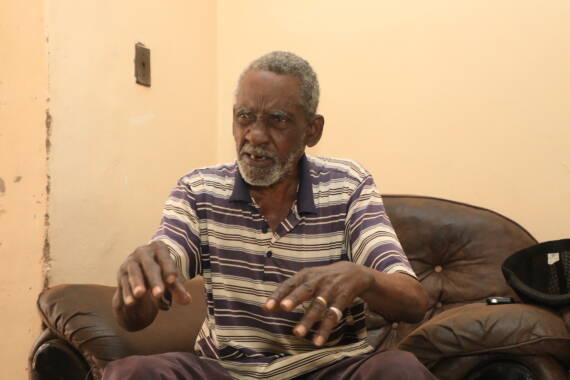
Last week, CDE WILLIE GAVHU, whose Chimurenga name was Cde Changamire Monomotapa, spoke about how he crossed the border into Mozambique in 1975 to join the liberation struggle after leaving his job as a technician at a clothing factory in the then-Salisbury (now Harare). When he got to Chimoio in Mozambique, he was initially stationed at a place commonly known as “PaDaf”, where he assisted in operating the grinding mill belonging to the Zimbabwe African National Union (ZANU), using skills he had acquired as a technician back home. This week, he tells our Political Editor KUDA BWITITI about the training he received at Chimoio.
**************
Q: What happened next after working at the grinding mill at PaDaf in Mozambique?
A: I was then selected to undergo military training at the Chimoio ZANLA headquarters camp, which was situated about 40 kilometres to the north-west of the Mozambican town of Chimoio. The training, which included political orientation, military drills, physical exercises, theory of guerrilla warfare, individual battle tactics, handling of weapons, ranch practice and bayonet fighting, took several months to complete. My instructors included Cde Murindagomo and Cde Machiwenyika. They were adept at their duties.
Q: Please give us the ins and outs of the training you received.
A: The trainers trained me to be a good commander to other comrades. They also made me grasp the concept of warfare in general. Since the training included political orientation, this was of fundamental importance, because it was about changing the mindset to enable one to interact well with the masses. It should be clear that fighting the war was not all about having guns and destroying the enemy. One needed to have the correct frame of mind to understand why one was sacrificing so much fighting the war. It was also about understanding the masses, enemy forces and our relations as fellow guerrillas.

As ZANLA fighters, we were taught that we were made up of three elements: a fighter force, a production force and a teacher (commissar). The training taught us how to understand all types of people and evaluate how a person thought and behaved, as soon as you met them. The instructors, as we used to call them, taught us how to think differently from ordinary people. As guerrillas, we were supposed to be pragmatic and think very fast to be ahead of the enemy and the prevailing situation.
Q: How exactly was a guerrilla supposed to think?
A: We were taught to be agile in our political thinking. A guerrilla had to think and react to survive, meaning you could not take anything for granted. One was also not supposed to think about oneself, but your other comrades and the cause of the liberation struggle as a whole. One was supposed to put the reasons for fighting the liberation war ahead of anything else and stand guided by them in whatever they did daily.

The mind had to be properly calibrated to be on top of every situation. Once the mindset was well-shaped, it was easy to become a guerrilla. This is how we were minted to be invincible as guerrillas. The philosophy of ZANLA guerrilla fighters was that the gun was not just to fight the enemy forces, but it was also a weapon of political mobilisation, to get the people behind us, for independence to be attained. Furthermore, as guerrillas, we were supposed to have an inquisitive mind; always questioning things.
As guerrillas in a war situation, you were supposed to question yourselves, even if everything appeared normal, because what you thought was right could be totally the opposite. You always needed to question if what you were thinking was right, or if it was not a mistake that could get you into trouble. You needed to revise your thinking all the time.
Q: How did this psychological training help you?
A: Our minds were wired to fight the war and defend the revolution. We never wavered or sold out because of the training that we received, despite the fact that one was always looking death in the eye. We learnt not to talk too much about the war. So, you can see that the mindset of a guerrilla was sophisticated.
Q: Tell us about your training in weaponry.
A: We learnt how to handle guns. I was quite adept when it came to handling all types of guns, from small arms to heavy weaponry. And I sailed through that part of the training programme with flying colours.
When I was chosen to specialise in artillery weapons, I quickly adapted, but not everyone who trained with us in artillery managed to sail through like I and others did. I was found to be good at using these bigger weapons. I was selected to be part of those who were to operate them in defensive positions, as well as when we needed to go and attack enemy positions. Our training was also very physical, and I was also good in that aspect because I was in great physical shape.

The training at Chimoio was not the only training I received. I also furthered my training in the infantry at the Mudzingadzi Base, just before I was deployed to the front. The training at Mudzingadzi was more specialised, as it focused more on what to do during actual combat.
This type of training also shaped me to be a commander, which later led to my role as a detachment commander in the Gaza province. I rose in rank at the battlefront and was chosen to become a detachment commander for Sector 3. Even though I was the commander of the detachment, it was because I was so adept at handling the M90 rocket launcher that I again operated during battles.
Q: What did it take to become a detachment commander?
A: A detachment commander was a rank below that of the General Staff. The rank could be of one operating at the battlefront (in the then-Rhodesia), or at the rear (Mozambique bases, as was the case with ZANLA). Provincial commanders were in charge of the three war provinces, which were Tete, Manica and Gaza. Below provincial commanders were sectoral commanders in charge of each sector. Below sectoral commanders were detachment commanders . . . Each level of command had the following ranks: commander, political commissar, security (seguranza), logistics and medical officer.
Next week, Cde Gavhu shares some of the many battles that he was involved in, as he made use of his specialised training to become an efficient fighter during Zimbabwe’s war of liberation.


 Online Reporter