admin
admin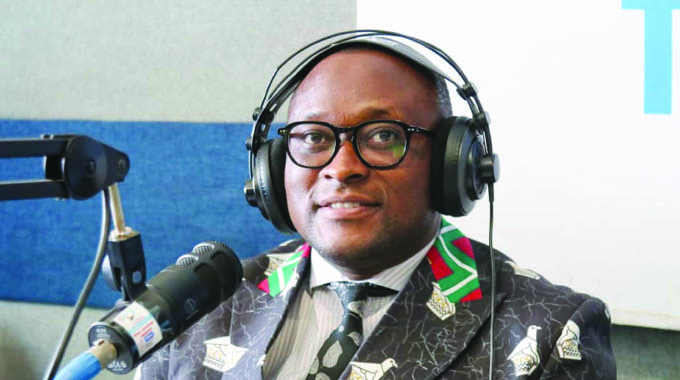
Star FM presenter George Msumba (GM) had an interview with Information, Publicity and Broadcasting Services Minister Dr Jenfan Muswere (JM) on the “State of Affairs, a current affairs programme that discusses important events.
GM: Zimbabwe will in August host the SADC Summit to enhance cooperation with countries in the region and there are also some various development aspects going on in the country. If you can just regale us on the SADC Summit, what it means and also some of the development which is coming through because of us hosting this SADC summit.
JM: The first issue is to highlight that our preparations are at an advanced stage in terms of infrastructure, the road infrastructure, in terms of the water, reticulation infrastructure, the communications infrastructure, the developments around the reception, the beautification of the city and many other issues related to the hosting of the SADC summit, but also to highlight, as I have indicated, that under the leadership of President ED Mnangagwa, that Zimbabwe has been given an opportunity, a unique opportunity to be able to foster cooperation, regional cooperation and also to champion peace and stability within the region.
Also owing to the re-engagement, engagement and re-affirmation initiatives under the leadership of President ED Mnangagwa, the region is confident that Zimbabwe is in safe hands.
The region is also confident that Zimbabwe shares in August, as Zimbabwe will primarily also focus on the promotion of economic integration by advocating for the implementation of various initiatives, which also includes the Regional Indicative Strategic Development Plan, the SADC Industrialisation Plan, the African Continental Free Trade Area, among other regional issues as we chair the block.
Zimbabwe will also champion a number of issues related to regional infrastructure, their development projects such as transportation networks, the railways, the airports, the power generation, telecommunications.
And as you are aware, that Zimbabwe has engaged in a massive investment in rehabilitation mission of major highways and also major road infrastructure projects that also link with the rest of the region, that also Zimbabwe has been involved in the development of key ports, which also includes the Beitbridge border post, which has been rehabilitated, is totally transformed, as one of the key ports to the region.
So Zimbabwe is also championing infrastructure development aimed at improving connectivity in the facilitation of the movement of goods, services and the people in the region.
So these are some of the issues that Zimbabwe will be championing, but also given a background that Zimbabwe is a democratic country, as a country and is a people that engaged in a war of liberation to overthrow imperialism, and that Zimbabwe is a firm believer in terms of the equality of foreign nations and also to the right to self-determination.
Zimbabwe will prioritise conflict resolution, peacebuilding initiatives, also including promoting dialogue and mediation in countries experiencing political conflict, but also given a number of transformational policy and implementation plans around agriculture; given the reality that SADC is experiencing a severe drought following the failure of the 2023/2024 farming season in a number of countries due to the effects of El Nino.
Zimbabwe will also spearhead the current initiatives that we have adopted as a country, which also include climate proof agriculture among Member States, during Zimbabwe’s tenure as Chair in terms of promoting capacity building and technical cooperation.
This will then ensure that we have institutional capacity and human resources development in many spheres of regional economies, including in agriculture, in education, and also in ICT and road construction is the way that Zimbabwe took a transformational journey to localise and domesticate value chains as we journey towards an upper middle income society by the year 2030.
So the targeting, the policy framework, these are some of the issues that Zimbabwe will be in a position to share with other original countries on how best we can promote industrialisation and value addition in the region by supporting initiatives such as the SADC Industrialisation Strategy and the African Union’s Agenda 2063.
So by prioritising these areas, Zimbabwe can then effectively utilise the SADC chairmanship to enhance regional cooperation, drive economic growth and improve the lives of citizens within the SADC region.
GM: The planned visit to Harare by the British Minister of State for Development and Africa, Andrew Mitchell, and the African nation’s expected return to the Commonwealth fold during the summit in Samoa towards the end of the year. What is your take on that?
JM: As I’ve indicated, that Zimbabwe’s engagement and engagement efforts continue to bear fruit is evidenced by the current framework that we have, which allows us to be able to participate at various multilateral platforms, which has also allowed us as a country to be able to look forward to receiving the British Minister for State for Development in Africa, Andrew Mitchell, and that Zimbabwe’s expected return to the Commonwealth during its summit in Samoa in October 2023, and also the West’s change in terms of the attitude also underlines the importance of the engagement and re-engagement strategy.
I also had an opportunity last year to attend the Commonwealth Telecommunications Organisation for the first time in more than 20 years, which clearly shows us that the West’s attitude towards Zimbabwe is changing.
And His Excellency, the President has also participated in a number of initiatives now, which also attests to the positive discourse that the engagement and re-engagement strategy has managed to score.
So rejoining the Commonwealth is a good initiative, it would able to be part of a mutually supportive community that amplifies the voice of African nations and also ensures that Zimbabwe’s global political and economic voice is heard in other international constituencies. So I can confidently state that we look forward to Mr Andrew Mitchell’s coming to Zimbabwe and we are also working on a number of initiatives for us to be able to be part of the Commonwealth, as part of the engagement and re-engagement strategy.
And I’m also proud to say that the President’s engagement and re-engagement initiatives have also resulted in improved relations between Zimbabwe and Britain.
You know, we’ve got a painful past, a difficult past, given the colonisation, but we also have differences. But through the engagement and re-engagement strategy, we believe that we are a friend to all and enemy to none.
So we look forward to renewing our relations, to the re-engagement with other nations, to working together to improve trade, for us to be able to work together on markets, for us to be able to work on our international relations as Zimbabwe.
To be continued


 Online Reporter