

 admin
admin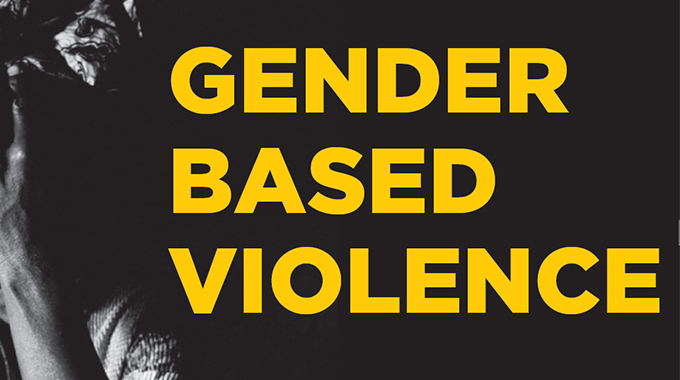
Sharon Tawuya
For years, 33-year-old Patience Sibanda, endured beatings and abuse at the hands of her husband. Like many women in Zimbabwe, she felt trapped as she was financially-dependent on her husband.
“I had nothing on me, no cash, nothing. I stayed with him because I had nowhere to go and no means to support myself and my four children,” Sibanda recalls. “And my husband knew this and used my desperate situation to control my life.”
The bashing went on unabated.
Sadly, Sibanda’s story is all too familiar in Zimbabwe, where gender-based violence (GBV) remains a huge burden. The country’s latest Demographic and Health Survey says over 35 percent of women have experienced physical violence, and 14 percent have endured sexual violence from an intimate partner. In addition, over one in three women in the country have experienced physical violence since age 15, the survey notes.
That is why the Government, in conjunction with the Nations Population Fund(UNFPA) and other development partners, are focusing on initiatives to boost women’s economic independence — a vital cog in combating GBV countrywide.
With programmes supported by the United Nations’ Central Emergency Response Fund (CERF), Sibanda and many other women are benefiting from essential skills and resources to start their own small businesses, ranging from urban agriculture, mining, fence making, rural agricultural production to textile production.
Sibanda is part of Tswaranang Basadi Safe Space Group of women in Gwanda, in Matabeleland South Province. Here, the women were taught how to make fences, which they are now selling to schools and other people in the community. They also make and sell detergents.
As part of this process of work, “safe spaces” are being established across the country, providing survivors of gender-based violence with emergency shelter, counselling and pathways to financial stability. These initiatives are proving to be a powerful tool in the fight against GBV.
The safe spaces also support a network of internal savings and lending schemes. By enabling women to accumulate savings and access small loans, these groups not only build their economic resilience, but provide a vital community of support.
Sibanda says: “I’m excited that I now support myself and my children. I’m no longer trapped or afraid.”
Tswaranang Safe Space Group takes turns to raise money to buy fences to secure their homesteads as well as goats for livestock production. “At Tswaranang, I found my voice, connected with others in similar situations and learnt that I had options. It gave me the courage to start rebuilding my life,” said Sibanda.
UN Women’s research indicates that for every US$1 invested in women’s economic empowerment initiatives in Zimbabwe, there is a US$5 return in reduced costs related to GBV, including heath care, legal services and lost productivity.
These safe spaces take many forms — from community centres to virtual support groups. But at their heart is the idea of providing a sanctuary where women can find solidarity, share their experiences and mobilise for change.
According to Musasa, a women’s rights and advocacy group, drought increased the risk of intimate partner violence, sexual assault, child marriages as well as harmful traditional practices.
The Ministry of Women Affairs, Community, Small and Medium Enterprises has been implementing a six-month project in partnership with UNFPA and other UN agencies with support from CERF, as part of the drought anticipatory action plan to prevent GBV during the drought period. However, the initial project was launched in 2006.
Started in January 2024, the short-term initiative to mitigate women against drought effects, the project aims to strengthen GBV services to vulnerable women and girls in eight affected districts of Chipinge, Buhera, Mwenezi, Chiredzi, Hwange, Umguza, Beitbridge and Gwanda. The new CERF funding will provide life-saving assistance to nearly 32 000 women.
Speaking recently at Masiyephambili Safe Space in Umguza, Matabeleland North where he led other UN agencies to appreciate the role played by CERF projects as a way of strengthening resilience to drought, UN Resident and Humanitarian Coordinator,Edward Kallon, said the economic empowerment of women goes a long way in fight against GBV.
“The awareness has been raised and you are going beyond awareness and talking of economic empowerment.”
Kallon also said: “These projects don’t just transform individual lives, they have a profound ripple effect on communities and the economy as a whole.”
UNFPA Zimbabwe country representative, Miranda Tabifor said as a technical implementer of the CERF project, her organisation was satisfied with the results of economic empowerment of GBV survivors as a strategy to fight GBV.
Jane Ngwenya, a member of Masiyephambili Safe Space Group in Umguza said having her own money had reduced violence in her household. — New Ziana


 Peter Tanyanyiwa
 Online Reporter