admin
admin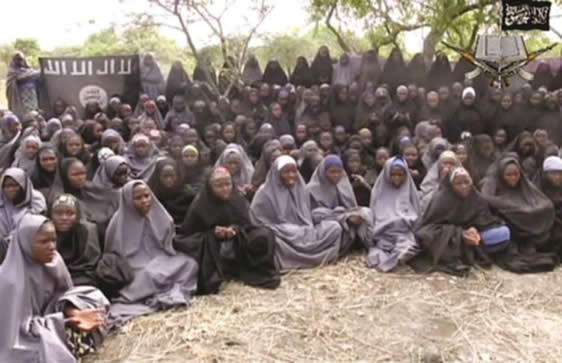
Yoliswa Dube Features Reporter
HOW could more than 250 girls vanish without a trace? Imagine if the eight o’clock news bulletin headline on the local television station said: “250 schoolgirls from Nyamandlovu abducted”. Shocking, puzzling and most certainly disturbing would the report be. Imagine the reaction of the parents of these girls and all parents in general, school authorities and Zimbabweans at large.
How would the Zimbabwean government and the rest of the continent react to such news?
Nigeria is in a quandary after the abduction of more than 250 school girls by the Islamist insurgent group Boko Haram at a boarding school in Chibok, Borno state, northeast of Nigeria, on April 14, over a month ago.
More shocking were the shameless claims by the militant group’s leader, Abubakar Shekau, that he would sell off the girls into slavery and marriage.
Boko Haram got the attention it wanted.
After the international outcry, Shekau, on May 12, outlined conditions for the release of the girls saying they would only be released “if you (government) release our brethren” (militants in custody).
In a rare show of unity, the leaders of Nigeria, Cameroon, Niger, Chad and Benin pledged cooperation including joint border patrols and sharing intelligence to find the girls while Western nations would provide technical expertise and training to the new regional African effort against the Islamic extremists.
The plan was announced at the conclusion of a security summit in Paris hosted by French President François Hollande recently. France? One would have expected the African Union (AU) to take a leading role in the search for the abducted Nigerian school girls. But for unknown reasons, the AU is taking too long to act in bringing peace to the oil giant’s kidnapped girls. Instead, western powers have taken the leading role.
Where was the AU before the summit in France?
This problem has gone beyond Nigeria and its 250 missing school girls and Boko Haram has become a major threat for the whole of west Africa and now for central Africa.
May 25 marks Africa Day and the continent is in the midst of a crisis and has no homegrown solutions.
This deafening silence shows how deep-seated the dependency syndrome is in African countries.
Reliance is on countries such as the United States of America (USA), which are so poorly informed about the rest of the world and so strangely enamoured of their own government and its intentions, automatically falling back to the worst solution of all, foreign military intervention.
Barack Obama has said he will assist the Nigerian military, a solution which may understandably please people who are concerned about the fate of these young women but the last thing Nigeria needs is a foreign military presence to prop up its government.
Nigeria is essential to the United States Africa Command (AFRICOM), which puts African militaries under the direct command of the USA.
AFRICOM is one of six of the US Defence Department’s geographic combatant commands and is responsible to the Secretary of Defence for military relations with African nations, the African Union, and African regional security organisations. It is also responsible for all US Department of Defence operations, exercises, and security cooperation on the African continent, its island nations, and surrounding waters. It is headquartered in Germany.
It is in place to protect the resource pipeline and to restrict efforts to keep any other nations from bringing resources that Africans need.
AFRICOM hasn’t helped the victims of Boko Haram thus far.
This level of insurgency was expected in a country that for decades was under successive military juntas. Security should have been the priority of the civilian government since former president Olusegun Obasanjo became the first democratically elected leader.
Nigeria is also Africa’s economic powerhouse, but if it cannot strengthen its security systems using its own resources, and has to rely on assistance from the West, it becomes problematic.
It’s high time Africa learnt to deal with its own problems firmly instead of perpetually playing second fiddle to the leadership of the West.
The AU, through the Peace and Security Commission should strive for zero tolerance on terrorist activities. The Commission needs to be more active and should have used the Nigerian case to show its commitment towards the eradication of terrorism on the continent.
The problem with the AU is that it is slow to take action and sometimes fails to lead by example. In the Malian crisis, people witnessed in 2012, the AU failing to send forces to repel the rebels who caused havoc in that country.
The AU watched as the Islamists rebels went on to destroy the centuries old Timbuktu and Ancient Surf Shrines causing the demise of tourist attraction sites.
The rebels only surrendered after the French army intervened and repelled the marauding rebels, leading to democratic elections in 2013, which brought in a new government.
In another incident, the AU failed to take action in the spring uprisings that swept through Tunisia, Egypt and Libya some years ago. The inaction of the AU in such troubled spots in Africa led to the overthrow of the leaders of those countries with lives being lost.
In Libya, the international community led by the USA deployed their armed forces that fought against the Muammar Gaddafi-led government as the international community said Gaddafi was committing crimes against humanity by killing his people yet Gaddafi was defending his territories from rebel attacks.
The USA sponsored a resolution in the United Nations Security Council which called for a no-fly zone for Libyan planes resulting in the bombardment of Libyan territories by allied forces in search of government forces that were fighting to repel the al-Qaida led rebels.
This salvo of the Libyan territories by the allied forces, led to the capture and assassination of Gaddafi by the allied forces-supported rebels, yet the AU remained silent.
Just recently, the crisis in South Sudan only needed the intervention of the USA through its Secretary of State, John Kerry to persuade the rebel leader Dr Riek Machar and President Salva Kiir to come to the negotiating table, leading to the signing of the ceasefire in Ethiopia.
The AU did not see any need to help the warring parties in South Sudan in order to end war but remained silent as thousands of innocent people were butchered.
However, the AU has a better understanding of African issues than these western countries. They know that bullhorn diplomacy and advertisement of military hardware does not solve crises in Africa.
The Americans went into Somalia with bravado and came out tail between the legs simply because they assumed the Africans were too docile to do something about the situation. Now they have invited themselves into Nigeria, they will fly around, take fancy satellite photos, find nothing and blame the Nigerian government.
Nigeria is an oil rich nation, before anyone realises it international interference will be knee high, which will translate to Africa falling prey to the insatiable oil appetite of the West.
Africa needs to pull up its socks and take control. If it is not careful, it will plunge itself into a precarious position.
Meanwhile, the message is simple. Bring back our girls.


 Online Reporter