admin
admin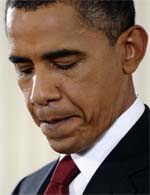

Hebert Zharare Political Editor
THE Western coalition’s attempts to bomb Syria hit a snag over the weekend as the credibility of the Western leadership’s claims that Syria used chemical weapons on civilians was called into question given the way London and Washington lied about Iraq ahead of the 2003 invasion.
Despite fierce opposition from the progressive world and with UN investigators in Syria, US president Barack Obama and his British and French allies had vowed to go into Syria without a UN mandate, raising the spectre of the disastrous invasion of Iraq 10 years ago that followed similar sensational allegations that Saddam Hussein had stockpiles of weapons of mass destruction that could be deployed to annihilate the world in less than 45 minutes.
The House of Commons consequently rejected a motion to authorise the British government’s participation in attacking Syria, forcing Obama, to consider unilateral air strikes against the Arab state which have since been put on hold as he seeks the support of Congress.
Analysts say Mr Obama’s motive for seeking congressional approval was to add an aura of legitimacy to the military intervention, but even the US Congress had no legitimacy to endorse a strike on Syria outside the purview of the United Nations Security Council. Iraq, and the drive to attack Syria, are just some of the numerous cases in which the Western powers have wantonly violated international law.
The economic sanctions regimes the Westerners imposed on Zimbabwe are a violation of international law as they were imposed outside the UN system and attempts to get the UN to endorse the sanctions flopped.
The British government’s refusal to honour obligations entered into with the Tory administration of Margaret Thatcher was also a violation of the international law of succession.
Politician and human rights activist, Mrs Margaret Dongo, said the lesson learnt in the destructive Iraq expedition might have forced the British Parliament to reject the proposal.
“The British learnt a huge lesson in Iraq and other countries. During that expedition, not all the MP endorsed it. They were embarrassed that after intervening in that country, no weapons of mass destructions were found. Now the question is how are they going to compensate the human wastage that took place in that country and besides, no weapons were discovered.
“The British have realised that their intervention in that country was likely to cause damage to the people and the country. Their fight for human rights is questionable, are these not human rights? The air strikes do not choose and in most cases targets are missed and innocent people are killed. If they are so rich, why cannot they give the money to poor people in Britain or in other parts of the world,” she said.
Mrs Dongo said it was unfortunate that the same British Parliament that voted against the Syrian raids, did not do anything when Mr Blair’s Government refused to fund the land reform programme before imposing illegal sanctions on Zimbabwe.
“These people are fond of bullying Africans. The sanctions hurt me. How can they punish such a small country? Why are they trying to kill a country whose wealth they have been looting for such a long time. We have just held a free and fair election that has become a role model for Africa and other countries in the world. There are enough reasons for them not to lift the sanctions they imposed on the country,” she said.
He said the British were not grateful because they continued destroying the country they had been looting for decades.
Another analyst and Midlands State University Lecturer, Dr Nhamo Mhiripiri, concurred with Mrs Dongo saying the British were embarrassed by the developments in Iraq.
“In the scheme of things, the British and Americans are still haunted by the developments in Iraq, how they fabricated lies about the presence of weapons of mass destruction. It is now difficult for them to convince the public about any future expeditions,” he said.
Dr Mhiripiri said given that the UN had not unanimously sanctioned the planned raid on Syria and after they had abused the UN Security Council’s no flight zone resolution to attack Libya, there was no way the British public could have sanctioned the strikes.
Commenting on the continued imposition of sanctions on Zimbabwe, Dr Mhiripri said it was unfortunate that the British were failing to listen to African opinion on Zimbabwe.
University of Zimbabwe lecturer Dr Charity Manyeruke, said developments in Iraq taught the British a huge lesson and they were considering other options before resorting to strikes.
“After the British Parliament refused to endorse the raids, (Mr) Cameron told the Americans that they should understand that position. They are realising the importance of listening to the people. The British are saying no because they have realised that all the previous strikes have been American machinations.
“The other issue is that the British are facing serious financial crises besides the global economic crisis. There are so many people who are unemployed and the British no longer want to waste money on such wars,” she said.
Commenting why the same British parliament declined to denounce the sanctions and their government’s refusal to accept a Zanu-PF victory, Dr Manyeruke said eventually, all hostile nations were going to accept Zanu-PF.
“On Zimbabwe, they will eventually accept that Zanu-PF has won the elections. It happens in diplomacy. They cannot say immediately we have accepted Zanu-PF’s victory. It is not simple for someone who has been against you for so long to just change. What is critical is they are going to accept Zanu-PF. The people of Zimbabwe have spoken and they will go by that,” she said.


 Online Reporter