


 Online Reporter
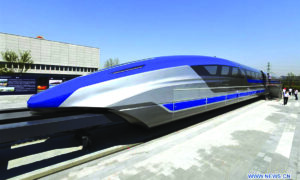
The Chinese yet again left the world spellbound last week when they unveiled what probably is the world’s fastest-ever ground transport vehicle — the maglev train — that can reach speeds of 600 kilometres per hour in just seven seconds.
Not only can it accelerate rapidly, it can also decelerate to zero in just 200 metres.
Incredible!
The maglev represents a remarkable breakthrough for China’s magnetic levitation technology.
It also cements China’s reputation as a world leader in high-speed rail (HSR).
Today, it boasts the world’s largest high-speed rail network, with a total track length of 42 000km covering 80 percent of major cities — more than the rest of the world combined.
The system also carries more than two billion passengers annually, far surpassing Europe’s TGV and Japan’s Shinkansen.
Europe, by contrast, only has about 8 600km, while the United States has none.
This has been the story of China for the past 47 years, as it continues to push the frontiers of science, technology and innovation. But it did not just stumble on success.
Boasting an uninterrupted civilisation that has a history of over 5 000 years, it has carefully curated its social, political, economic and cultural traditions, in the process gifting to the world transformative innovations that have shaped global civilisation.
The invention of paper by Cai Lun around the second century (during the Han Dynasty) revolutionised both literacy and record-keeping, while the discovery of gunpowder by alchemists seeking immortality during the time of the Tang Dynasty in the ninth century changed warfare globally.
Some of the inventions that have also benefitted humanity are the compass, printing, silk, porcelain, paper money (first fiat money to address coin shortages) and the umbrella. So, China’s old and current successes, as well as its value systems, are clearly a product of the crystallisation of the wisdom of its civilisation.
Bishop Lazi, however, would like you to underline a fundamental distinguishing feature that shapes its current development trajectory: its embrace of the guiding philosophy of “socialism with Chinese characteristics” — a curated hybridisation of social, political and economic ideologies and models to suit its local conditions and context.
Its system naturally takes the best from both worlds.
It also reminds the Bishop of the concept of integrative thinking, which was developed by Roger Martin, a former dean of the Rotman School of Management at the University of Toronto (Canada).
He described integrative thinking as “the ability to face constructively the tension of opposing models and instead of choosing one at the expense of the other, to generate a creative resolution of the tension in the form of a new model that contains elements of the individual models but is superior to each”.
Quite profound.
This is the essence of innovative thinking.
This is a philosophy that is continuously preached by Chinese President Xi Jinping.
“We must uphold the principle of independence and explore diversified paths towards modernisation,” he once said.
“Modernisation is not ‘an exclusive patent’ of a small handful of countries, nor is it a single answer question . . . For any country to achieve modernisation, it needs not only to follow the general laws governing the process, but more importantly consider its own national conditions and unique features.”
The moral of the story is: Development does not have a single political totem.
There are many and different paths to modernisation and development.
It is, however, also important to note that China’s continuity, including of its language and writing systems that connect the past, present and future, was aided by its geography or terrain, which insulated it against large-scale invasions, helping to retain its core traditions while simultaneously evolving in response to changing circumstances.
It is more or less the same with Iran, whose civilisation similarly stretches back 5 000 years.
Throughout history, either as Persia or modern-day Iran, it has demonstrated capacity to withstand foreign aggression while remaining rooted in its deep civilisational identity.
It withstood invasions by Alexander the Great and Mongol armies.
Even in the face of ongoing aggression, including from the mighty US, it still stands.
Sad tale of Africa
Unfortunately, the same cannot be said about Africa, which suffered several calamitous historical episodes — most notably, the transatlantic slave trade and colonialism — which were not only disruptive but highly extractive.
The damage that was suffered by the continent is both unconscionable and incalculable.
While some, like the Caribbean Reparations Commission, estimate that Africa is owed in excess of US$100 trillion for slavery and colonialism, one cannot simply put a number on these egregious crimes.
But perhaps the most haunting legacy of colonialism, which continues to affect the organisation of societies, governance and the cohesiveness of institutions and systems, was the subversion of time-tested indigenous knowledge systems, traditions, cultures and civilisations, and their subordination to alien Western legal systems and cultures. The tragedy is that traditional political institutions were viewed with disgust and suspicion in the post-colonial era.
As was observed by Professor Dani Nabudere, they were only tolerated to the extent that they were retained only as cultural institutions.
Various African scholars have also raised concerns on the seeming incompatibility of democracy, as promoted by the West, with governance systems associated with traditional African life.
Western democracy has only succeeded in sowing rancour, divisions, tribalism and poverty in African societies.
Romans 16:17-19 tells us: “I urge you, brothers and sisters, to watch out for those who cause divisions and put obstacles in your way that are contrary to the teaching you have learned. Keep away from them. For such people are not serving our Lord Christ, but their own appetites. By smooth talk and flattery they deceive the minds of naive people.”
Mwalimu Julius Nyerere, the first president of independent Tanzania and one of the foremost leaders of the Frontline States, realised back then that the wholesome adoption of capitalism was not in the best interest of African societies.
He thus championed Ujamaa (Kiswahili for extended family), or villagisation, which was essentially premised on repudiating capitalism and all its trimmings.
At its core was the desire to recreate traditional societies by moving people from cities, which were viewed as centres of decay of traditional value systems, to rural villages, where communities were expected to thrive through collective farming.
Nyerere set out his policy in the Arusha Declaration of February 5, 1967.
It was, however, a resounding failure.
Ujamaa ended in 1985 when Nyerere stepped down from the presidency in favour of Ali Hassan Mwinyi.
Although it failed, villagisation represented an earnest and noble attempt to engineer a system suited for development in the African context.
Nyerere’s social experiment was eerily reminiscent of Mao Zedong’s Cultural Revolution, launched in 1966 as a sociopolitical movement to eliminate capitalist and traditional Chinese elements from society.
Mao, who especially feared urban social stratification, wanted to create an egalitarian society where educational, healthcare and cultural systems were less elitist.
Chairman Mao also feared bourgeoise infiltrators in the Chinese Communist Party (CPC).
But the Cultural Revolution, like Nyerere’s Ujamaa, was highly disruptive.
However, it was Deng Xiaoping who reconciled capitalism and communism by promoting socialism with Chinese characteristics.Throughout his reign, Deng was renowned for curating a social and economic system suited to its local context.
Charting a way forward
In his inaugural address as President on November 24, 2017, ED outlined the premise of economic organisation under the Second Republic.
“Our quest for economic development must be premised on our timeless goal to establish and sustain a just and equitable society firmly based on our historical, cultural and social experience, as well as on our aspirations for better lives for all our people,” he explained.
“Our system of economic organisation and management will incorporate elements of market economy in which enterprise is encouraged, protected and allowed just and merited rewards, while gainfully interacting with strategic public enterprises run professionally and profitably, all to yield a properly run national economy in which there is room and scope for everyone.”
We, however, need to continuously evaluate and crystallise our ideological, political systems to ensure that they benefit all Zimbabweans.
As Xi Jinping says, “We must put the people first and ensure modernisation is people-centred.
“The people are the creators of history and are the strongest bedrock and force in advancing modernisation.
The ultimate goal of modernisation is people’s free and well-rounded development. For a modernisation path to work and work well, it must put the people first. Modernisation is not only about indicators and statistics on the paper but more about the delivery of a happy and stable life for the people.”
Ultimately, we need a country that works for all, leaving no one and no place behind.
Bishop out!


 Online Reporter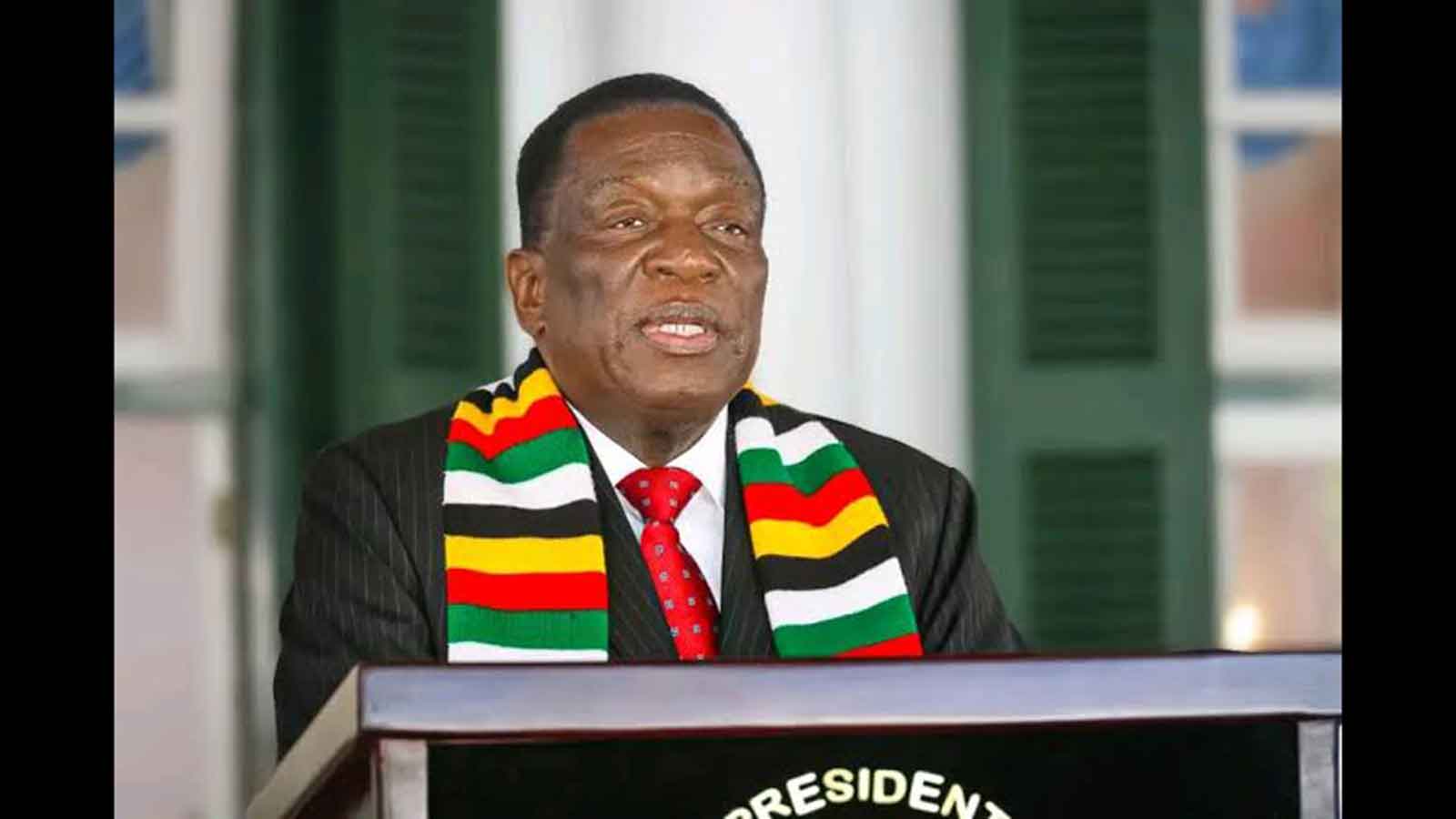
 Bongani Ndlovu