Chronicle Editor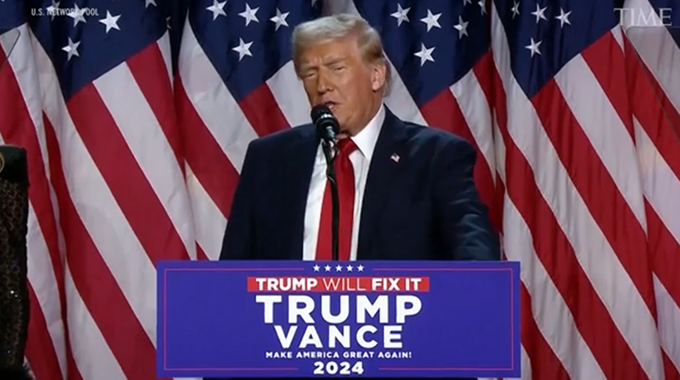
Tichaona Zindoga
The recent elections in the United States of America, which returned Donald Trump as the 47th President, gave many insights into what is wrong with the Western model of democracy, and why it will neither be functional nor sustainable for both the US and elsewhere in the world where it is sold as the best system.
Closer to home, the recent elections in Mozambique, Botswana and South Africa drive home the folly of copying-and-pasting Western democracy in Africa, where, already, evidence has shown glaring shortcomings.
First of all, the US election was one huge spectacle with little substance. It gave loads of entertainment and pushed TV ratings, but in the end, for many people in America and abroad, after all the sound and fury, it has left a hollow aftermath.
Like tasting froth, without drinking the beer.
Among other worrying signs, the US elections proved to be about personalities, and this is why both the main candidates — Republican Trump and his Democrat rival, Kamala Harris, spent a whole lot of time tearing into each others’ characters and calling each other names. Pundits in the US correctly noted that the “closing arguments” by both candidates were “dark” character assassinations.
In the case of Trump, one must add, this almost translated into an actual physical assassination, as at least two attempts were made on his life during the campaign. The would-be assassins, pumped up by rhetoric, are understood to have believed that Trump was a threat to democracy and a fascist. In the end, the elections in America were somewhat reduced to whether one liked Harris and loathed Trump; or loved Trump, anyway, warts and all, as proved to be the case.
The post-mortem of the elections has seen many analysts, particularly those in the mainstream media and polling industries, lamenting the fact that the Democrats ignored fundamental issues such as the economy, inflation and immigration as well as issues affecting certain populations such as black and Latino men and white women.
Democrat exponents spent most of their time focusing on the assumed unsuitability of Trump for office.
The outcome of the election aside, the quality of the debate, discourses and narratives during the election campaign demonstrated the particularly low bar of US democracy in what it can and should do for the people.
Another worrying issue for observers, and the world at large, is that the US election (and the fate of the whole world) is decided by the so-called swing or battleground states, where swing states — also called battleground states, namely Florida, Pennsylvania, Michigan, Wisconsin, Arizona, Georgia and Nevada — where the outcome is uncertain and can “swing” either way, in the end determining the overall result of the Presidential election.
The winner-takes-all system in these states implies that winning a swing state secures all its Electoral College votes. The Electoral College system is also another contentious phenomenon, whereby states do not have equal numbers of votes to determine who the President should be based on national popular vote, but their votes could lead to a candidate polling more votes nationally losing to a less popular candidate, as was the infamous case of George W Bush and Al Gore in 2000.
The swing states phenomenon has led to criticisms that, apart from skewed dynamics in the electoral college, these states wield outsized importance, and candidates pay more attention to the people in them than others that have well defined voting cultures.
Again, experts say, candidates end up crafting (or selling) policies which might not reflect the needs or priorities of the broader electorate.
At the same time and more sinister, it has been stated that this has bred voter inequality and universal suffrage, by dint of a voter in a swing state having more influence on the outcome of the presidential election than one in another, non-battleground state.
This essentially is undermining the principle of “one person, one vote” as basis of universal suffrage. It has also been suggested that given the intensity of competition, voters in these areas “may feel pressured to vote for major party candidates to avoid “wasting” their vote, reducing opportunities for third-party or independent candidates to gain traction.”
It is no surprise, then, that American elections have been riddled with claims and counter-claims of election malpractice such as gerrymandering (changing of electoral boundaries) voter suppression, or misinformation campaigns often targeting these battleground states, undermining the democratic process. These accusations have been made over the years and do not reflect well on the world’s shiniest democracy that hides deep flaws and corruption beneath.
In the final analysis, democracy was for sale in America, a fact so aptly demonstrated by Harris raising a record US$1 billion in campaign funds in 100 days; not to mention the traditional dark forces in lobbying, huge business and the so-called military-industrial complex.
There is little imagining as to who is actually served by American leaders between the people and power brokers.
More ominously, there was a real and substantial threat that these elections could lead to unrest and chaos, seen three years ago when Trump rejected the outcome, if conditions further deteriorated.
Made in America, failing in Africa
Recent elections in Africa, demonstrate similar problems to those in America at a scale and scope only much worse.
Mozambique, which had elections won by Daniel Chapo, saw a conflagration of protest and vandalism after the opposing candidate — Venancio Mondlane — refused to accept the results. The situation has metastasised and now even poses a regional security risk.
The problem in Mozambique’s election, lies in both the procedural, logistical and technical conduct of the process, but also because of external interference as there are forces seeking to remove the ruling Frelimo party from power, itself a SADC region-wide phenomenon.
America’s Central Intelligence Agency (CIA), the European Union and individual countries such as Netherlands and Switzerland have been accused of sponsoring the unrest in resource-rich Mozambique, which has also been facing challenges in containing extremists, largely thought to be sponsored by hostile forces.
The script has played similar to Zimbabwe’s elections over the years, including last year, when foreign-sponsored and backed opposition attempts to de-legitimise the outcome of elections at the threat of violence.
The 2007 Kenyan elections where thousands died post-election stands out as an example of the ugly side of Africa’s imported democracy, made uglier by covert operations by American and Western sponsored NGOs and civil society groups, some of which are invested in local electoral processes as stakeholders and non-State actors.
The cases of South Africa and Botswana present unique and complex dynamics that bear explaining that, outside of the facade of democracy — the two countries are held as best, model democracies in Africa — there are deep flaws in their respective systems.
The elections in South Africa this year, which saw the revolutionary African National Congress (ANC) losing its Parliamentary majority, demonstrated the power of those who hold the levers of the economy located in the apartheid rump. This class is represented by the Democratic Alliance, whose strength led to it forcing a coalition government for the first time, after eating into the majority of the ANC. The strategy, since 1994, has been to win political power and retain economic control of South African white elites and liberal compradors. This power has been used to carry out what is likely the sabotage of the economy — seen in the manipulation of the country’s currency, the rand (ZAR) — to make it difficult for the government of ANC in recent years, especially as it sought to carry out black empowerment and land redistribution policies.
The whites also control the liberal leaning media and how people think, eat, drink and even smoke.
This gave rise to the concept of the so-called white monopoly capital, comprising of the likes of the Ruperts Murdoch, Oppenheimers, Anglo-American and De Beers, among others.
Apart from controlling the economy, this monopoly capital largely determines the outcome of political processes, in the same way it is done in the US. This plutocracy is not democracy.
When it comes to Botswana, former President Ian Seretse Khama said something instructive, regarding the loss of incumbent President Mogkweetsi Masisi to Harvard-trained Duma Boko.
Local media quoted Khama, who supported the opposition coalition and campaigned against Masisi, as saying the latter had treated diamond conglomerate, De Beers in a “childish” manner. Masisi’s “childish” actions were to demand more stake from the diamond monopoly for the sake of the country, upsetting the powerful interests. Unsurprisingly, there are reports of huge South African economic oligarchies that are said to have worked in concert to ensure the removal of Masisi to stop resource nationalism, underscoring the phenomenon of plutocratic influence.
The DA, the face of South Africa’s apartheid rump and plutocracy, is said to have supported the opposition technically and morally.
Botswana’s democracy is not what it seems.
Western democracy vs Whole process people’s democracy
Western democracy, as we are made to understand it, has failed in Africa; and it is failing in America, too, given its weaknesses, particularly regarding elections.
Ironically, a fallacy has long been peddled that this democracy is linked to economic prosperity and modernisation.
It simply doesn’t. It does not add up.
The time is now for the world, particularly Africa, to rethink the Western democracy experiment.
A key model to consider is China’s “whole process people’s democracy,” which has over the years achieved success anchored on stability and rigorous processes led by meritorious individuals held to the highest scrutiny of integrity. Whole process people’s democracy has served China’s socialist system, through its consultative approach from grassroots to the highest echelons of the Communist Party of China and government.
But what is this phenomenon?
The concept was first propounded by President Xi Jinping in 2019, after visiting the city of Shanghai on an inspection tour of a community-level legislative outreach.
President Xi explained that the whole-process people’s democracy was a Chinese model born out of the creative evolution and development of the wisdom of political philosophy in the fine traditional Chinese culture.
According to a white paper published by the State Council Information Office: “Whole-process people’s democracy integrates process-oriented democracy with results-oriented democracy, procedural democracy with substantive democracy, direct democracy with indirect democracy, and people’s democracy with the will of the state. It is a model of socialist democracy that covers all aspects of the democratic process and all sectors of society. It is a true democracy that works.”
The white paper explains that democracy is a concrete phenomenon that is constantly evolving; rooted in history, culture and tradition, and takes diverse forms and develops along the paths chosen by different peoples based on their exploration and innovation.
It argues that, “There is no fixed model of democracy; it manifests itself in many forms. Assessing the myriad political systems in the world against a single yardstick and examining diverse political structures in monochrome are in themselves undemocratic.
“In the richly diverse world, democracy comes in many forms. China’s democracy is thriving alongside those of other countries in the garden of civilisations.”
The paper also offers what could be a chastening reminder of the flaws of Western democracy, seen in America’s dramatic elections.
“Democracy is not a decorative ornament, but an instrument for addressing the issues that concern the people,” it said.
In what many in the international community should have stood up to take notice, the white paper also made it clear that China is willing to share the model with other countries, in what could be a new era.
“China stands ready to contribute its experience and strength to global political progress through cooperation and mutual learning,” the white paper said.
President Xi is on record saying, whole-process people’s democracy is “the defining feature of socialist democracy…(a democracy) in its broadest, most genuine, and most effective form.”
Tichaona Zindoga is the director of Ruzivo Media and Resource Centre, a Zimbabwean think tank that specialises in analysing global and local issues


 Online Reporter