Ashly Dhani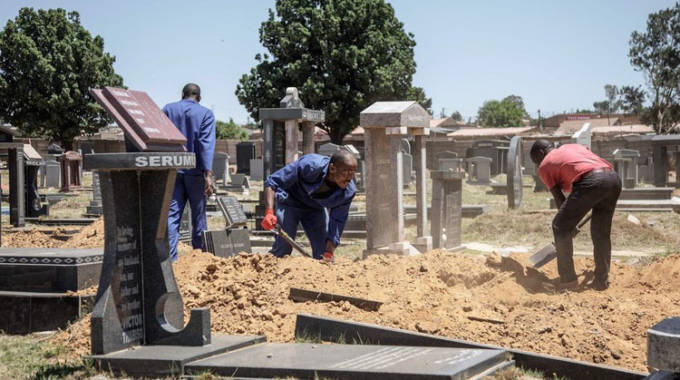
Dr Onesimus Ngundu
AT death the body and spirit separate.
The body is buried and the spirit is sent to its assigned destination, from where it continues to exist.
And the spirit of the dead cannot voluntarily come back on its own initiative.
Only God will reunite the spirits of the dead with their bodies at the time of the resurrection of all the dead at the Second Coming of Jesus Christ.
However, in African society the spirits of the dead, variously known in Sub-Saharan Africa as amahlozi or amatongo (Zulu, Xhosa), balimo (Sotho, Tswana), psikwembu (Tsonga), medzimu (Venda), midzimu (Shona), mikishi (Bemba), Orisha (Yoruba), maimu (Kikamba), etcetera, are believed to continue living close and watching living family members.
The departed ancestors are also generally credited with the perceived help and protection they offer to living family members.
Success in business, job security, conception after years of infertility and escape from fatal accidents are some of the things that are usually attributed to the help and power of one’s ancestral spirits.
In African thinking, things do not just happen.
Calamities like mental illness, miscarriage, singleness and death are often believed to be caused either by avenging spirits or aggrieved ancestral spirits.
So, in response, the affected persons or families will seek the advice of a sangoma or n’anga on the kind of appeasement to be performed.
These rituals tend to vary not only from ethnic groups but also according to the relationship between victims and the crime committed.
During the appeasement ritual, someone claiming to be possessed by an ancestral spirit will go into a trance while supposedly communicating the infractions committed and how to make things right.
If successes and calamities are common to all people world over, why should they be attributed to the activities of their ancestral spirits only in African society?
Think about that.
The Hindus believe in a cycle of death and rebirth of life called samsara.
They believe that at death, the souls of people reincarnate as animals like monkeys and cattle.
This is the reason why we have so many animals roaming around undisturbed in India.
Belief in African ancestral spirits living in proximity to their living family members and belief in Hindu samsara are examples of human ignorance of what actually happens to human spirits or souls at death.
According to God’s dictionary of life, the Bible, when a Christian dies his spirit or soul goes straight to heaven to be in the presence of God: “to be absent from the body is to be present with the Lord” (2 Corinthians 5:1, 6, 8), and that of a non-Christian is sent straight to hades or hell where it will await the final Day of Judgement (2 Peter 2:4; Revelation 20:13).
In the meantime, neither the spirit of the Christian nor that of a non-Christian can come back from its assigned place of abode (Luke 16:19-31).
Only God will bring them back and reunite them with their bodies at the Second Coming of Jesus Christ.
Christians will be raised to live with God forever (1 Thessalonians 4:13-18; 1 Corinthians 15:12-16, 51-55) and non-believers will be raised and face judgment.
They will be cast into the lake of fire where they will spend eternity (Revelation 20:11-15).
A Christian is someone who has personally believed and accepted the good news of the gospel that when the innocent and holy Son of God, Jesus Christ, was crucified on the Cross, He died in my place and for my sins.
None of us as sinners can attain a right standing before God by doing good works (Ephesians 2:8, 9), or by living a good life (Philippians 3:4-11), or by trying to keep the law (James 2:11), or by belonging to a particular church denomination (1 Corinthians 1:12-18).
There is only one way to God and that is through the Lord Jesus Christ (John 14:6; Romans 10:13).
Now the question is: If the spirits of the dead go straight to their designated places of abode, from where they cannot return on their own initiative, then who masquerades as ancestral spirits?
The Bible, as our true instruction manual, teaches that it is the devil and his demons.
In the Garden of Eden, the devil posed as a serpent when he struck a conversation with Eve.
He talked to her as someone who was really concerned for the couple’s welfare, even if it meant disobeying God.
She believed his lies and the consequences of her disobedience to God affected the human race and the universe (Genesis 3).
The devil and demons can coherently speak in the name of someone through persons (Acts 19:11-20). They can also ask for some special treatment (Mark 5:8-13).
Today we hear of some people who identify themselves as the abode of certain spirits. By their attire and in some cases by their type of music, they claim to represent certain totem or ethnic ancestral spirits.
If God, our Creator, says the spirits of the dead are currently confined in specific places awaiting the day of the resurrection, one can confidently conclude that the devil and his demons do masquerade themselves as ancestral spirits.
Why? Because the devil is the deceiver who blinds people into believing his lies and deception.
God warns us against the disguised operations of the devil: “Be aware of the schemes of the devil” (2 Corinthians 2:11).
If one accepts the biblical teaching on life after death, then a belief in ancestral spirits (midzimu) is a myth.
Dr Onesimus A. Ngundu is a theologian, historian and former principal of Harare Theological College.
Feedback: [email protected]


 Online Reporter