admin
admin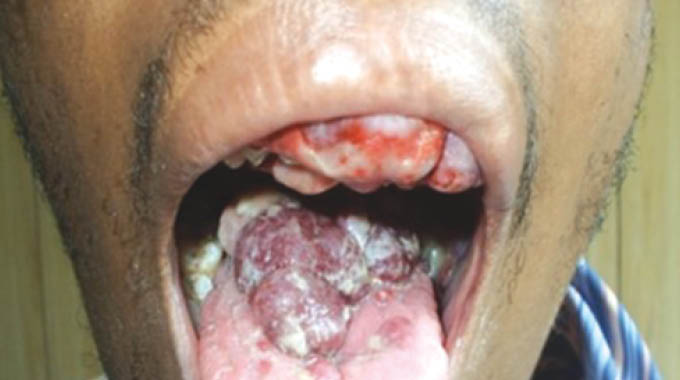
OVER the past weeks we have been discussing various forms of cancers and how they can be managed. This week we bring you information on a type of cancer that is related to HIV and that is a leading cause of cancer deaths in Zimbabwe: Kaposi’s Sarcoma (KS). In Zimbabwe, and globally there are more males with KS than females.
Tumours with tiny new blood vessels grow below the surface of the skin and in membranes of your mouth, nose, eyes, and anus. It can spread to your lungs, liver, stomach, intestines, and lymph nodes, which are glands that help fight infection.
Researchers have found that Kaposi’s Sarcoma is caused by a herpes virus, HHV-8, also called KSHV. It affects 8 times more men than women. It may be spread through sexual contact or through saliva.
KS was once rare, affecting older men or people who had undergone organ transplants. Now with HIV as the most common cause, cases have become more frequent.
Kaposi’s Sarcoma and HIV
Because people with HIV have weakened immune systems, they are more likely to develop certain cancers, including KS. Skin lesions tend to get worse when you also have other infections.
Treating the HIV virus with antiretroviral therapy (ART) is the best way to treat KS, too, especially in the early stages. Anti-HIV drugs have dropped the rate of KS cases by 80 percent-90 percent from the beginning of the Aids epidemic in the early 1980s.
Symptoms
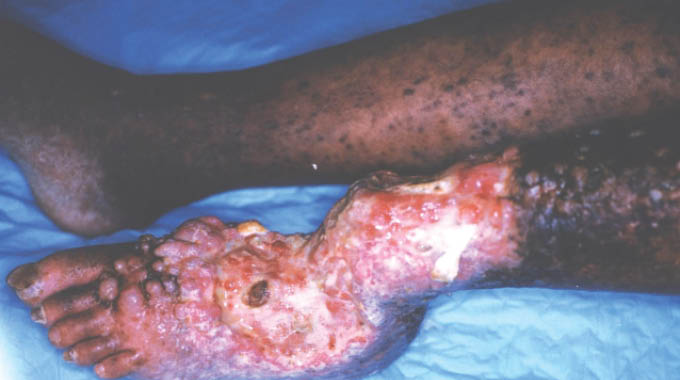
The most visible signs of Kaposi’s Sarcoma are lesions on the skin: flat, painless spots that are red or purple on white skin and bluish, brownish, or black on dark skin.
New spots may show up each week. For some people, these lesions change slowly. They may grow into raised bumps or grow together.
When KS spreads elsewhere, it can be life-threatening. You may have:
- Trouble eating or swallowing
- Queasiness, vomiting, and belly pain from bleeding and blockages inside
- Severe swelling in your arms, legs, face, or scrotum
- Serious coughing or shortness of breath
Getting a Diagnosis
Your doctor may diagnose Kaposi’s Sarcoma simply by looking at your skin. To confirm it, he may take a sample of tissue from a spot and look at it under a microscope, which is called a biopsy.
If you have trouble breathing, your doctor may use a thin tube with a light (a bronchoscope) to look into your breathing passages. Or, if you have tummy troubles, he may want to look inside your guts through a lighted tube during a procedure called an endoscopy.
Research has proved that highly active antiretroviral therapy and lifestyle changes may reduce the risk of some types of cancer in people infected with HIV. Early detection of cancer will save your life. Seek treatment early when necessary. Get tested for HIV and know your status so that if you are HIV positive you are put on treatment immediately.



 Online Reporter