


 Online Reporter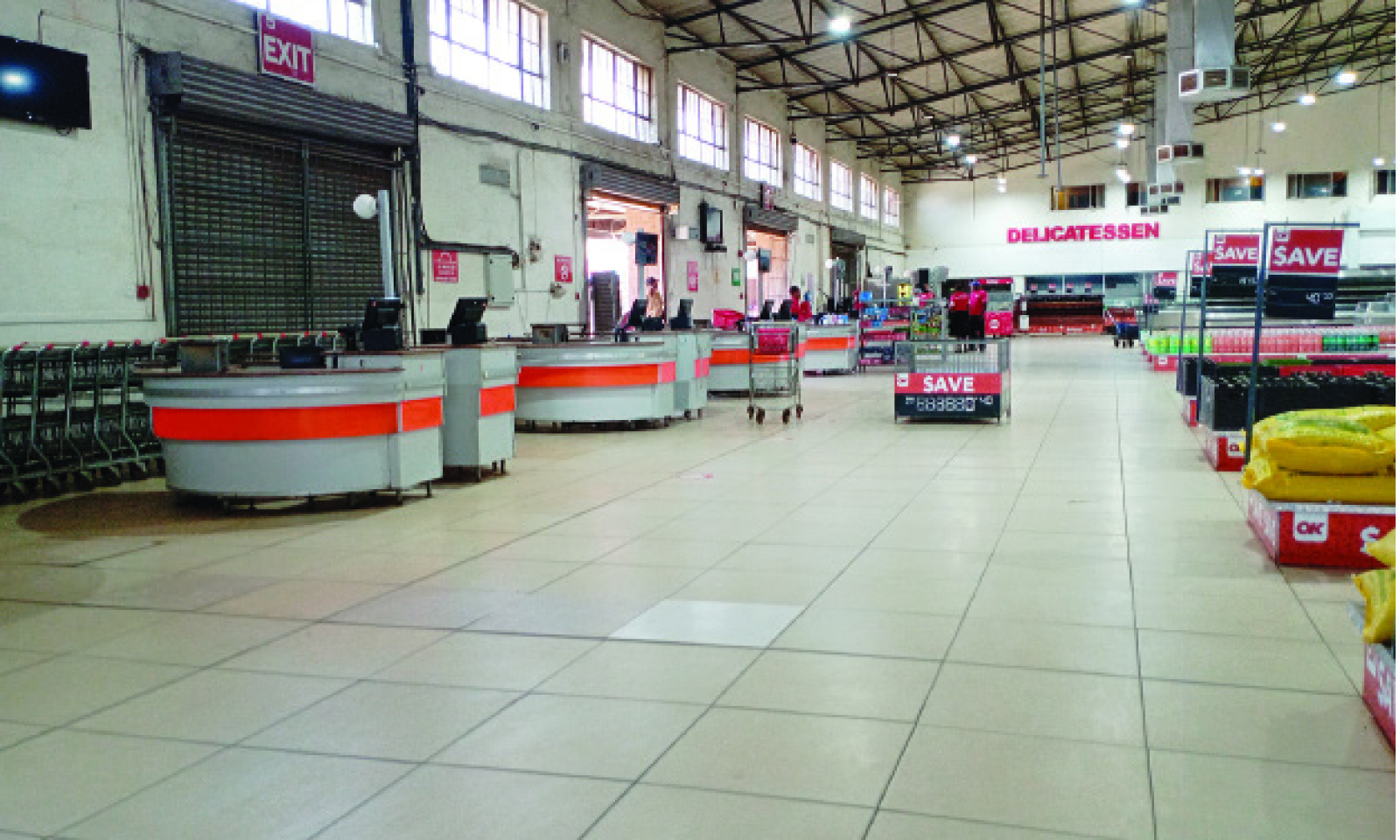
Emmanuel Kafe
ZIMBABWE’S retail sector stands at a crossroads, facing a perfect storm of fierce competition from the informal sector, as well as regulatory and management complications.
These problems are threatening the viability of formal retail businesses, raising concerns about the future of an industry that plays a vital role in the economy and the livelihoods of thousands of Zimbabweans. With some once-thriving supermarkets struggling to restock, the signs of distress are evident.
This situation has since attracted the Government’s swift intervention, with President Mnangagwa recently chairing a high-level meeting meant to address challenges facing the sector.
“His Excellency, the President, Dr ED Mnangagwa, yesterday took time off his annual leave to chair a session on developments in the economy designed to map the way forward,” said Finance, Economic Development and Investment Promotion Minister Professor Mthuli Ncube in a statement released on January 31.
“The session, which also included the two Vice Presidents and economic ministries, deliberated on measures Government has taken on the economy, and developments in specific economic sectors, including the retail sub-sector. This culminated in additional measures being proposed.”
The meeting sought to chart a new path to rescue the retail sector from what appeared to be an imminent collapse on the back of myriad challenges that have seen some major retailers closing their outlets.
Rise of the informal sector
One of the most pressing challenges facing formal retailers is the rapid growth of the informal sector. In Harare’s central business district, for example, small, unregulated tuck shops have proliferated, often operating from street corners, malls or makeshift stalls on sidewalks.These unregulated businesses thrive by circumventing regulations, having lower overhead costs, avoiding taxes and licensing fees, and disregarding labour laws. This makes their prices significantly lower than those charged by established retailers.
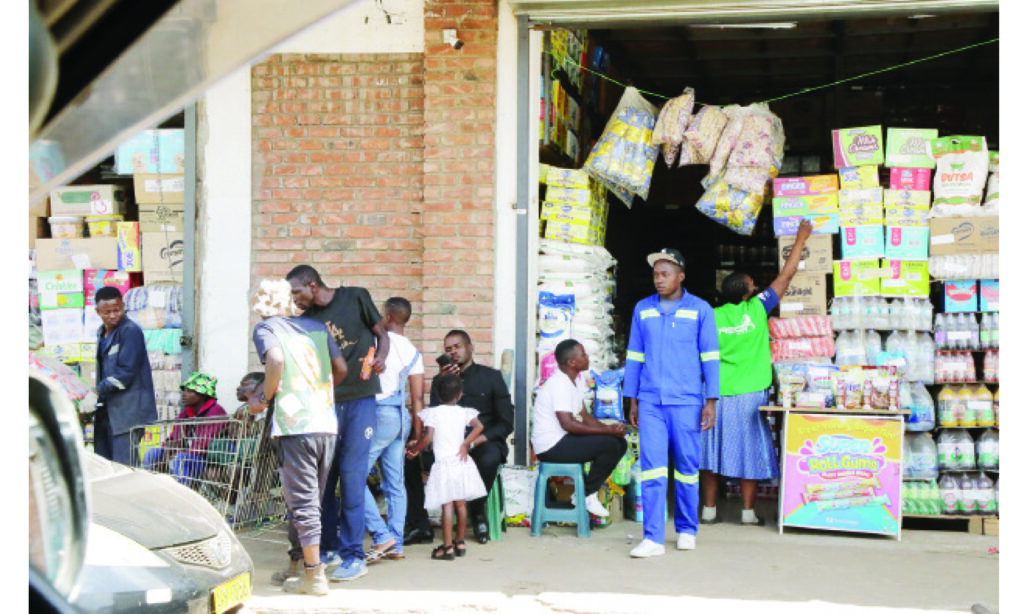
Unlike formal retailers, informal traders are thriving
“They are able to sell goods at much cheaper prices because they do not have to pay taxes, adhere to import regulations or meet the same health and safety standards that formal retailers do,” said Professor Amos Muranda, an economic expert and economic policy research lecturer at a local university. Consumers are increasingly drawn to these informal outlets.
“The prices are much lower, and the convenience of buying from tuck shops makes it an easy choice,” said Tendai Kudzai, a shopper in Harare. As a result of this aggressive competition, sales are precipitously declining for formal retailers.
Pricing distortions
Another major challenge is the pricing structure that is being influenced by wide premiums between the formal and black market exchange rates, which creates opportunities for arbitrage.
While informal traders primarily transact in US dollars, formal retailers are often required to trade in the local currency — Zimbabwe Gold (ZiG) — at the official exchange rate, which puts them at a disadvantage. Compounding the issue, some manufacturers are bypassing formal wholesalers and retailers and supplying goods directly to informal traders to harvest US dollars.
“Since the beginning of 2023,” said Prof Ncube in his statement, “some manufacturers have been opting to supply their goods directly to the consumers and informal retailers, bypassing wholesalers and retailers.
“This situation has compromised the operations of formal wholesalers and retailers, as they are competing with informal traders, who are operating outside compliance with regulations such as taxes, licence fees and labour laws, among other formalities.”
This disruption in the supply chain has left many formal retailers struggling to maintain stock levels, resulting in empty shelves and declining sales.In some instances, some informal retailers even sell their goods below the replacement price in order to mop up US dollars, which are then used to exploit arbitrage opportunities in the market. The shift in consumer behaviour has led to a shrinking market share for formal retailers, impacting their profitability and long-term viability.
Today, many of these supermarkets are scaling back operations, closing stores in key areas and even laying off workers.
Concern
According to the Confederation of Zimbabwe Retailers, the haemorrhage has been sector-wide. Concerned by these developments, last year, the Government introduced measures to protect value chain integrity and transparency and to counter unfair competition by informal traders.
To enforce tax compliance and level the playing field, the Government introduced a 5 percent withholding tax on unregistered micro and small enterprises, payable by wholesalers and manufacturers selling directly to small retailers. Additionally, new regulations mandate that household goods such as alcoholic and non-alcoholic beverages, clothing and footwear, dairy products, diapers, processed meat, rice and pasta, as well as sugar found in small retail outlets, would be deemed smuggled unless documentary proof of import and payment of duties and taxes can be provided.
Treasury also directed that all small retailers should operate using point-of-sale (POS) machines and maintain a bank account linked to the Zimbabwe Revenue Authority (Zimra).
Smuggling
The situation is further worsened by a surge in smuggling, with basic goods such as sugar, rice and processed meat flooding the market.
Many of the products sold in these tuck shops — especially in downtown Harare — are smuggled from South Africa, Mozambique and Botswana. The authorities estimate that millions of dollars are lost due to evasion of customs duty and leakages of export levy at official points of entry and their surrounding areas.
In the 2025 National Budget Statement, Prof Ncube warned that smuggling continues to pose a serious threat to Zimbabwe’s economic development. “The influx of imported goods sold at artificially low prices — well below what should be expected given ex-works prices, insurance, freight and duty costs — suggests widespread tax evasion, particularly through smuggling,” he said. He said smuggling undermines efforts to boost local production, disrupts value chains and hampers job creation.
“It creates an uneven playing field for locally manufactured and legally imported products, deprives the Government of much-needed revenue, promotes illicit activities and discourages investment,” he stated.
In response, the Government has intensified its crackdown on border crime through a multi-agency task force that is targeting smuggling activities. Zimra reported recently that it had impounded goods valued at approximately US$2,4 million during the operation.
The crackdown has witnessed the seizure of dozens of vehicles, including cross-border buses and haulage trucks, and the confiscation of illicit goods such as foodstuffs and second-hand clothes.
A maze of regulations
Formal retailers also face a burdensome regulatory environment, with numerous licences and compliance requirements increasing operational costs. This also puts them at a disadvantage compared to their unregulated counterparts. To operate a formal retail outlet in Zimbabwe, one needs no fewer than 20 licences and permits from various Government and local authority agencies. These include trade licences, health permits, fire and safety certificates, import permits and environmental clearances.
It starts with basics like a shop licence from the local council, and if the outlet is to sell alcohol, there is need for both a council liquor licence and one from the Liquor Licensing Board. Adding a restaurant within the premises means another licence from the Zimbabwe Tourism Authority.
Playing background music requires a permit from the Zimbabwe Music Rights Association.
Depending on the products sold, further licences may be necessary, for example, a seed seller’s licence and a pesticide licence from the Ministry of Lands, Agriculture, Fisheries, Water and Rural Development, and a livestock and livestock products licence from the Agricultural Marketing Authority.
Handling anything potentially hazardous, from cleaning supplies to certain types of stock, requires a storage and sale of hazardous materials licence from the Environmental Management Authority (EMA), which also needs to be consulted for permits if the retailer is constructing a new store, alongside council permits. Even everyday operations generate regulatory needs. The city council’s environmental management unit requires a trade waste and discharge licence, and if a generator is used, an emissions licence from EMA is necessary — separate from the generator registration required by the Zimbabwe Energy Regulatory Authority (Zera) for larger models.
Retailers must also secure permits for food handling, fire safety and registration with Zimra, the National Social Security Authority, the Medicines Control Authority of Zimbabwe and other agencies.The sheer number of these permits necessitates visits to countless offices, both Governmental and municipal, creating a complex and time-consuming bureaucratic hurdle for retailers. The complexity and high cost of obtaining these approvals discourage new entrants and make it harder for existing businesses to remain viable.
Mismanagement
While external factors like competition from the informal sector and smuggling are significant, mismanagement has also contributed to the sector’s struggles. Poor corporate governance and decision-making have plagued some of the country’s largest retailers.
Said Prof Ncube in his recent statement: “Research and consultations indicate that some of the reasons formal businesses are experiencing distress include competition from the informal sector, poor management and poor corporate governance which have resulted in business failure in some instances.”
It is a point that has been amplified by the central bank. Presenting the 2025 Monetary Policy Statement last week, RBZ Governor Dr John Mushayavanhu dismissed claims by some formal retailers that the economic environment is the source of their challenges.
He argued that gross mismanagement was at the heart of constraints weighing down their businesses. He, however, announced the extension of the Traded Finance Facility (TFF) to cushion struggling retailers from working capital challenges.
“In order to address working capital challenges recently experienced by some wholesalers and retailers, the TFF has been extended to these critical sectors to enable them to restock.
“Previously, we had said TFF was only for the productive sector, but we have heard the plea and we are saying those struggling retailers can also access the TFF, even though we know that their problem has nothing to do with the environment. “We know it — these are management issues and even if they (retailers and wholesalers) access that TFF and continue with those management gaps, they will fold,” he said.
Last year, RBZ announced the introduction of the TFF with interest rates set at 20 percent for banks borrowing from the central bank and a maximum of 30 percent for on-lending to clients. The initiative, which was meant to provide cheap funding to the productive sectors, was established following the realisation that commercial banks were lacking capacity to adequately finance productive sectors, a situation that could hinder economic growth.
OK Zimbabwe, the country’s largest supermarket chain by store numbers, has closed five outlets, citing a harsh trading environment.
However, some analysts argue that the retailer’s struggles can also be traced to an oversized executive team, high operating costs and questionable investment decisions.
OK Zimbabwe is currently battling to clear outstanding supplier debts of US$17 million and ZiG537 million, a situation that has left many of its outlets with empty shelves.
Stemming the tide
Emerging from the recent meeting chaired by the President, Prof Ncube announced a cocktail of interventions which the authorities hope will help stem the tide.The Government is, therefore, proposing additional measures to promote formalisation and tax compliance by the informal sector.
These include mandating the use of POS machines by informal traders, “discouraging” manufacturers from supplying directly to the informal sector and establishing a domestic interagency enforcement team to enforce compliance in the informal sector.
Added Prof Ncube: “Government will embark on an exercise to streamline regulatory processes, fees and charges, as well as duplication of work by Government agencies in order to reduce the cost of doing business.
“There will be provision of additional incentives to support industry through the Industrialisation Fund over and above the already existing incentives such as duty-free imports.
“Also, the promotion of procurement of goods and services from local producers and suppliers by the Government to support local industry.”



