Zimpapers Business Hub
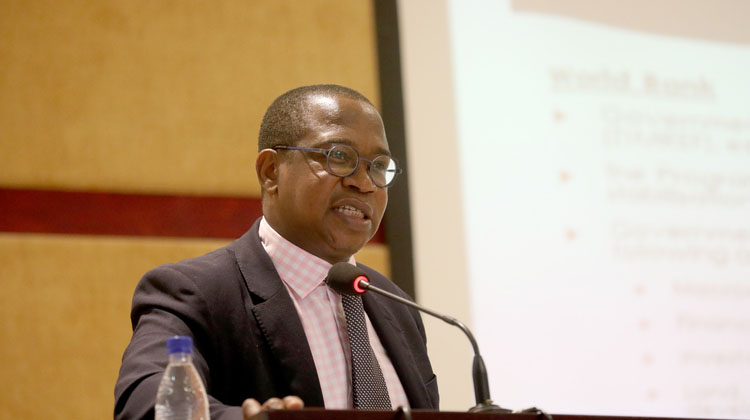
It is a calm and cool Thursday, and Finance, Economic Development and Investment Promotion Minister, Professor Mthuli Ncube, is expected to present the Mid-Term Budget Review from the New Parliament Building, Mount Hampden, this afternoon.
The mid-term budget review is set to provide insights into Zimbabwe’s economic performance in the first half of the year and outline fiscal projections for the remainder of 2025.
Expectations are high, with economic analysts and business leaders anticipating measures to boost local currency usage, ease the cost of doing business, and support the emerging informal sector.
The measures are also expected to outline fiscal priorities for the medium term, aligning with the National Development Strategy (NDS) 1 and Vision 2030.
Overall, the budget review measures are expected to mainly focus on sustaining the current macroeconomic stability and promoting inclusive economic growth.
Since the country adopted the Zimbabwe Gold (ZiG) currency in April 2024, the currency has achieved commendable stability, evidenced by low inflation and exchange rate predictability, anchored by prudent monetary policy management and other supportive Government measures.
With inflation having slowed down, business confidence is returning and investor interest, particularly in the mining and energy sectors, is growing steadily.
The minister is expected to provide an update on the progress of tax reforms targeting the informal sector, including efforts to compel informal businesses to register for corporate and income tax.
This follows findings from the 2023 Economic Census by the Zimbabwe National Statistics Agency (Zimstat), which revealed that 76.1 percent of business operations surveyed were classified as informal.
Economist Dr Prosper Chitambara believes this year’s review presents an opportunity to reinforce the gains made so far.
“We are at a point where the economy is showing signs of realignment. The review should go beyond maintaining order; it must unlock investment in underperforming but high-potential sectors like agro-industry, digital infrastructure and clean energy,” he said.
Mr Persistence Gwanyanya, an economic analyst, said he expects the mid-term budget review presentation to focus on measures that the Government will be taking on tax reforms for the informal sector.
He said the mid-term budget review is also expected to highlight measures being implemented to clear the country’s debt and arrears, as well as the 2026 national budget strategy paper, as the country moves from National Development Strategy (NDS) 1 to NDS 2.
Zimbabwe’s Treasury has set an ambitious target of 6 percent growth for the 2025 gross domestic product.
Ultimately, the mid-term review is expected to provide more than just numbers. It must signal direction.
With businesses watching closely, ordinary citizens hoping for improved services, and development partners assessing reform momentum, the stakes are high.