admin
admin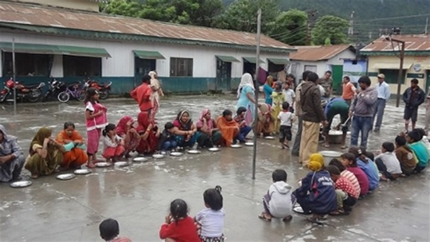
“We do know that in warmer climate situations, we expect the atmosphere to be able to hold more moisture, and therefore that heavy rainfall events will become more common in the future,” said Andrew Turner, a monsoon expert with the Walker Institute for Climate System Research at the University of Reading.
The extreme event also puts a spotlight on loss and damage caused by climate change and the need for resources for help poor countries adapt — issues to be negotiated at the 19th Conference of the Parties to the UN Framework Convention on Climate Change, which will be held from November 11 to 22. Discussions on these matters have been moving slowly; some important related issues were not even raised at the recently concluded talks in Bonn.
Harjeet Singh, Action Aid’s international co-ordinator for disaster risk reduction and climate change adaptation, said the unfolding impact of extreme climate variability “is just a sample of the catastrophe our children will witness if we do not dramatically reduce emissions and prepare to deal with it”.
Reduce emissions
Irin has asked experts from NGOs and governments what they would like to see happen in Warsaw and what they believe is realistically possible.
The upcoming talks will be considering two major deals: first, a new global regime for 2020 and onwards to curb the emission of harmful greenhouse gases and help poor countries adapt to climate change — this should be ready by the 2015 UN climate talks to be held in Paris — and, second, a pre-2020 deal to reduce emissions.
“The unfolding impact of extreme climate variability ‘is just a sample of the catastrophe our children will witness if we do not dramatically reduce emissions and prepare to deal with it”.
The current legal instrument to reduce harmful emissions, the Kyoto Protocol, has been extended to 2020. But the International Energy Agency warned this month that the world is not on track to meet its goal of limiting the global rise in temperature to 2 degrees Celsius by the turn of the century.
An increase of over 2 degrees would be catastrophic, leading to a rise in sea levels and threatening the existence of small island states and low-lying countries.
The experts Irin consulted identified three key issues they want to see addressed: Loss and damage, funding for adaptation, and preventing forest loss.
When poor countries walked away from the 2012 climate change talks in Doha, it seemed possible that a mechanism addressing climate change-related loss and damage could be formalised in the upcoming Warsaw talks.
The mechanism would open the door for poor countries to receive compensation should they experience loss and damage from climate change.
Saleemul Huq, lead author of the chapter on adaptation in the fourth assessment report by the Intergovernmental Panel on Climate Change, says he would like to see the adoption of the proposed “Warsaw International Mechanism on Loss and Damage”. He says countries need not work out the details, but rather they should accept the skeleton of a mechanism in Poland.
This sort of arrangement has worked in the past.
A green climate fund was accepted in principle, as were discussions around adaptation, in previous climate change meetings; both these elements were fleshed out in subsequent meetings and have a permanent place in the main negotiation text of the talks.
Pessimistic
Joe Aitaro, a negotiator for the Alliance of Small Island States representing the Pacific island of Palau, says he would like to see the mechanism agreed upon and operationalised.
Aitaro and Huq are pessimistic about the issue moving forward in Warsaw.
But Action Aid’s Singh, Germanwatch’s climate policy advisor Sönke Kreft and Asad Rehman, international climate head at Friends of the Earth, are more hopeful.
A stalemate on a procedural issue stalled talks around loss and damage in Bonn, Kreft said, but he expected the issue will find a permanent home under the UNFCCC in Warsaw. At the moment, he said it was unclear where the issue will be placed under the new regime.
Singh says that, despite the glitches in Bonn, “negotiators worked informally to detail out functions and modalities of the international mechanism, which is a step in the right direction”.
Rehman says, it might require Poland, as the host of the talks, to provide “extra political space as necessary to reach the agreement” on the mechanism.
In 2009, developed countries promised to provide US$30 billion by 2012 to help poor countries adapt to climate change. They also promised to provide US$100 billion a year from 2020 onwards. Developed countries reported in Doha that they had reached the US$30 billion target, but this was disputed by academics and civil society.
Rich countries should make clearer commitments about how they intend to scale up their funding until 2020, said Sven Harmeling, the lead on climate change policy at Germanwatch. Countries should also make a commitment of US$150 million to the Adaptation Fund set up under the UNFCCC, he said.
Current amounts pledged by rich countries are considered much lower than what is required.
The UNFCCC has estimated that by 2030, poor countries will need between US$28 billion and US$59 billion a year to adapt. The World Bank thinks between US$20 billion and US$100 billion should help.
The Adaptation Fund says that over the past two years, it has given out more than US$180 million to increase climate resilience in 28 countries around the world. Two other funds under the UNFCCC — the Least Developed Countries Fund (LDCF) and the Special Climate Change Fund (SCCF) — recently said they have received a combined US$198 million in new pledges, bringing total international commitments to more than US$1 billion.
Harmeling is pessimistic. He says developed countries are unlikely to make clearer commitments; the global economic downturn has made countries tighten their purse strings.
Deforestation
Reducing Emissions from Deforestation and Degradation (REDD) is a UNFCCC programme to prevent the increase of greenhouse gases through deforestation; its successor, REDD+, additionally aims to reverse forest loss.
REDD+ is currently designed to provide financial incentives for forest preservation, attaching a monetary value to carbon captured by forests, but questions over funding have stalled its implementation.
Some of the sticking issues have included the rights of indigenous forest communities and the protection of biodiversity, conditions, or “safeguards”, that counties were required to meet to qualify for REDD+ funding.
No policies have yet been developed to implement these safeguards. There have also been questions about monitoring and addressing drivers of deforestation and forest degradation, according to the World Wide Fund for Nature. In particular, activists want to know when and how often information will be presented about the safeguards’ implementation.
Vera Coelho of Wetlands International says the organisation wants both developed and developing countries to report back on actions to reduce deforestation and peatland degradation.
Rosalind Reeve of the REDD+ Safeguards Working Group (R-SWG), an alliance of NGOs, would like more clarity about the safeguards.
Reeve says some developments in Bonn were encouraging, as countries were asked to provide “submissions on lessons learned and challenges with developing safeguards’ information systems, since this will enable the improvement of systems”.
She said the outcome on the timing and frequency of when information will be provided “to demonstrate that safeguards are being addressed and respected is disappointing”.
Donald Lehr, spokesperson for R-SWG, says the current negotiation text for Warsaw, “as currently formulated, causes a problem for indigenous peoples, since it implies they are causing deforestation and forest degradation as opposed to be being good stewards of the forest whose traditional practices need to be recognised”.
He continued: “Several countries, including the Philippines, Tuvalu and Australia for the Umbrella Group (an informal coalition of non-EU developed countries) expressed concern about the ‘drivers’ language, so we expect that it and text on safeguards reporting will be negotiated further in Warsaw.”
Monsoon
The heavy rainfall which prompted massive floods in Uttarakhand State were caused by an unusual interaction between the westerly jet stream and the monsoon-laden easterly winds, according to Andrew Turner, a climatologist with the Walker Institute for Climate System Research at the University of Reading.
“The jet stream snakes across the northern (and southern) hemisphere and meanders north and south. Sometimes the jet stream gets stuck in one position, and this can cause extreme heat and drought in some regions and heavy rainfall in others,” according to the Walker Institute website.
“This appears to have led to much more intensive rainfall than usual, as it interacts with the moist surface flow from the Indian Ocean,” Turner told Irin.
A similar situation occurred in Pakistan in 2010, leading to some of the most devastating floods in recent memory. Such events may be increasing in frequency.
The monsoons in India also arrived a month earlier than usual, Turner told Irin.
“In northern India, the states of Punjab, Himachal Pradesh and Uttarakhand had received between three and four times as much rainfall as normal in the June 1-22 period, and Uttarakhand in particular received almost 10 times as much rainfall as normal in the week June 13-19,” he said. — Irin.


 Online Reporter