

 Online Reporter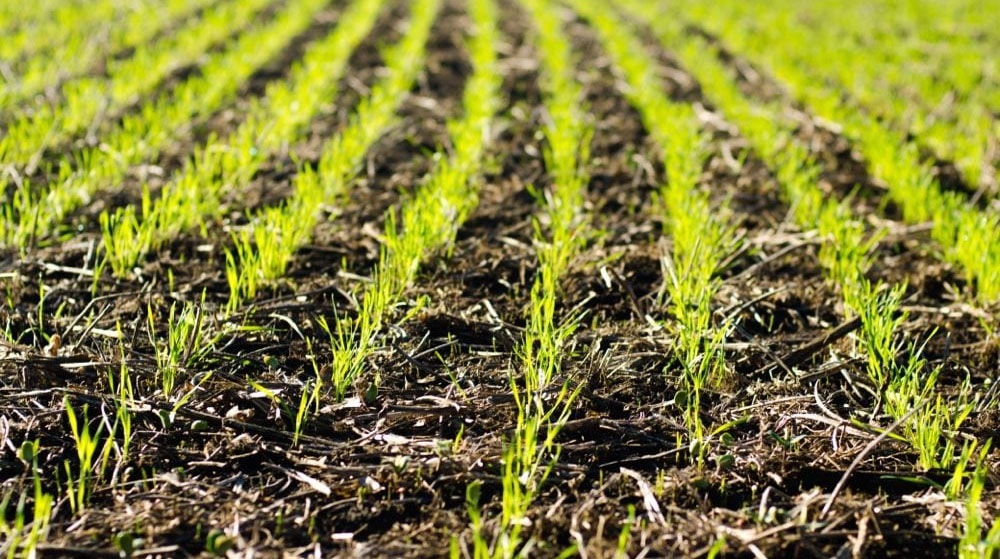
Agriculture Reporter
Wheat planting has started in some parts of the country, with experts urging farmers to avoid delays in order to maximise yields.
Some farmers are however, still concentrating on land preparations, while others are still harvesting the early planted crop.
Farmers usually start planting wheat around mid-May when temperatures are ideal.
Late planting is discouraged as it compromises yields, and the crop may be affected by early rains.
The Zimbabwe Farmers union executive secretary, Mr Paul Zakariya, confirmed that wheat planting was underway and that the crop was already established in some areas.
He urged farmers to plant within the window period for high yields.
“Now is the time to plant wheat. The cut-off date is usually May 15. Farmers may extend, but there will be trade-offs,” he said.
Mr Zakariya said some farmers were still harvesting summer crops while others were carrying out land preparations.
He said fuel price increases and late payments for agricultural commodities were major challenges affecting production.
“Late payments discourage farmers and affect many things, including cash flows. Farmers have workers who require their wages. Some farmers would have borrowed funds from the bank and will be penalised for late payments, which increases production costs. The funding becomes expensive and this disrupts operations.
“It is unfortunate that the farmer does not have anywhere or anyone to pass the costs on to.
“Fuel price increases mean an increase in production costs, but the farmer cannot put the costs further down the value chain. In the case of high fuel costs, a supplier will increase the price of fertiliser, while the farmer meets a depressed market, and this depletes earnings,” he explained.
Mr Zakariya said producer prices should take into consideration the production costs.
The Zimbabwe Indigenous Women Farmers Trust president, Mrs Depinah Nkomo, said farmers were planting wheat, but the majority were still harvesting maize.
“Some farmers had a late maize crop, and it is not yet ready for harvesting. The situation has been made worse by the recent rains, which affect moisture content.
“We hope farmers will be able to prepare and plant within the window period,” she said.
Meanwhile, the Zimbabwe National Water Authority has assured farmers of enough water for irrigation, with the national dam level average at 93,4 percent.
The Government has moved in to promote wheat production to ensure national food security.
Currently, wheat production is financed under the Presidential Inputs Scheme, the National Enhanced Agricultural Productivity Scheme, the Agriculture and Rural Development Authority (ARDA), joint ventures (JVs) and private sector schemes.
Measures to be implemented towards guaranteeing a successful season include ring-fencing all key drivers: ZINWA, ZESA, banks and extension services.
The Government has intensified mechanisation support, with a total of 82 new combine harvesters recently acquired — 62 from Belarus and 20 from John Deere US.
These machines have already been distributed through local banks to farmers and farmer consortia to support the peak summer-to-winter transition.
A target of 662,000 tonnes of wheat has been set for this season against an annual requirement of 605,183 tonnes.



