Theseus Shambare-Features Writer
WHEN Covid-19 struck, it arrived as more than a public health crisis as it landed as a stress test for agriculture, collapsing supply chains and pushing input prices up.
Also, climate shocks intensified.
All these posed a severe challenge for the Government’s National Development Strategy 1 (NDS1), which was still in its early stages.
NDS1 was conceived as a medium-term blueprint to stabilise the economy, restore growth and secure food production across the country.
Its implementation coincided with unprecedented global and domestic shocks that tested the resilience of Zimbabwe’s agricultural sector.
Yet, as NDS1 concluded at the end of last year, the sector emerged stronger, more coordinated and more deliberate in its direction.
As the country now moves fully into implementation of the National Development Strategy 2 (NDS2), agriculture is being repositioned to capitalise on lessons learnt under NDS1. The goal is to align agricultural production, modernisation and value addition with Vision 2030.
In an interview, Lands, Agriculture, Fisheries, Water and Rural Development Permanent Secretary, Professor Obert Jiri, said the ministry is now moving “from a position of strength, credibility and proven delivery.”
Reflecting on NDS1, Prof Jiri described it as “a defining chapter in Zimbabwe’s agricultural history, where clear targets were set and more importantly, exceeded.”
He noted that under NDS1, the initial goal was to build a US$5 billion agricultural industry by 2025, but by 2023, the sector had surpassed this target.
“Ultimately, we closed the year with an impressive US$10 billion agricultural industry, a testament to the effective strategies implemented,” Prof Jiri said.
He said despite droughts and climate shocks, Zimbabwe moved from being food-deficit to food-sufficient in grains. Wheat production became a flagship achievement, with the area cultivated expanding from about 60 000 hectares to over 120 000 hectares, producing more than 640 000 tonnes last year.
“Today, wheat self-sufficiency is no longer an aspiration; it is a reality,” Prof Jiri said.
Zimbabwe and Ethiopia are the only wheat self-sufficient countries on the continent, highlighting a major milestone.
Livestock production also improved significantly, with milk output increasing from 40 million litres per year to over 115 million litres, making the country self-sufficient.
Meat production now averages around 100 000 tonnes annually, eliminating the need for imports entirely.
Prof Jiri said the convergence of Covid-19, climate change and global conflict fundamentally reshaped how Zimbabwe approached agriculture.
“Covid-19 was very critical in terms of directing agriculture because during the inception phase of NDS1 we saw the three Cs kicking in — climate change, conflict and Covid-19,” he said.
He added that the lockdowns exposed the country’s reliance on external supply chains and made domestic capacity an urgent priority.
“When Covid-19 hit, we saw the disruption of supply lines,” Prof Jiri said.
“It showed us that we were supposed to really look inward and ensure that we get our things together internally as Zimbabwe agriculture.”
The problem was compounded by conflict in the Middle East, which disrupted fertiliser supplies and pushed production costs higher.
“The rise of conflict in the Middle East led to disruption of supply lines, particularly for fertiliser,” Prof Jiri said.
“So, the cost of production during NDS1 was really pushed by those conflicts.”
Despite these challenges, the Government prioritised production and recovery over retreat.
“Our focus in NDS1 was to ensure that we get our production right,” Prof Jiri said. “And recover from the vagaries of the weather and the economic meltdown.”
One of the key lessons from NDS1, he said, was the importance of climate resilience anchored in water infrastructure.
“One of the key things to respond to climate change is building resilience in our agricultural system,” Prof Jiri said. “Particularly through the building of dams.”
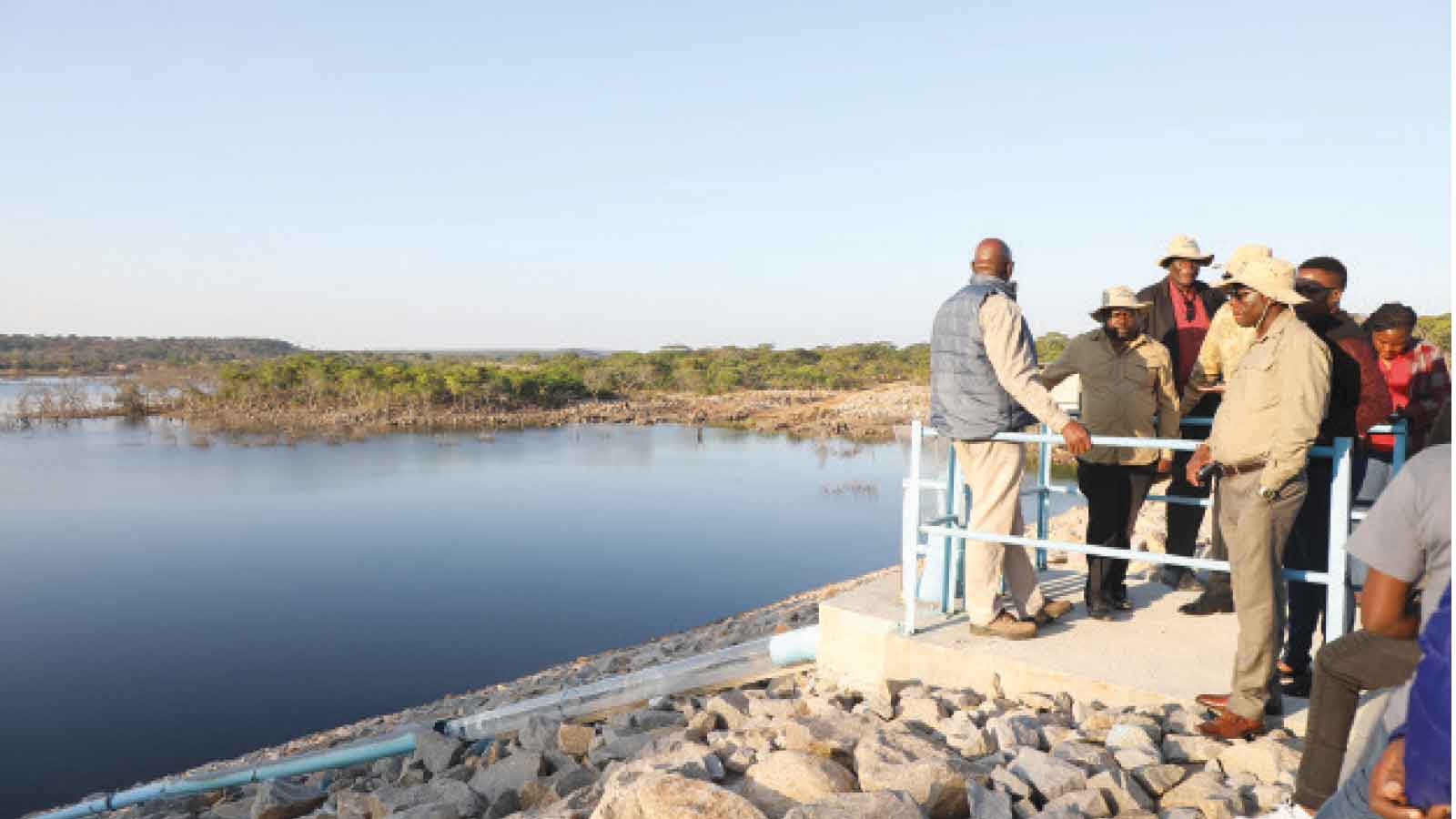
Under NDS1, at least 12 dam projects were initiated nationwide, each designed to boost production and secure water supplies. Chivu Dam in Mashonaland East became a turning point in how dams were planned and executed.
“We said a dam can never be complete if it doesn’t support the livelihoods around it,” Prof Jiri said.
At Chivu, irrigation systems were installed, wheat was planted, fisheries were introduced, and water was reticulated to surrounding communities.
“This is when the new concept of dam construction was born,” he said. “We now say a dam is an economy.”
As NDS1 concluded, the “dam as an economy” approach became central to NDS2 planning.
Projects such as Gwayi-Shangani Dam, now 74 percent complete, reflect this shift.
“Gwayi-Shangani will be able to irrigate at least 10 000 hectares,” Prof Jiri said. “It will also supply clean water to Bulawayo and generate hydropower.”
The Kunzvi Dam project also demonstrates a similar shift in approach. “Kunzvi shows a major shift in how we now view dam construction,” he added.
However, smallholder farmers remained central to NDS1’s success. Challenges, however, persist. Farmer, Thabo Moyo, from Mashonaland Central Province said while dams and irrigation have helped, access to fertiliser and seed remains inconsistent.
“Water availability really played a key role in our success as farmers. However, sometimes we get inputs late or in small quantities,” Moyo said.
“It affects the timing of our planting.”
Pfumvudza became the cornerstone of climate-proofed agriculture for rural households.
“Pfumvudza is not just a free inputs programme,” Prof Jiri said. “It is a productive investment facility.”
Adoption of Pfumvudza climbed above 80 percent nationwide, even as drought struck parts of the country. An El Niño-induced drought reduced maize output from 2,3 million tonnes to just over 600 000 tonnes.
“It was a major disaster,” he stressed. Yet, thanks to interventions guided by President Mnangagwa, extreme hunger was avoided.
“The response that came from the President was fantastic,” Prof Jiri said.
Ward drought mitigation centres provided livestock with feed and water, protecting livelihoods and avoiding widespread losses. Agricultural experts, however, note that these successes remain uneven. Zimbabwe Commercial Farmers union president, Dr Shadreck Makombe, said some districts still struggle with erratic rainfall and limited storage infrastructure.
“While NDS1 has made progress, resilience is not uniform across the country,” Dr Makombe said. “More targeted support is needed for marginalised areas.” Horticulture also emerged as a powerful growth pillar under NDS1, with blueberry production rising from zero to making Zimbabwe one of largest producer globally.
“In avocados, Zimbabwe is now the fifth-largest producer globally. These achievements underscore the idea that Zimbabwean agriculture can compete at the highest international level when policy, investment, and execution are aligned,” Prof Jiri highlighted.
Modernisation of agriculture also accelerated under NDS1. The Belarus tractor programme increased mechanisation from below 10 percent to nearly 44 percent.
“This country requires at least 35 000 tractors,” Prof Jiri said. “We are now hovering around 17 000 to 18 000.”
Smart grain silos were also introduced to strengthen storage capacity. Fourteen new silos are under construction nationwide, with those at Grain Marketing Board depots in Kwekwe and Mutare already commissioned.
“Never in the history of the country have we seen such modernisation,” Prof Jiri noted.
By the time NDS1 concluded, tangible results were visible. Wheat production rose from 60 000 tonnes in 2017 to over 640 000 tonnes in 2025, with smallholder farmers contributing more than 60 percent of total output. Tobacco production reached a record 355 million kilogrammes. Livestock numbers increased from five million in 2017 to 5,7 million, while diseases such as theileriosis (January Disease) and foot-and-mouth were brought under control.
Dr Makombe cautioned that climate variability and market access still pose risks to future growth. “Success is evident, but sustainability depends on strengthening input supply, market linkages, and extension services,” he said.
Building on this foundation, the Government is now shifting decisively into NDS2, targeting an agricultural industry of more than US$15,8 billion by 2030.
“Agriculture is a major business,” Prof Jiri said.“NDS2 is about building on what we learnt under NDS1.” Infrastructure, modernisation and climate resilience remain core priorities, alongside smallholder empowerment and strategic value chains.
The Government aims to integrate agriculture into broader economic planning, ensuring that each sector contributes to livelihoods and national growth.
“Wherever there is a dam,” Prof Jiri said, “there must be life.”
Farmers like Moyo agree, but emphasise that Government support must be consistent.
“If NDS2 delivers regular inputs, water, and extension support, then smallholders will finally reach their full potential,” he said.
The challenge now is sustaining progress while ensuring inclusivity, resilience and access for all farmers across Zimbabwe.