Online Reporter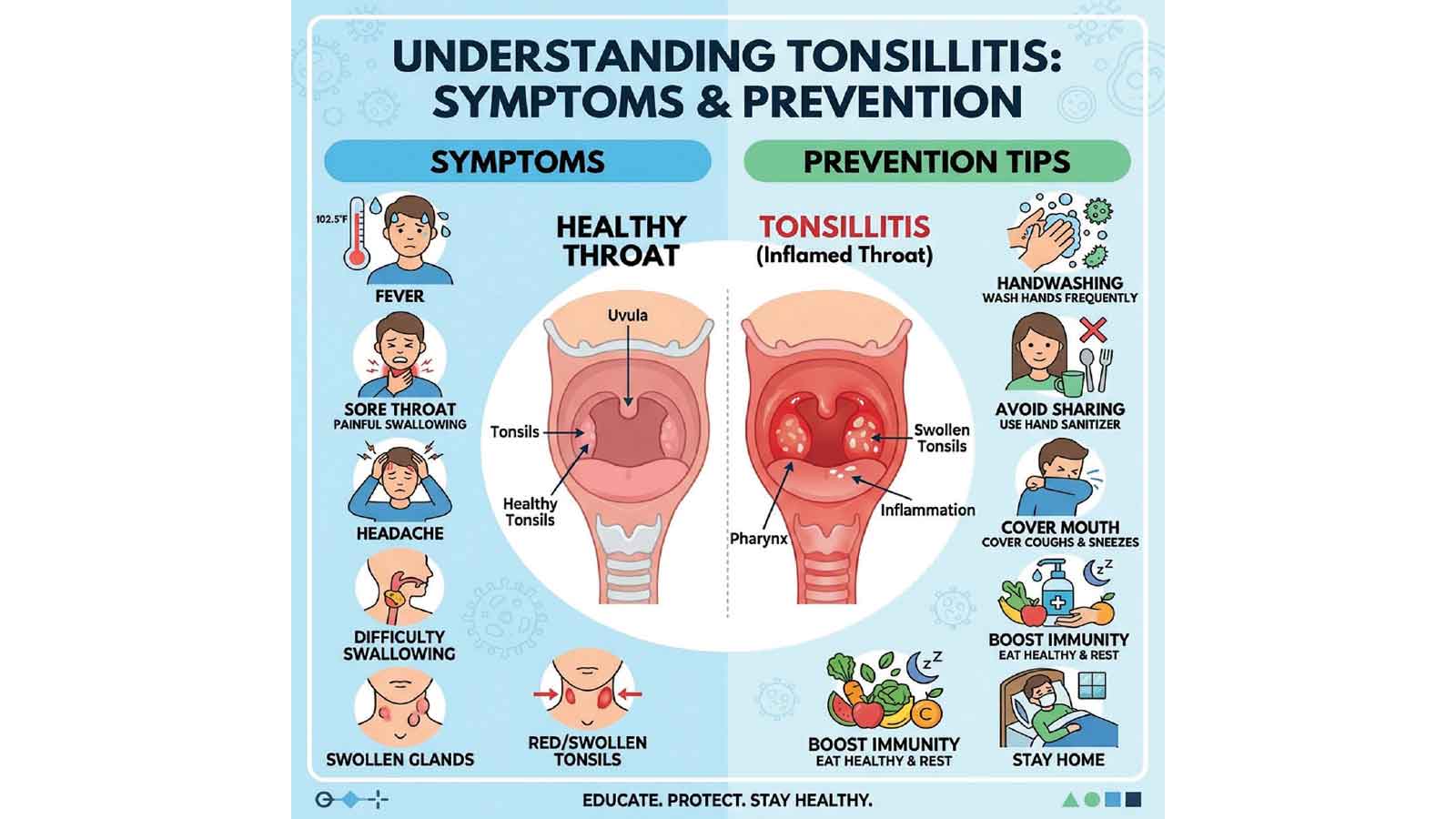
Rumbidzayi Zinyuke
Health Buzz
I remember growing up when I had a bad case of “tonsils”, as we used to call it. It was the kind of illness that could turn swallowing water into an unpleasant task, make eating feel like a chore, leaving you wishing someone could simply make the pain disappear.
For many families, especially those with school-going children, tonsillitis is a familiar childhood complaint. A child wakes up with a sore throat, complains that it hurts to swallow, develops a fever and, on inspection, the tonsils at the back of the throat may look red, swollen and sometimes covered with white patches.
But while tonsillitis is common, it should not simply be dismissed as another ordinary sore throat.
Tonsillitis is inflammation of the two oval-shaped pads of tissue at the back of the throat. The tonsils form part of the body’s immune system and help recognise germs entering through the mouth and nose. Ironically, this protective role also exposes them to viruses and bacteria, making them susceptible to infection.
According to the Mayo Clinic, tonsillitis occurs mainly in children and teenagers, with viral infections accounting for most cases. Bacteria can also be responsible, with Streptococcus pyogenes, commonly known as group A Streptococcus, being the most common bacterial cause.
The condition is therefore not one disease with one cause. A sore throat does not automatically mean a child needs antibiotics.
The United States Centres for Disease Control and Prevention (CDC) says viruses cause most sore throats. Only about one in 10 adults and three in 10 children with a sore throat have strep throat, a bacterial infection caused by group A Streptococcus.
This distinction matters because unnecessary antibiotic use contributes to antimicrobial resistance, while failing to recognise a bacterial infection that requires treatment can expose a child to avoidable complications.
Knowing the warning signs
The symptoms of tonsillitis are usually difficult to miss.
A child may complain of a sore throat and pain or difficulty when swallowing. There may be fever, swollen and tender glands in the neck, bad breath and a muffled or altered voice. On examination, the tonsils may be visibly red and swollen, with white or yellow patches.
Younger children who cannot explain what they are experiencing may instead drool, refuse food or become unusually irritable because swallowing is painful.
There is also an important clue when trying to distinguish a possible bacterial throat infection from a viral illness.
According to the CDC, cough, runny nose, hoarseness and conjunctivitis tend to point towards a viral cause rather than group A Streptococcus. Strep throat, by contrast, commonly presents with sudden throat pain, fever, painful swallowing, swollen neck glands and red, swollen tonsils, sometimes with white patches.
However, symptoms alone cannot always provide the answer. Where strep infection is suspected, healthcare workers can use appropriate testing to establish the diagnosis.
Who is most at risk?
Age is one of the biggest risk factors.
Tonsillitis is particularly common among children, while bacterial tonsillitis caused by group A Streptococcus is most common between the ages of five and 15. Close contact with other children also increases the risk because viruses and bacteria can spread easily in schools, childcare settings and households.
Crowded environments, frequent exposure to respiratory infections and poor hand hygiene can therefore create favourable conditions for transmission.
Exposure to tobacco smoke can also irritate the throat and increase susceptibility to respiratory problems. Allergies, sinus problems and other conditions that cause irritation or mucus to drain down the throat may contribute to persistent throat symptoms.
For Zimbabwe, the problem is visible not only in clinics but also in the demand for specialist treatment.
In 2023, the Ministry of Health and Child Care, with support from the World Health Organisation and the Government of Japan, provided free adenotonsillectomy and related ear procedures to 140 children during a surgical camp. The children were aged between two and 12 years.
At Sally Mugabe Central Hospital, a separate 2023 tonsillectomy camp initially targeted 125 children but doctors reported a backlog of more than 200 cases. Local reports also highlighted children travelling from different parts of the country to access the surgery.
These figures do not represent the prevalence of tonsillitis nationally. Rather, they demonstrate that recurrent tonsillitis and enlarged tonsils can become significant enough to require specialist intervention.
When tonsillitis becomes serious
For most people, tonsillitis settles without major problems. However, recurrent or severe disease can interfere with a child’s quality of life.
Enlarged tonsils can obstruct the upper airway, causing snoring and disturbed sleep. In severe cases, children may struggle to breathe properly during sleep. Persistent problems can affect feeding, daytime concentration and school performance.
Complications include obstructive sleep apnoea, tonsillar cellulitis and peritonsillar abscess among possible complications of tonsillitis.
Health experts say bacterial group A Streptococcus infections deserve particular attention because untreated infections can, in rare cases, lead to rheumatic fever or kidney inflammation.
This is particularly relevant in settings where rheumatic heart disease remains a concern. A study involving children presenting at Harare Central Hospital and Parirenyatwa Central Hospital found acute rheumatic fever and rheumatic heart disease among hospitalised children, with a history of sore throat reported in 56.3 percent of children with acute rheumatic fever.
This does not mean every sore throat leads to heart disease. Rather, it reinforces why persistent or concerning throat infections should not be ignored.
For parents, the lesson is simple: not every sore throat is tonsillitis, and not every case of tonsillitis requires antibiotics or surgery.
Health workers reiterate the importance for parents to seek medical assessment when a child has a persistent or severe sore throat, fever, painful or difficult swallowing, recurrent episodes, significant snoring or breathing difficulties during sleep.
Difficulty breathing, extreme difficulty swallowing or excessive drooling also warrants urgent medical attention.
Simple measures such as regular handwashing, avoiding sharing cups and utensils, covering coughs and sneezes and keeping children away from school while they are infectious can help reduce transmission.
And perhaps most importantly, “tonsils” should not simply be regarded as that childhood illness we all have to endure.
Sometimes it is just a passing viral infection. Sometimes it is bacterial. And sometimes, particularly when it keeps returning or interferes with breathing and sleep, it is a sign that a child needs proper medical assessment.
The earlier that distinction is made, the better.
Feedback: [email protected]