Online Reporter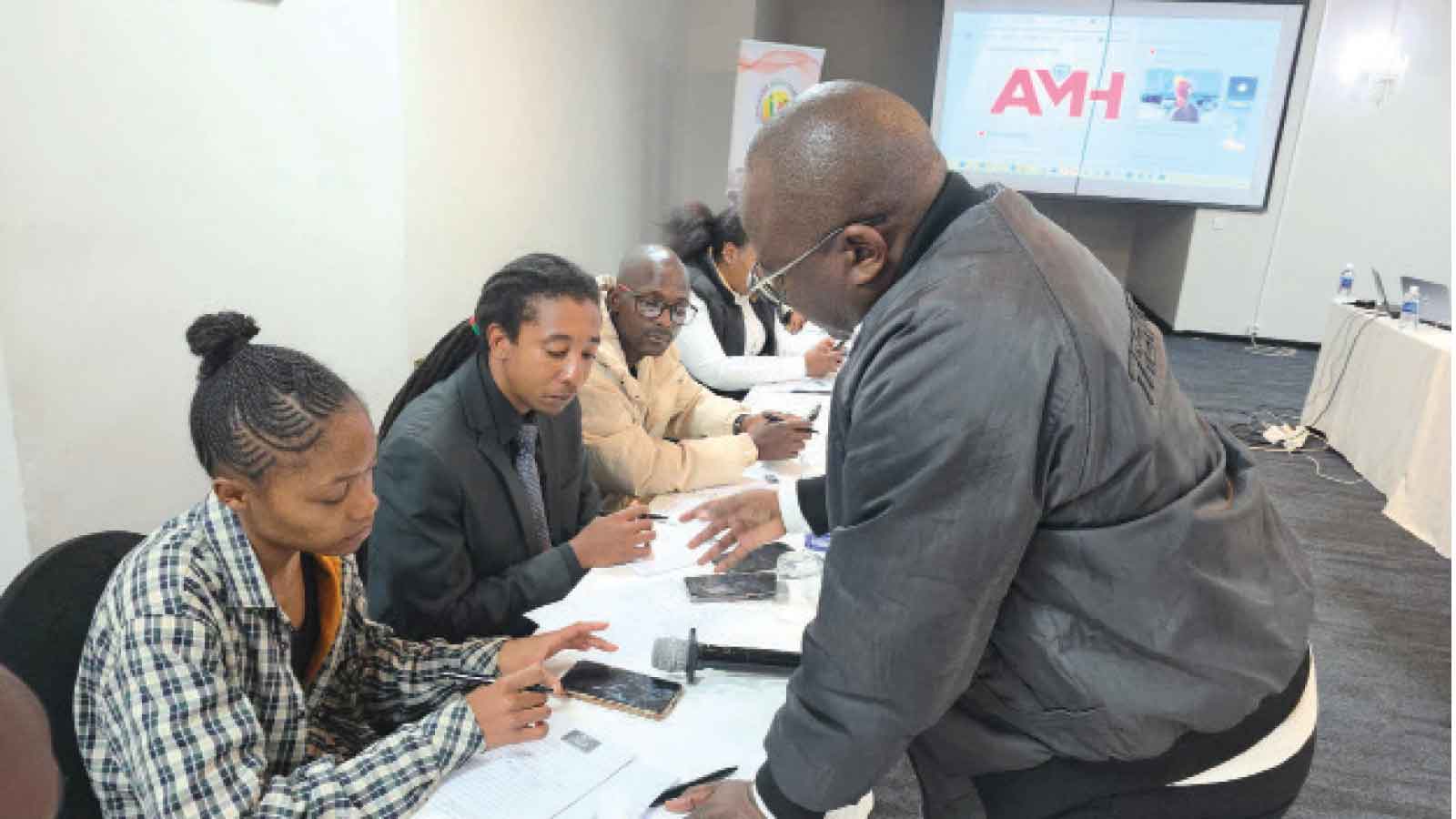
Theseus Mauruki Shambare-Features Writer
IT began as a simple assignment.
Inside a training room in Harare, journalists sat behind glowing laptop screens, each group given the same challenge: produce a compelling feature story using artificial intelligence before adding any human input.
Among them was journalist Kudakwashe Ruzive, working with fellow reporters in a group. The case study sounded straightforward.
A young couple rushes into Parirenyatwa Group of Hospitals carrying their critically ill two-year-old daughter.
At the entrance, they are met by a male doctor and a female nurse before the child is whisked away for urgent medical attention. The journalists entered a few brief prompts into an AI platform and waited.
Within seconds, a beautifully written feature story appeared. The opening tugged at the heartstrings. The language was polished. The emotions felt genuine.
Then came the surprise.
The supposedly Harare-based story suddenly described the child being rushed into St Thomas’ Hospital in London.
A few paragraphs later, the family was receiving treatment at Karolinska University Hospital in Stockholm before being attended to through a National Health Service (NHS) emergency triage system.
Another paragraph referred to landmarks and emergency procedures that simply do not exist in Zimbabwe.
The room burst into laughter.
The artificial intelligence system had confidently written fiction while presenting it as fact.
“It looked convincing at first glance,” said Ruzive. “But once we started reading carefully, we realised it had taken our Harare story to Europe. That exercise taught us that AI can write beautifully while getting the facts completely wrong.”
The practical assignment formed part of the Zimbabwe Media Commission (ZMC) nationwide capacity-building workshops on the ethical application of artificial intelligence in journalism, with Harare becoming the final province to host the programme after similar workshops across all 10 provinces.
The training comes at a defining moment for Zimbabwe.
In March this year, President Mnangagwa officially launched the Zimbabwe National Artificial Intelligence Strategy (2026-2030) at the New Parliament Building in Mount Hampden under the theme, “Harnessing AI for Inclusive National Development”.
The five-year blueprint seeks to transform Zimbabwe from a resource-based economy into a knowledge-driven one through six strategic pillars: talent and capacity building, infrastructure and computational sovereignty, sector transformation, governance and ethics, research and innovation and international collaboration.
Artificial intelligence is expected to drive innovation in agriculture, mining, healthcare, education and other sectors while fostering home-grown digital solutions.
For the media industry, however, the technology presents both enormous opportunities and significant responsibilities.
After reviewing the first AI-generated story, Ruzive’s group returned to their laptops.
This time they gave the system detailed instructions. They specified that the story must remain at Parirenyatwa Group of Hospitals in Harare, use Zimbabwean healthcare workers, reflect local realities, avoid fictional locations and remain factually accurate.
The difference was remarkable.
The rewritten feature painted scenes familiar to anyone who has visited Zimbabwe’s largest referral hospital — anxious parents pacing hospital corridors, overworked but compassionate healthcare workers responding with urgency and an atmosphere that resonated with local readers.
Harare had returned to Harare.
Artificial intelligence trainer and veteran journalist Conrad Mwanawashe said the exercise perfectly illustrated why journalists must understand how to work with AI rather than blindly trust it.
“President Mnangagwa launched the Zimbabwe AI Strategy in March this year and it is incumbent upon us to operationalise this strategy by adopting AI ethically.
“AI is not there to take away our space, but to enhance how we source, package and distribute our news products,” he said.
Mwanawashe said many people wrongly assume that good AI results depend solely on sophisticated software.
“AI is a mirror reflecting your intellect and values. If you provide vague prompts, you get generic noise. To get brilliant, high-quality output, you must input detailed context, constraints and rigorous verification. You are the editor; the AI is merely your research assistant.”
He warned that journalists should never confuse eloquence with accuracy.
“AI writes with confidence even when it is wrong. Verification remains the most valuable skill in journalism,” he said.
Mwanawashe said artificial intelligence could never replace a journalist’s instincts, local knowledge and unique storytelling ability.
“AI cannot emulate your unique journalistic voice, local insights or perspective. Always plan to rewrite, humanise and edit the AI’s response multiple times until it sounds like an experienced human reporter wrote it.”
He said journalists who will thrive in the coming years will be those who know how to ask better questions. “Journalists who will thrive in the next decade are not necessarily those with the biggest budgets or the most powerful computers. They are the ones who know how to ask the right questions and use the right tools to get answers faster,” he said.
Fellow participant and Zimpapers reporter Alicia Kadzviti, said the exercise fundamentally changed her perception of artificial intelligence.
“I came here believing AI was almost another reporter sitting beside me. I am leaving knowing it is more like a fast assistant. It can save time, but every sentence still needs a journalist’s eye,” she said.
Broadcast journalist at Harare Polytechnic Only Moyo said the workshop highlighted the importance of preserving Zimbabwean perspectives. “If we do not provide our local realities, AI will fill the gaps with information from somewhere else. That is how Harare suddenly became London,” he said.
Zimpapers senior reporter Fatima Bulla-Musakwa said AI should strengthen journalism rather than weaken editorial standards.
“It can make our work faster, but it should never make us careless. Accuracy remains our greatest asset,” she said.
ZMC director of media development and governance, Mrs Nyaradzo Makombe-Hazangwi, said technological advancement had transformed journalism, making it imperative for practitioners to embrace artificial intelligence responsibly.
She said the commission was equipping journalists with practical skills in automated transcription, translation, fact-checking, avatar creation, infographics and other digital tools while encouraging media organisations to establish AI policies that guide responsible use.
“We cannot afford to have our practitioners lag behind in using technology,” she said.
“But while AI presents many opportunities, it also comes with risks. There is a need for media houses and newsrooms to develop AI policies that ensure the technology is used ethically and responsibly.”
Regional director (Southern Africa) for the Media Institute of Southern Africa (MISA), Dr Tabani Moyo, reminded journalists that legal responsibility ultimately rests with human beings.
“AI is a powerful tool, but it is not an editor; the constitutional duty to verify information, protect source data and uphold the public trust rests entirely on human shoulders,” he said.
He warned that publishing AI-generated falsehoods would not shield journalists from legal consequences.
“The law does not sue the algorithm; it sues the journalist and the media house,” he said.
Dr Moyo also cautioned that many Western AI platforms often struggle to understand Zimbabwe’s socio-political and cultural realities.
“We must actively ground our technology use in the principles of accuracy, fairness and cultural responsibility to ensure algorithms do not reinforce discrimination,” he said.