daniel chigunwe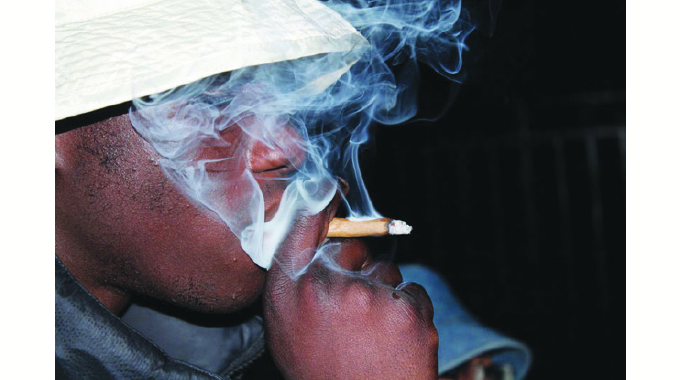
Rumbidzayi Zinyuke
Health Buzz
In August this year, I attended a women’s fellowship with hundreds of other women. The four-day conference was packed with a wide range of topics to be discussed.
However, what stood out for me was the lesson on drug and substance abuse.
When the topic was introduced, the atmosphere in the auditorium suddenly changed.
The facilitator had a lot to say about the impact that drugs and substances were having on the communities and how a parent can tell if their child is using these illicit substances.
But the question and answer session became a cry for help for most of the desperate mothers who were there.
I call them ‘desperate’ because from the first woman who stood up to speak until the session was closed, all I heard were cries for help from women who had suffered enough.
They all had in common sons and daughters who had lost their ways and were so engrossed within the drug and substance abuse abyss.
Pulling them out was proving to be an insurmountable task.
Theirs was a cry for a solution to remove their children from this darkness and create a better life for them.
One woman said “tovaisa kupiko avana ava?” (where do we get help for these kids?)
There was a hum of concurrence from the auditorium.
What they needed was a solution.
It did not matter to them that the facilitator was not from the Government and could not speak on its behalf, to them he was an expert who should know how best their problems could be solved.
The sentiments expressed by this small section of women resonated with all parents across Zimbabwe whose children have been lost to the drug and substance abuse chasm.
They have become a lost generation!
For years, society has watched as the cancer of substance abuse ravaged both children and adults with no solution in sight.
The numbers of those affected just keep growing.
According to the World Health Organisation, about 36,3 million people suffered from drug use disorders in 2019 globally and at least half a million deaths are attributable to drug use every year.
The number has probably doubled by now and this shows how rampant substance abuse is.
For Zimbabwe, millions of people have been affected by the scourge and despite efforts by the Government, the menace continues.
Information Publicity and Broadcasting Services Minister Dr Jenfan Muswere recently told the post cabinet briefing that “Government continues to heighten the fight against illegal inflow of illicit drugs, substances as well as alcohol throughout the country.”
A total of 468 offenders have been arrested while raids were conducted and drugs confiscated.
A total of four bases were destroyed from three provinces, that is, two in Harare, one in Midlands and another in Mashonaland West.
But this is just a drop in the ocean of numerous drug bases dotted across the country. While rehabilitation services are available, not everyone can afford them so this simply means the affected will have no recourse.
What to do?
Zimbabwe Civil Liberties and Drugs and Network (ZCLDN) executive director, Mr Wilson Box contends that it is time to consider other interventions as a way of curbing the crisis.
To him, harm reduction initiatives are the way to go.
Harm reduction can be defined as a public health strategy and method that is used to reduce or minimise the harm associated with certain risky behaviour, without necessarily having to eliminate that behaviour. It recognises that there will most likely always be people who will engage in activities that involve risk.
“We now need to be thinking in terms of harm reduction services where the people who abuse drugs actually get treated. Zimbabwe does not have these services yet but they are needed,” he said.
Drug treatment and harm reduction services are essential components of comprehensive strategies for reducing the harms of drug use and overdose.
These include interventions to combat stigma around people who use drugs and people with co-occurring disorders, promote referrals to care, counselling and treatment services. It also seeks to educate individuals about overdose risks and provide lifesaving overdose reversal medications.
The services can also include an increased distribution of condoms to hotspot areas owing to the relationship that exists between drug abuse and risky behaviours which can fuel the spread of HIV and other sexually transmitted diseases.
Some of the harm reduction strategies for drug and substance use can include needle exchange programs, supervised injection sites, condom distribution, PrEP (Pre-Exposure Prophylaxis) and supervised consumption of medications among others.
Countries like Kenya and South Africa have implemented some of the strategies related to drug and substance use and there have been noted improvement in the outcomes for the targeted populations.
The 3rd edition of the Harm Reduction Exchange held in Nairobi, Kenya recently also highlighted how these harm reduction initiatives could assist countries in fighting the drug and substance abuse problem.
According to Dr Vivian Manyeki, a medical doctor, evidence of substance abuse is there and this needs countries to implement strategies that work.
“Cannabis is the most widely used illicit substance and over three million deaths have been recorded every year from alcohol use. Countries in West and Central Africa have the highest prevalence of cannabis use at about 5,2 percent and 13,5 percent respectively.
In some countries, there is overuse of a drug called tramadol. In north and west Africa, about 18 percent or more are taking over the counter use of tramadol. This remains a major public health challenge that we have in Africa,” she said.
Integra Africa chief executive officer Dr Tendai Mhizha explained that harm reduction was a broad concept that applied to many areas such as drugs, alcohol, tobacco, skin lightening and many more.
“Harm reduction in itself is grounded in human rights and justice. It is centred around generating positive change and providing people with solutions without discrimination, judgement, coercion or requiring that people stop their various behaviours or habits as a precondition of support.”
Unfortunately, there is a lot of misinformation and disinformation surrounding the topic of harm reduction as many believe that these methods are enabling and encouraging people to continue or start to partake in habits and behaviours that are detrimental to their health when in reality they provide a middle ground to reduce harm for those who are already addicted or who are unable to stop.
“This is why harm reduction advocacy in Africa is so important because it provides the opportunity to educate people on the truth of harm reduction and the impact it can have on the lives of many.
“Harm reduction practices and policies are in fact informed by a large and strong body of scientific evidence that shows that these methods are effective, feasible, practical, safer and cost-effective in diverse cultural, economic and social settings. Evidence also shows that harm reduction has a strong positive impact on individual and community health,” said Dr Mhizha.
While as a country we are offering treatment and rehabilitation services for people using drugs and other illicit substances, there is more that can be done.
And harm reduction interventions could be a step towards achieving a better young generation that is free from the vices of drugs and substances.
Feedback: [email protected]


 Online Reporter