daniel chigunwe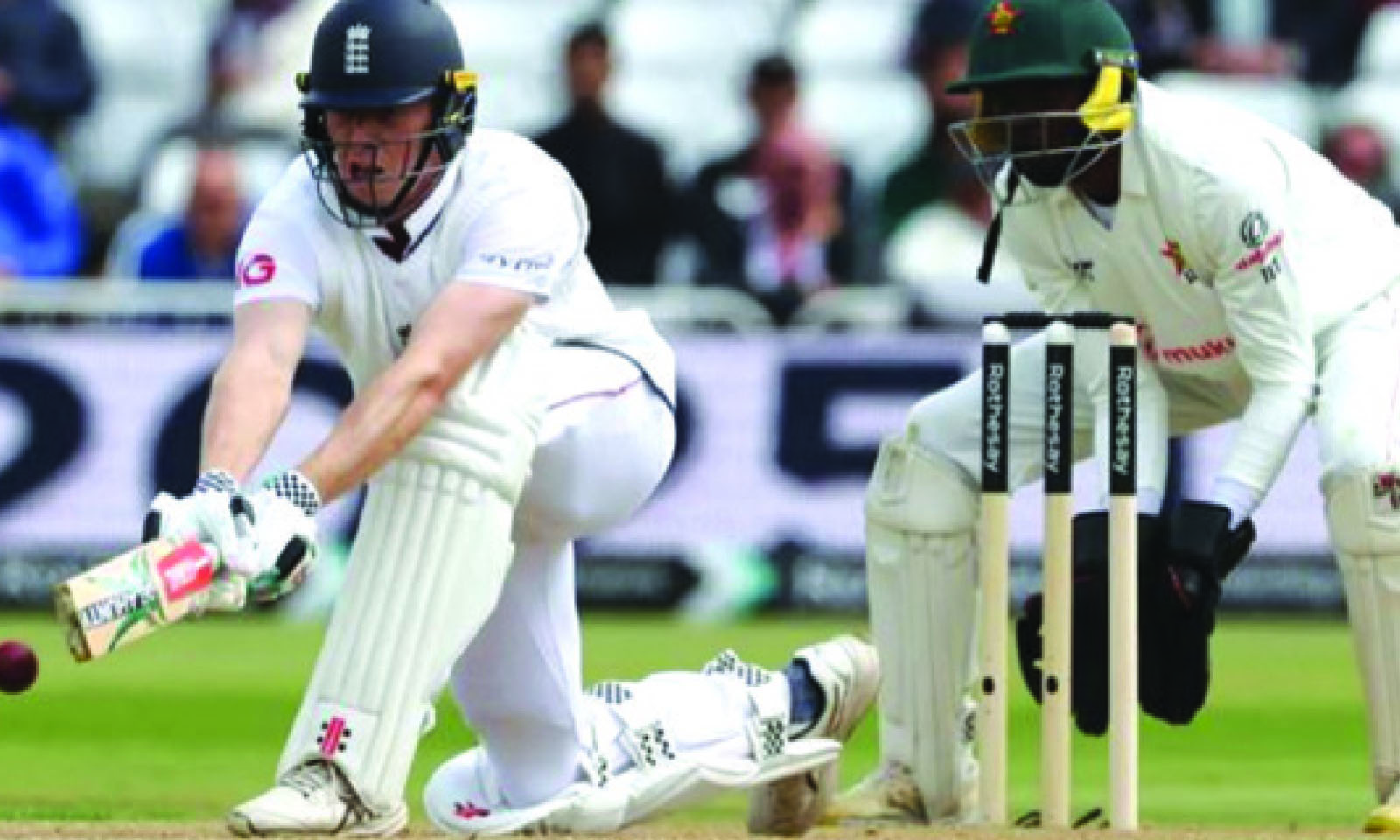
Gibson Nyikadzino
Zimpapers Politics Hub
The last time Zimbabwe played a Test match against England in 2003, Britain was still a member of the European Union (EU), and Zimbabwe’s population, based on the 2002 census, was around 12 million.
At that time, Africa’s population was approximately 913 million, while the world’s population was around six billion people.
Back then, Zimbabwe’s ex-sports minister, Kirsty Coventry, now president of the International Olympic Committee (IOC), had yet to win her first Olympic gold medal, which she won the following year at the Olympic Games in Greece in 2004.
In the same year, Zimbabwe would produce a duo of track powerhouses, Makanakaishe Charamba and Tapiwanashe Makarawu (aged two and three respectively), who would go on to hoist the nation’s glory in the 200m race at the Paris 2024 Olympics.
In the midst of the British-Zimbabwe frosty relationship in 2016, the women’s national soccer team, the Mighty Warriors, participated in the Rio 2016 Olympic Games. In 2019, Zimbabwe’s Gems entered their first Netball World Cup tournament in Liverpool, with great charm, charisma, and flair that captured the hearts of many global sports lovers.
Zimbabwe and England, with a long history of association through colonisation, are from May 22 to 25 playing their first Test match in over two decades at a time when the world’s political, economic, social, demographic, and cultural pages have turned swiftly.
Just to explain these changes, Zimbabwe’s population is now estimated to be around 15,5 million; Africa’s is now approximately 1,4 billion, and the world’s population is estimated to be eight billion.
This means that, in terms of cricket and forging bilateral cooperation, the two countries have missed a lot of cultural and economic exchanges they each accumulated over the years through cricket.
They had an unrepairable ‘animosity’ they both nurtured, either through ego or pride, yet much was lost.
Now, at a time when both countries are looking at global interdependence and cooperation; re-engagement and engagement to open new frontiers, both are slowly reconciling.
Sports Diplomacy Strategy
What Zimbabwe and England are set to witness is the power of sports diplomacy. Despite the possible impact of political decisions at government or bilateral level, sport normally binds people together.
Sport remains a powerful tool that can be used to unite people, forget quarrels, bury differences, and exchange feelings of love. Such is the power of sports diplomacy. It is much more than soft power; it is the strategic use of sport to bring people, nations, and institutions closer together.
In the conduct of foreign policy, diplomacy is the chief instrument and prime currency. It can take many forms of interaction between nations, and sport has become one of them.
The upcoming cricket Test match between England and Zimbabwe on Thursday is itself the restoration of cricketing ties that shows how much sport is an effective diplomatic tool that is key in rekindling bilateral relations.
The relationship between sport and politics is increasingly becoming visible.
Sports diplomacy is a strategy that both Zimbabwe and England are employing to achieve specific foreign policy goals through the use of non-state actors.
At the state-actor level, both countries have shown commitment to increasing their trade exchanges; they have revealed intentions to normalise people-to-people interactions and interact as equals in the global sphere for the betterment of their people.
There is therefore no doubt that the two parties are on a path to politically reset their objectives of interaction.
The hosting of these sports mega events (SMEs) also shows that states, state actors, politicians, and non-state actors are keen to achieve different foreign policy goals; their geopolitics, different histories, regime types, economic systems, and levels of development influence this.
Remember Russia, Qatar
Towards the 2018 men’s soccer World Cup that was hosted by Russia and the 2022 tournament hosted by Qatar, there were levels of disinformation, misinformation, and fake news that were peddled against the host countries.
At one point, they were attacked for being “racist, exploitative, and engaging in unfair labour practices.”
They were also criticised for upholding traditional cultural values, which many thought was based on their being “intolerant.”
On the contrary, they wanted to preserve their cultures.
However, it should be understood that these international sporting events lend themselves to the promotion of universally shared ideals, which can then be used to woo the publics of other countries via a variety of means.
For Russia and Qatar, there has been increased African migration into these countries, and in Africa, there has also been an increase in the uptake of Russian language lessons.
Sport, as a concept, should be known to be credited with not only resolving or averting violence but also assisting peace processes and promoting greater cultural understanding among countries and their people.
The same applies when India and Pakistan meet in their cricket matches; despite animosity at the political level, or when teams from the USA meet Iranian teams, the goal is uniting people through sport even with divided political leadership.
Enhancing Global Image
A clear example of how sport can be used to enhance a nation’s global image is how China leveraged the 2008 Olympic Games to position itself globally.
Since hosting the SME, it adopted “the Medium and Long-term Development Plan for Chinese Football (2016–2050),” which links its sports diplomacy to the notion and practice of national branding and economic attractiveness.
Zimbabwe can also do the same. It should see beyond only hosting SMEs, as is the case with Zimbabwe Cricket (ZC), which has started preparations for the two World Cup tournaments in 2026 and 2027, which they will co-host with Namibia and South Africa.
Sports diplomacy is an indirect yet adaptive instrument key for setting the political agenda in such a way that should shape the preferences of others through the use of intangible assets that include an attractive culture, innovative ideologies, and commendable institutions, values, and policies.
The position Zimbabwe holds on the global sports arena is one that should be used to improve the political and economic reputation of the country to obtain maximum benefits, posture, and stature in the world.


 Online Reporter