Online Reporter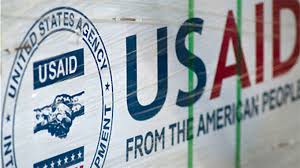
Elliot Ziwira
At the Bookstore
The notion of “crisis” in Zimbabwe has been a recurring theme, often perpetuated by external forces seeking to exert control over the nation’s destiny.
The concept of “crisis” in Zimbabwe is complex and multifaceted. On one hand, it refers to the economic challenges that the country has faced since independence, particularly in the past two decades. On the other hand, it represents a colonial legacy that continues to impinge on the progress of the post-colonial nation-state.
This phenomenon is reminiscent of the colonial-era perpetuated by Cecil John Rhodes and his cohorts, who justified their exploitation and oppression of Africans by framing them as “half-devil” and “half-child” (Rudyard Kipling in “The White Man’s Burden”). The colonial mentality of describing blacks in beastly terms and denoting them as children ignored or downplayed the wholeness and philosophical hinging of the African people.
Using dehumanising rhetoric, colonialists justified the exploitation and dispossession of African lands. The echoes of this racist and paternalistic ideology continue to reverberate in modern-day narratives surrounding Zimbabwe, especially when read in view of foreign aid.
Curiously, the recent suspension of the United States Agency for International Development (USAID) activities in Zimbabwe, and over four dozen other developing countries globally, raises questions about the true motives behind foreign aid.
The persistent question remains: Is this merely a thinly veiled attempt to exert pressure on sovereign governments, or is there a more sinister agenda at play? It is worth noting that the 63-year-old agency has historically been criticised for its role in promoting US foreign policy interests under the guise of humanitarian aid.
The Donald Trump administration’s recent acknowledgment that USAID has been used for regime change activities worldwide has lent credence to Zimbabwe’s long-held suspicions.
US President Trump’s executive order imposing a 90-day pause on most US foreign aid, insisting that the “industry and bureaucracy are not aligned with American interest”, has sparked significant controversy, with far-reaching consequences for Zimbabwe.
Elon Musk, appointed by Trump to oversee a new outfit called Department of Government Efficiency aimed at dismantling outdated US bureaucracies and addressing wasteful government spending, has referred to USAID as a “criminal organisation” whose time “to die” was up. He has also described the National Endowment for Democracy (NED) as a “scam”.
Following the January 20 Washington’s halt on global humanitarian programmes, the US Embassy to Harare is reassessing its aid programmes to ensure they align with Trump’s revised foreign aid policies.
The consequences of this pause are already being felt, with USAID suspending its grant agreement with Zimbabwe-based non-governmental organisations.
Notably, the suspension affects various programmes, including those focused on global health and agriculture.
As authorities move in to close the gap, the immediate impact could be severe, with HIV/AIDS programmes facing shortages of vital supplies, food security initiatives halted, and civil society organisations facing a major crisis in their quest to douse perceived “crises”.
Trump’s reference to foreign aid as an “industry” pivoted on nefarious motives supports the viewpoint that when individuals and organisations coalesce on “crisis”, they create more crises to remain relevant.
In this context, the suspension of USAID activities can be seen as a continuation of the colonial-era tactics of economic coercion and manipulation.
By framing Zimbabwe’s struggles as a “crisis,” external actors have always aimed at perpetuating a narrative of African incompetence and reinforce their own dominance over the continent.
However, this narrative is being challenged by Zimbabweans themselves, who are increasingly asserting their right to self-determination and resisting external interference.
Since crises are man-made, it is imperative to examine the reasons for and against land appropriation and acquisition, which left the post-colonial nation-state of Zimbabwe in a perpetual “crisis” as depicted in “Absent: The English Teacher” (2009) by John Eppel, Valerie Tagwira’s “The Uncertainty of Hope” (2006), and Eric Harrison’s “Jambanja” (2007).
As Lawrence Vambe, notes in “An Ill-Fated People” (1972), “We Africans did not learn of history, civilisation and culture from Europeans”. It is time for external players to respect Zimbabwe’s sovereignty and allow the country to forge its own path, free from the shackles of colonial-era thinking.
Collective memory aver that the colonial apparatus of plunder, oppression, injustice and subjugation was hinged on the racial superiority propagated by Rhodes — the chief proponent of British imperialism in Africa.
In colonial Rhodesia, the “crisis” was inextricably linked to the issue of land ownership. The forced removal of black Africans from their ancestral lands, as depicted in Charles Mungoshi’s novels “Waiting for The Rain” (1975) and “Coming of the Dry Season” (1972), resulted in physical, spiritual, and psychological dislocation. Historians such as De Waal (1990) and Ranger (1985) have noted that the struggles of the 1890s and 1970s were sparked by the contentious issue of land ownership.
The Land Apportionment Act of 1930, amended 60 times, and the Native Land Husbandry Act of 1951 further entrenched racial segregation and land inequality. These laws resulted in the forced relocation of approximately 700 000 black families to arid and rocky reserves, while white minorities retained control of the more fertile lands.
The creation of Gwayi and Shangani reserves for the Ndebele people in 1894 was a major factor in the 1896 uprisings, highlighting the longstanding tensions over land ownership in Zimbabwe.
The so-called “crisis” that spurred the emergence of trade unions, nationalist parties, and liberation movements was, in essence, a response to the profound injustices perpetrated by colonial governments.
The seizure of land, as eloquently described by Alexander Fuller in “Don’t Let’s Go to the Dogs Tonight”, was tantamount to the loss of fundamental human necessities— “air, water, food, and sex”.
Furthermore, Zhuwarara’s insightful observation (2001) accentuates the deep spiritual implications of land dispossession, effectively rendering the loss of land synonymous with the loss of cultural identity and spiritual heritage.
The parallels between the current situation and the colonial-era are striking.
Just as Rhodes and his associates used their economic and military might to subjugate the African people, today’s external actors are using their economic and diplomatic influence to exert pressure on the Zimbabwean Government under the guise of democracy and humanitarian aid.
Nonetheless, Zimbabweans are not fooled. They know that their country’s struggles are not solely the result of internal factors, but a consequence of external interference and manipulation as well.
The “decade of crisis” in Zimbabwe, which, according to Raftopoulos in Raftopoulos and Mlambo (eds) (2009), spans from 1998 to 2008, is deeply rooted in the country’s complex history of colonialism and land ownership. This period of crisis cannot be understood without examining the land “crisis” sparked by Rhodes’ exploitative policies and the violent displacement of indigenous people.
Absurdly, the acquisition of land by its rightful owners is often framed as a “crisis”, while the initial seizure of land by white colonisers in 1890 was not. This double standard beams the laser on the ongoing legacy of colonialism and the struggles of decolonisation.
The historical context of Zimbabwe’s struggles for independence and self-determination cannot be ignored. The Land Acquisition Act of 1992, aimed at addressing the colonial-era injustices that left black Zimbabweans disenfranchised and landless, has been repeatedly cited as a major factor in the country’s economic woes.
Yet, this narrative conveniently glosses over the role of external factors, such as the International Monetary Fund and Western governments, in exacerbating Zimbabwe’s economic challenges. The country’s economic struggles are often attributed to the Government’s policies, but rarely is mention made of the devastating impact of Western sanctions.
This narrative is not unique to Zimbabwe. It’s a familiar trope in Western discourse surrounding Africa, where countries are often portrayed as helpless and in need of external intervention.
The economic meltdown that occurred during this period of perceived “crisis” cannot solely be blamed on the black leadership, but is largely a consequence of historical factors.
Rather, it is the result of a complex interplay of historical, economic, and political factors, including the legacy of colonialism, the Cold War, and the impact of neoliberal economic policies. As Kheir (2010) points out the “African crisis, is a crisis of inheritance rather than a crisis of capability”, as such, the so-called “crisis” in Zimbabwe is a colonial child.
Zimbabweans’ experiences during this period are vividly portrayed in literature, such as Tagwira’s “The Uncertainty of Hope” (2006) and Eppel’s “Absent: The English Teacher” (2009), which aptly illustrate their multifaceted, culturally and historically rooted travails.
Notably, Mbare, depicted in Tagwira’s novel, is a product of colonialism, and a slum for black labourers, united by their toil and marginalisation. For Africans, hope lies not in emulating their former colonisers, but in creating opportunities for themselves through ownership of the means of production, particularly land. As Mashingaidze Gomo insists in “A Fine Madness” (2010), true freedom can only be achieved through land ownership.
The legacy of colonialism continues to shape the lives of Zimbabweans, with issues of land reclamation, culture, and identity remaining moot points. However, as they reflect on the essence of freedom and independence, they are reminded of the many challenges that still pervade their nation.
Therefore, it is essential to recognise the ways in which colonialism has been perpetuated and reinforced, often disguised as “crisis” or “emergency”. Rather than being swayed by these narratives, Zimbabweans must unite and assert their right to self-determination, land ownership, and economic empowerment—recognising that their destiny is in their hands.
Eventually, the concept of “crisis” must be understood within the broader context of colonialism, decolonisation, and the ongoing struggles of the African people to reclaim their land, rich and diverse culture, and identity.
Hence, the “crisis” narrative, which obscures the deeper historical and structural issues underpinning Zimbabwe’s challenges, should be essentially approached with a nuanced understanding of the complex factors at play.
Indeed, the past impacts the present and future, where the greater good is the ultimate winner.
Now that the chickens are coming home to roost, with USAID and NED expediently brought to book by non-other than their creators—deciding to consider their sovereignty first, “crisis” in Zimbabwe, often exploited by internal and external forces to undermine the country’s progress, faces an imminent death.