Online Reporter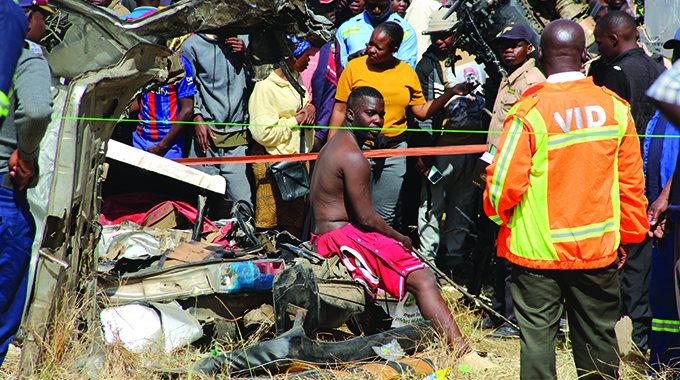
Tendai Gukutikwa
Post Reporter
FOR Rowa resident, Ms Rutendo Zimunya, the worst day of her life began with a shocking discovery on Facebook.
While scrolling through her feed, she stumbled upon a stranger’s post featuring a car wreck.
Initially, she thought little of it until she saw her brother’s name in the comments, accompanied by heart-breaking RIP messages from strangers.
“I had to call the police to confirm the devastating news. No one deserves to find out about their loved one’s passing in such a manner,” recounted Ms Zimunya, her eyes welling up with tears.
Her experience is, unfortunately, not an isolated incident.
An increasing number of people are learning about the loss of their relatives through social media platforms like WhatsApp and Facebook. Graphic images of accidents and names of victims are being shared online, often before the next of kin have been officially notified.
The traditional wisdom of not announcing death prematurely once guided society’s approach to handling loss with dignity is now in the dustbin as in today’s social media landscape, this principle has largely been abandoned.
Every tragedy now tests the limits of our moral fabric.
The recent horror crash in Nyanga, which claimed the lives of three family members from Katerere area, is a stark example.
Instead of being informed by authorities, the surviving relatives discovered the news through WhatsApp groups, where images of the mangled wreckage and names of the victims were circulating within hours.
A similar pattern emerged following the Harare road disaster in July, which claimed 17 lives.
Before the police could officially release the names of the victims, social media platforms were awash with pictures of the dead,names of victims, and sensational captions, complete with emojis.
Families, who deserved time and dignity to process their loss, were instead confronted with strangers callously sharing their pain with thousands of contacts.
What was once an intimate and carefully managed process has been hijacked by digital opportunism. Death, once considered sacred and private, is now exploited for online content.
This disturbing trend raises important questions about our society’s values and the impact of social media on our humanity.
Acting Manicaland provincial police spokesperson, Assistant Inspector Wiseman Chinyoka expressed concern over the public’s tendency to treat tragedy as entertainment.
“We have been issuing numerous statements urging the public to refrain from capturing and sharing videos and images of accident scenes, effectively turning tragedy into content,” he said, emphasising the importance of respecting protocols and allowing the police to attend to the scene, conduct their work, and inform the next of kin before sharing any information.
“People should avoid capturing content at crime scenes,” he stressed, highlighting the need for humanity and responsibility in breaking news of human loss.
“Families deserve to hear about their loved ones’ deaths in a compassionate and respectful manner, not through a stranger’s reckless social media post,” said Assistant Inspector Chinyoka.
Ironically, most individuals rushing to share tragic news are not professional journalists bound by ethical codes, but rather ordinary people equipped with smartphones and a desire for attention.
Traditional leaders condemn this growing phenomenon as indecent, culturally insensitive, and spiritually insulting.
Chief Saurombe was forthright in his criticism, emphasising the need for a more respectful and humane approach to sharing news of tragic events.
Chief Saurombe expressed his dismay at the erosion of hunhu/ubuntu, the African philosophy of humanity towards others.
“When someone shares news of a death on social media, it is a cultural insult. When someone does this, there is something called mushumo that should be done culturally. A father who finds out about his daughter’s death online may even sue his son-in-law for not informing him first. Meanwhile, content creators profit from these videos. Instead of helping, they take videos and post them online. The spirit of hunhu/ubuntu is lost,” he said.
Chief Saurombe also lamented the indecent and inhumane treatment of tragedy victims.
In a disturbing trend, some individuals steal from accident scenes instead of offering assistance. This shocking behaviour underscores the decay of moral values in society.
“At accident scenes, people prioritise recording the dead and dying over helping survivors. Bodies are exposed to thousands online, rather than being shielded with dignity,” he said.
Pastor Davies English, of Shield of Victory Ministries, shared similar concerns, attributing the trend to a broader moral decline in society.
“People value clout over compassion. I advocate for a law to stop untrained content creators from posting sensitive content.
Imagine seeing your brother’s face or vehicle on Facebook, announcing his death.
It is traumatic,” said Pastor English, emphasising the Bible’s teachings on mourning and the need to comfort those in pain.
“The Bible teaches us to mourn with those who mourn and comfort those in pain, but what we are seeing now is the opposite. Instead, people use others’ pain to gain social media fame. The dead deserve respect, and the living deserve compassion. In the pursuit of virility, dignity is trampled, leaving grieving families to pick up the pieces of tragedy and the wounds inflicted by a society that has forgotten how to respect death,” he said.