

 admin
admin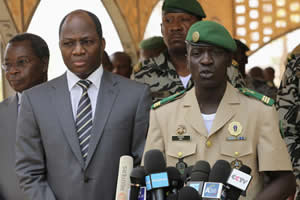
accountability of Government to the governed, and the relative stability of the polity.
Democracy is a system of government based on the consent of the people and focuses on political issues, while governance draws attention to the administrative and technical aspects of the exercise of public authority. Modern democratic governance entails citizen representation and participation.
No doubt democratic governance has attracted huge amounts of interest all over the world, in recent years. In Africa the democratic governance agenda was seen as a progression from attainment of various political independences across the continent.
It was perceived that this would move African nations towards developmental states from the political struggles, wars and conflicts. Another driver to the promotion of democratic governance was the mixed achievements of structural adjustment programmes in many African nations.
For instance, these adjustment programmes during the 1980s, created distrust between rulers and the ruled in many African countries, including Zimbabwe. The agenda for democratic agenda became necessary for the reconstruction of the social contract among national stakeholders, hence its emphasis on citizen participation.
As such, the agenda on democracy is sometimes viewed as representing efforts to restore and reinforce trust in governmental authorities, institutions, political leadership, private sectors and civil societies.
Democratic governance encourages transparency, accountability, the rule of law, respect for human rights, civic participation, and civic inclusiveness — all of which are necessary for securing economic productivity, equitable distribution and state legitimacy.
Practitioners in this field say that a state which identifies with the culture of democratic governance is one which welcomes a wide scope of political participation. Thus a culture of democratic governance is embodied in the level of participation of political parties, a vibrant civil society and media, protection of the rights and dignity of children as well as the integration of women and minorities in all levels of the government and society as a whole.
Civil society, both a driver and product of the global democratic governance agenda, has played an important role in raising awareness among citizens, particularly, in raising awareness in the rights of citizens to engage in the political activities in their countries.
However, the missing link in that agenda is awareness of responsibilities by citizens. Citizens need to be aware of responsibilities that come with rights. One such right is freedom to lead. Increased awareness of rights has caused an upsurge in numbers of individuals and political parties, rising to take up leadership roles.
In 2009 Mali had more than 120 registered political parties, but only 14 were represented in Parliament. In a resident population estimated of about 15 million, this effectively meant one political party for every 125 000 Malians — democracy run wild.
Many other African countries have had numerous political parties appear during elections and virtually disappear a few days after elections. In one research, they could not even find the physical whereabouts of these parties or their promoters. So what happens to the citizen supporters in between elections?
In Zimbabwe, we recently witnessed leadership jostling when a member of the Affirmative Action Group assumed leadership, then a few days later a totally different set of leadership was also announced. This trend is prevalent, in almost all sectors of the economy, the private sector, NGOs, churches, sports and of course political parties.
Certainly the driver to all this leadership jostle is democracy, but when democracy runs wild, it ceases to create the benefits for which it was mooted for in the first place. If anything it creates chaos and confusion.
Democratic governance is intended to enhance quality of accountability, inclusiveness, fairness etc. If all have a right to lead, then who has the responsibility to be led?
Who will ensure that internal systems and controls in governance institutions respond to demands of citizens? Who will supply accountability?
The other downside is that when there are too many leadership candidates, distrust ensues. This in turn affects the quality of participation of citizens. It actually weakens the ability of the population to exercise democratic control. As a result very little development takes place.
The coup in Mali, offers a good example of a case of distrust, where the US-trained coup leader, Captain Amadou Sanogo could not trust the government of Amadou Toumani Touré as being capable of adequately dealing with the accelerating Tuareg rebellion in the North of Mali.
Whoever is right or wrong, the fact is another cycle of violence, conflict and instability has been injected into Mali, a country that has its own problems with nature and poverty. Once again more vulnerable women and children will be troubled for a long time and made to pay again.
There are many other reasons, which cause people to jostle for leadership, but are not necessarily to advance good governance. These include simple lack of respect for authority, envy, greed or just rebelliousness. I believe that the ultimate aim of democratic governance systems is to create sustainable peace and stability in countries, so as to allow citizens to get on with the job of securing economic productivity and decent livelihoods.
In this way democratic governance should be able to provide mature homegrown systems including citizens’ control over national politics, socio and economic development. It is therefore now imperative for those who drive the democratic governance agenda to educate citizens about responsibilities.
People need to be trained and made aware that elections are just a small fraction of good governance. In fact much of the democracy is shaped in between elections. Responsibility by citizens to manage, control and strengthen institutions is what delivers sustainable peace and stability for development.
Democratic governance discourse in Africa, should increasingly factor in, forgiveness and reconciliation. If it is true that the Truth and Reconciliation Commission of South Africa, helped transform that country from apartheid into a democracy, then perhaps all other conflicts on the continent should be exposed to the light of forgiveness. It is after all the spirit of Easter to forgive and reconcile. Those who forgive and reconcile are the healers of humanity.
l The writer is a researcher and consultant in governance.


 Online Reporter