Griffin Gulledge-Matters of Faith
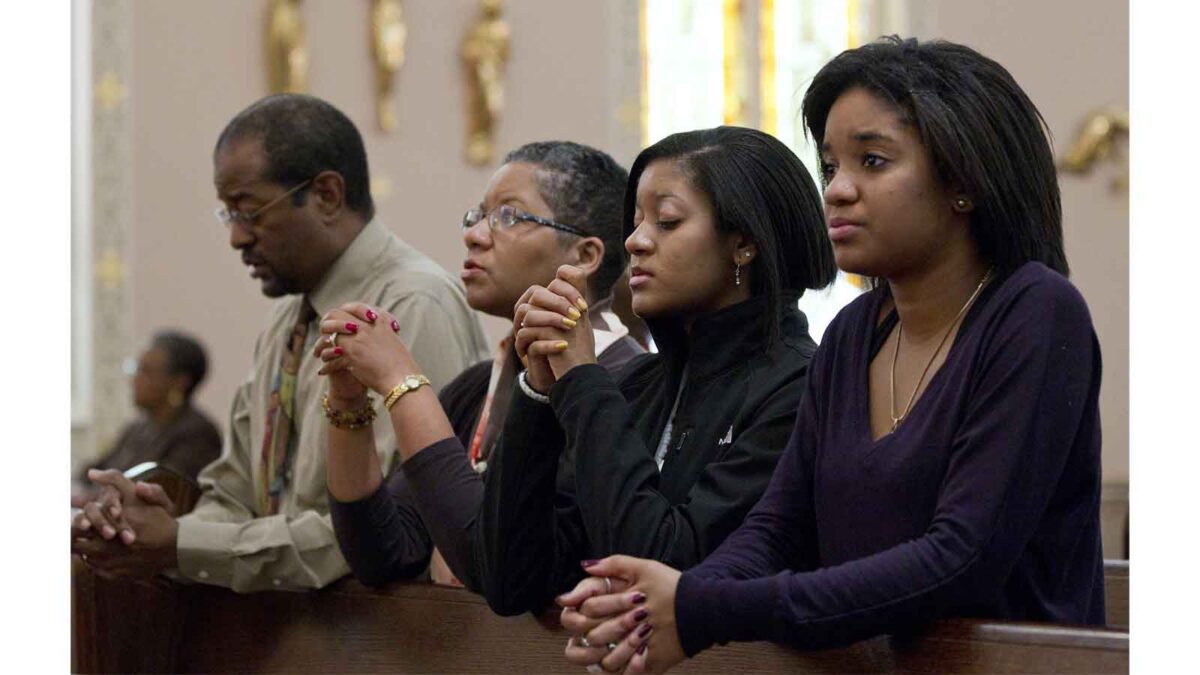
Most pastors I know are working on a common problem: How do we better serve the people who come to church and feel like everyone has a family group and no one is genuinely welcoming?
In a recent article, Dave Moore argues that for the sake of the Great Commission, you should stop sitting with your family at church. He writes that “church is for others” and says we should think of our church attendance in terms of deployment for mission.
The article appeared on The Gospel Coalition’s Australian site. TGC’s international coalitions have their own independent editorial teams. All agree to publish resources that align with TGC’s Foundation Documents, but individual writers, staff members, and Council members often disagree on matters that fall outside our Confessional Statement and Theological Vision for Ministry. In this case, I respectfully disagree with Moore.
Any church committed to reaching lost people and including outsiders is asking themselves how to best address the problems of cliques and people not feeling like they belong. But when Moore says that “dividing ourselves for the sake of others is the most beautiful picture of Christian unity,” I believe he overstates his case.
The Bible doesn’t command families to divide in worship as a picture of Christian unity. More than that, to present family members worshipping together as an obstacle to love for others neglects the mission of the family and God’s call to parents. Acknowledging legitimate situations where families can’t or don’t sit together in church, as Christians, we don’t choose between our families or our mission. Building gospel-centred families is Great Commission ministry.
Families as Mission
God commands parents to teach his words and ways diligently to their children (Deut. 6:7). We are called to train up our children in the way they should go (Prov. 22:6). The Bible places a priority on the family as a first-order love over against providing for others (1 Tim. 5:8). The Bible doesn’t command families to divide in worship as a picture of Christian unity.
The primary responsibility for showing children “the way they should go” belongs to the parents, not the people of God in the abstract (Gen. 18:19). Parents set the tone for the worshipful commitment of a household (Josh. 24:15). Parents are the generation that proclaims the works of God to the next generation (Ps. 145:4).
When Moore writes that “church is special spiritual-family time,” he neglects another reality: The primary disciple-making responsibility for children in those spiritual families is given to nuclear families – namely, mothers and fathers. Modelling worship for your children is ministry. It’s a blessing for your children to watch you week after week learning from God’s Word and participating in the life of the church.
It’s good to make people feel welcome at church – and that includes children. To be entrusted with children is to be entrusted with the mission of God: the passing of God’s worship from one generation to the next.
Families on Mission
At the same time, it’s good to be intentional about those who come into the church without a family, without community, without certainty that anyone cares about them. That’s true for our approach to lone believers, and it’s true for our approach to the lost. So how can we address that problem without treating the family like an obstacle to engaging the isolated?
Loving families can be welcoming families.
The best path forward for engaging people alone at church isn’t by neglecting an essential commitment – the family – but by leveraging the family as a unit for mission. It’s not “Sorry kids, someone else is more important.” Instead it’s “Hey kids, this is our new friend. She’s going to sit with us today.” My wife and I have worked to show our kids not that others come before them but that others come with us because we love to include people in our lives. As Jen Oshman says, “We will never sacrifice our family for the mission; but we will sacrifice as a family for the mission.”
Churches can empower all members.
One of the mistakes we make in the church is thinking everyone should do everything. The beauty of the body of Christ is that different people are gifted in different ways for different ministries. What about the empty-nesters who have love to give and do so unhurriedly? Could widows or single men be, especially suited to notice newcomers in the church and connect with them? They have much to offer the church as ministry-givers, not just ministry-receivers, and can extend gospel welcome to other never-married singles and widows.
Griffin Gulledge (ThM, Southeastern Baptist Theological Seminary) is pastor of Fayetteville FBC in Fayetteville, Georgia. He is concluding his PhD in systematic theology at Southeastern Baptist Theological Seminary. His writing has been published in numerous outlets, including The Gospel Coalition and the Journal of the Evangelical Theological Society. You can connect with him on X or Instagram